













-
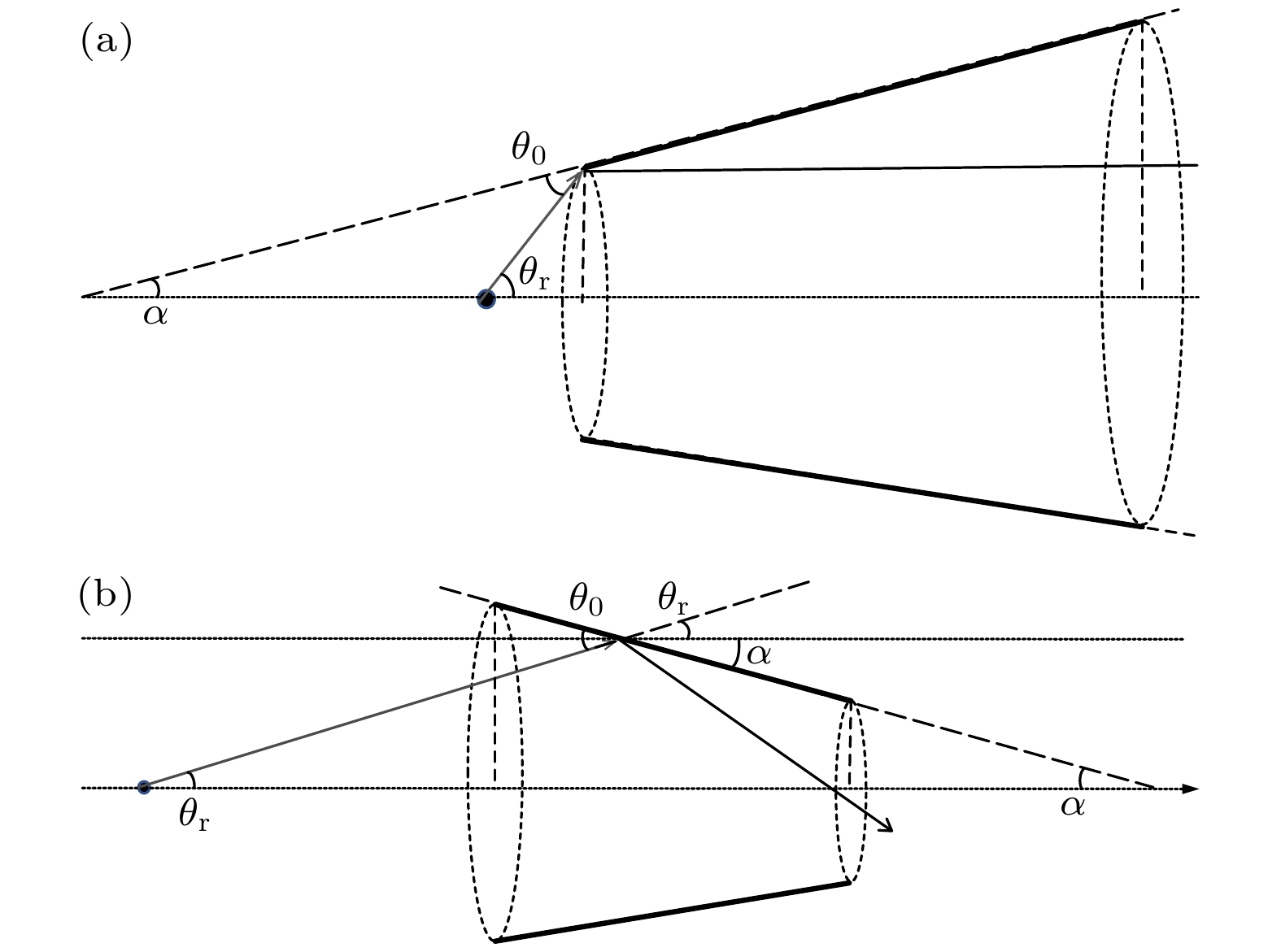
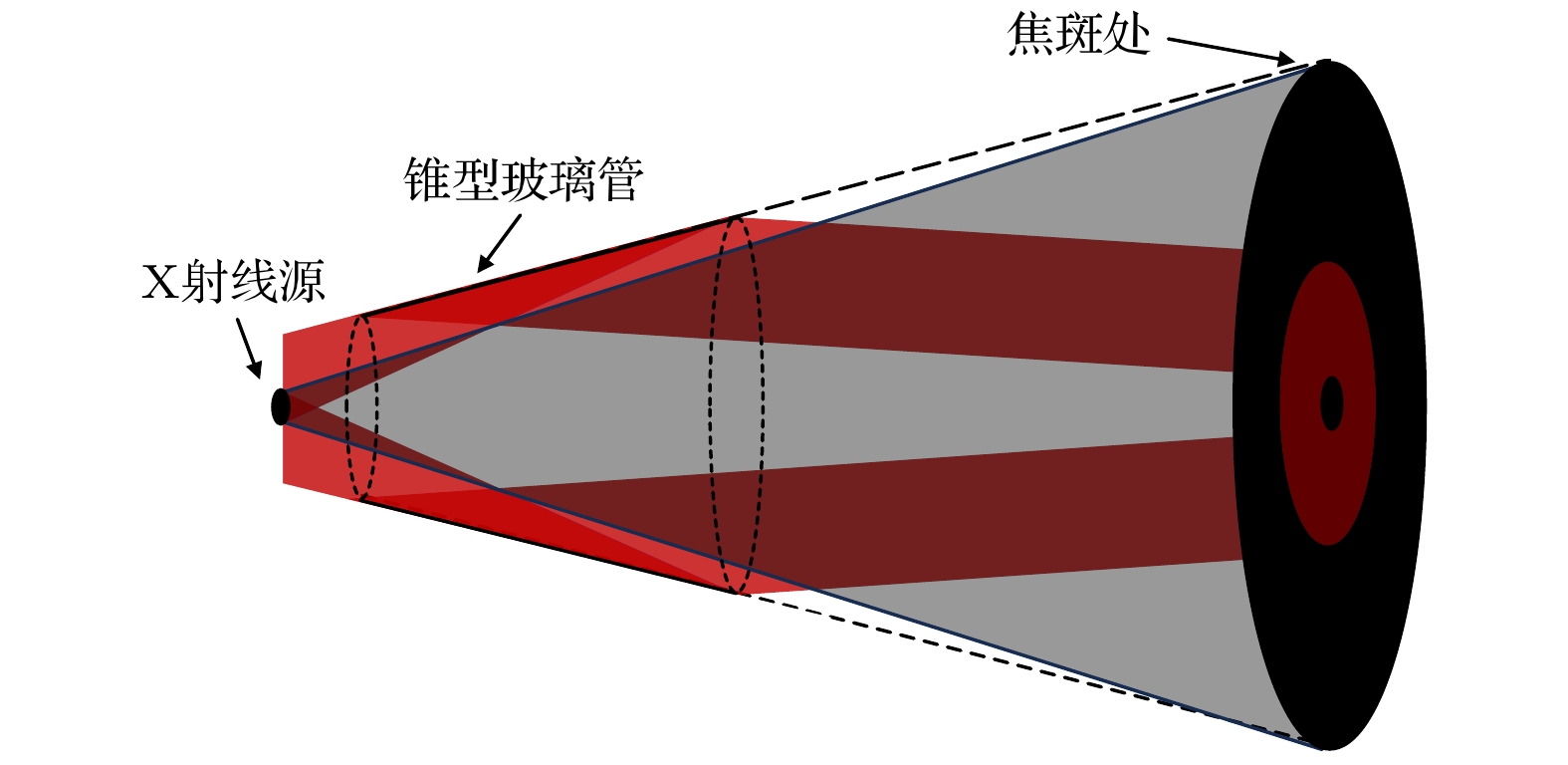
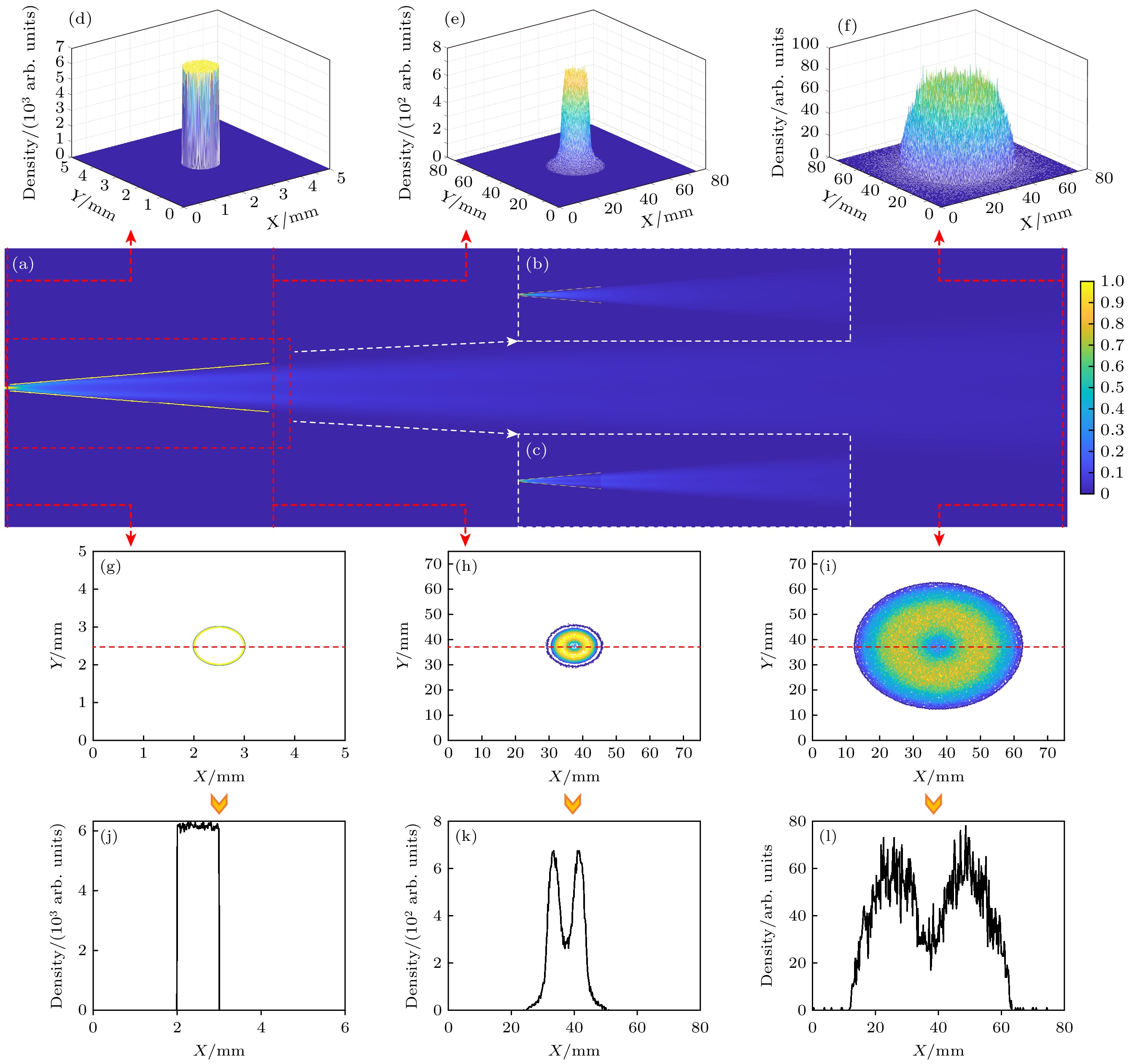
高能量密度物理实验诊断中, 采用晶体谱仪等X射线分光元件可实现靶物质中心区温度和密度等参数的高谱线分辨要求, 通过优化靶点光源到探测器间的光输运效率, 可极大地提升在低光源发射度下实验诊断精度. 本文介绍了一种大口径锥型玻璃管的X光传输部件, 构建了对应的数学模型, 基于光线追迹法, 用MATLAB软件对其X射线的传输图像进行了数值模拟. 结果显示: 新设计的大口径锥型玻璃管传输部件对面型误差要求较低, 其焦斑范围可控; 可以有效提升光源的利用率, 其平均增益约为3.1. 另外, 本文还介绍了该大口径锥型玻璃管传输部件系统性的性能模拟和分析结果, 为实验室高能量密度物理研究中的低发射度X射线诊断技术升级提供了新的思路和参考.In high-energy density physics (HEDP) experiments, accurate diagnostics of physical parameters such as electron temperature, plasma density, and ionization state are essential for understanding matter behavior under extreme conditions. In these cases, X-ray spectroscopic technique, especially those using crystal spectrometers, is widely used to achieve high spectral resolution. However, a common challenge in such experiments lies in the inherent low brightness and poor spatial coherence of laboratory-based X-ray sources, which limit photon throughput, thus the diagnostic accuracy. Therefore, improving the X-ray optical transmission efficiency between the source and the detector is a key step to improve the performance of the whole system. Capillary X-ray optics, which function based on the principle of total internal reflection within hollow glass structures, provides a promising avenue for beam shaping, collimation, and focusing in the soft-to-hard X-ray range. These optical devices are usually divided into polycapillary type and monocapillary type. While polycapillary optics are composed of numerous micro-channels and used primarily for collimating or focusing divergent X-rays, monocapillary lenses—consisting of single curved channels—provide more precise beam control and are particularly suitable for customized X-ray pathways. Depending on the curvature of the inner reflective surface, monocapillaries are classified into conical, parabolic, and ellipsoidal geometries. In this study, we propose and analyze a novel design of a large-caliber conical glass tube, specifically tailored to address the issue of low light utilization in multi-channel focusing spectrographs with spatial resolution (FSSR). The proposed conical glass tube is made of a single large-diameter capillary structure, simplifying alignment requirements and reducing the surface manufacturing precision typically required by complex aspheric lenses. Its geometric configuration enables X-rays from extended or weak sources to be redirected and controlled to convergef, thereby improving photon collection without significantly altering beam divergence. To quantify the performance of this optical system, we develop a detailed mathematical ray-tracing model and implement it in MATLAB. The model combines physical parameters such as capillary inner diameter, taper angle, reflection loss, and source-detector geometry. Numerical simulations show that compared with traditional flat or slit based systems, the new conical design improves source utilization efficiency by 3.1 times. Furthermore, the lens exhibits a ring-shaped enhancement region in the output intensity profile, which can be regulated by adjusting the capillary geometry and source positioning. This feature enables the spatial customization of the beam profile, thereby facilitating optimized coupling with downstream spectroscopic components or imaging systems. In conclusion, the proposed large-aperture conical monocapillary X-ray lens provides a practical and efficient solution for enhancing X-ray optical transport in low-brightness source environments. Its simple construction, tunable focusing characteristics, and compatibility with diverse X-ray source types make it a compelling candidate for integration into a high-resolution X-ray diagnostic system, particularly in HEDP and laboratory-scale X-ray spectroscopy. This work not only introduces a novel optical approach but also provides a robust theoretical and simulation framework for guiding future experimental design and application of capillary-based X-ray optics.
-
Keywords:
- high energy density physics research /
- X-ray transmission efficiency /
- conical single capillary /
- ray tracing method /
- X-ray lens
[1] [2] [3] [4] [5] [6] [7] [8] [9] [10] [11] [12] [13] [14] [15] [16] [17] [18] [19] [20] [21] [22] [23] [24] [25] [26] [27] [28] [29] [30] [31] [32] [33] [34] [35] [36] [37] [38] [39] [40] [41] [42] [43] [44] [45] -
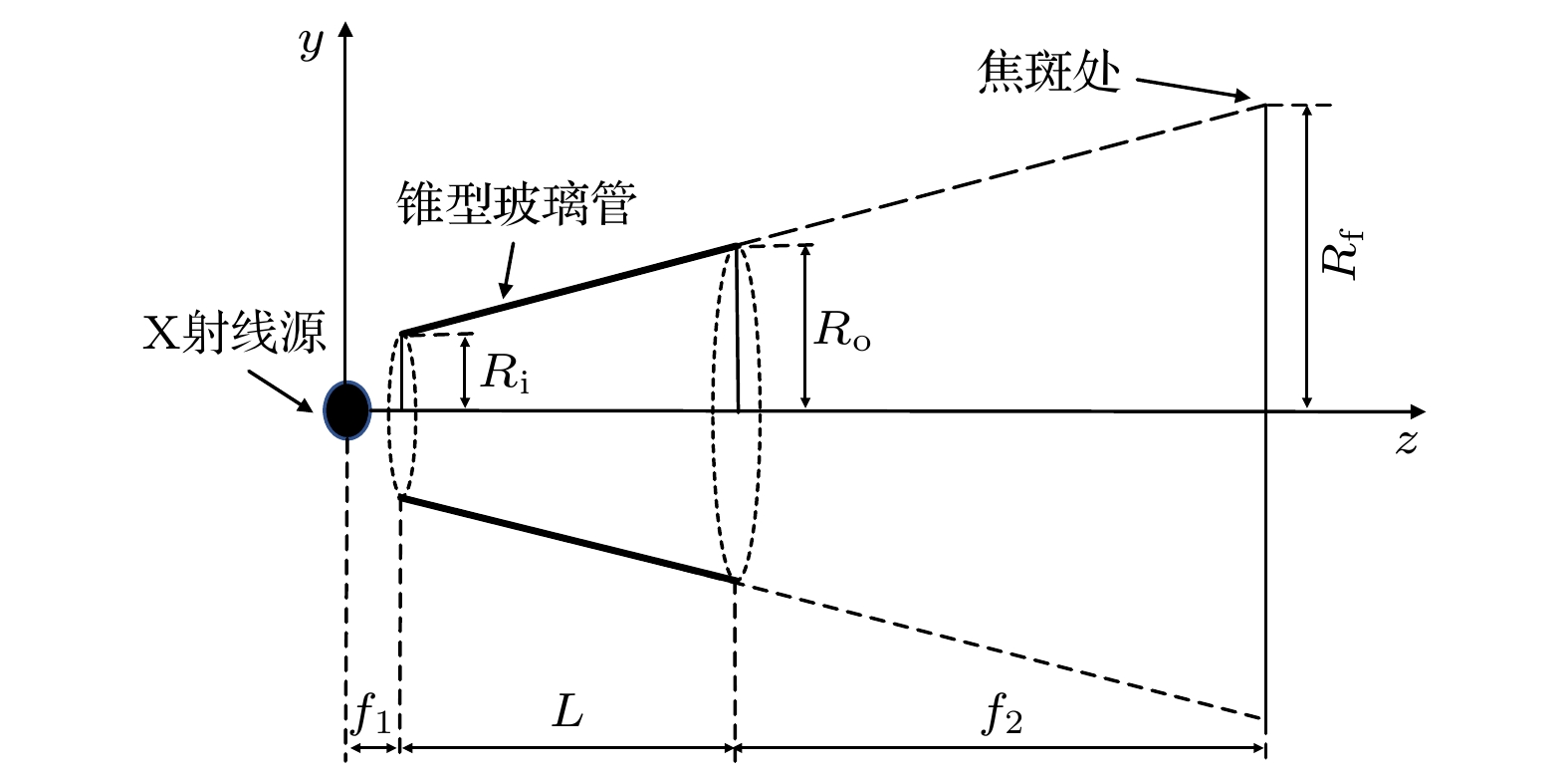
参数 $ {f}_{1} $ $ L $ $ {f}_{2} $ $ {R}_{{\mathrm{i}}} $ $ {R}_{{\mathrm{o}}} $ $ {R}_{{\mathrm{f}}} $ 单位/mm 2 100 298 0.8 6.88 25  下载: 导出CSV
-
[1] [2] [3] [4] [5] [6] [7] [8] [9] [10] [11] [12] [13] [14] [15] [16] [17] [18] [19] [20] [21] [22] [23] [24] [25] [26] [27] [28] [29] [30] [31] [32] [33] [34] [35] [36] [37] [38] [39] [40] [41] [42] [43] [44] [45]

 下载:
下载:

计量
- 文章访问数: 713
- PDF下载量: 40
- 被引次数: 0