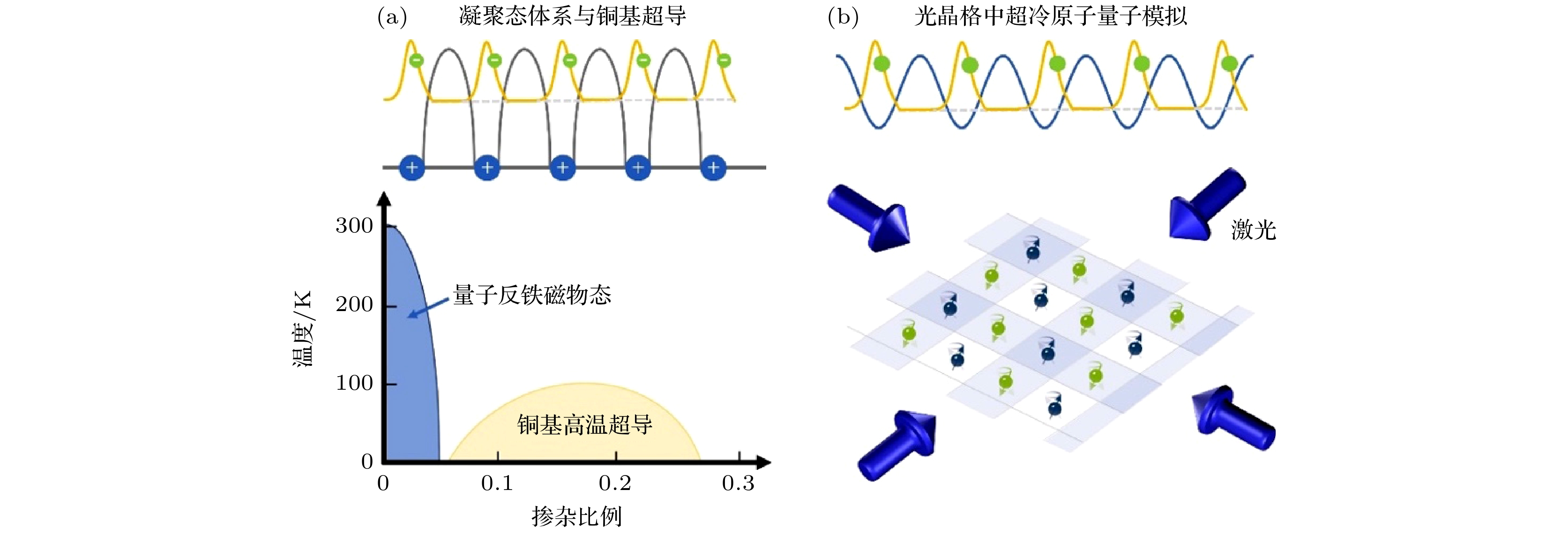
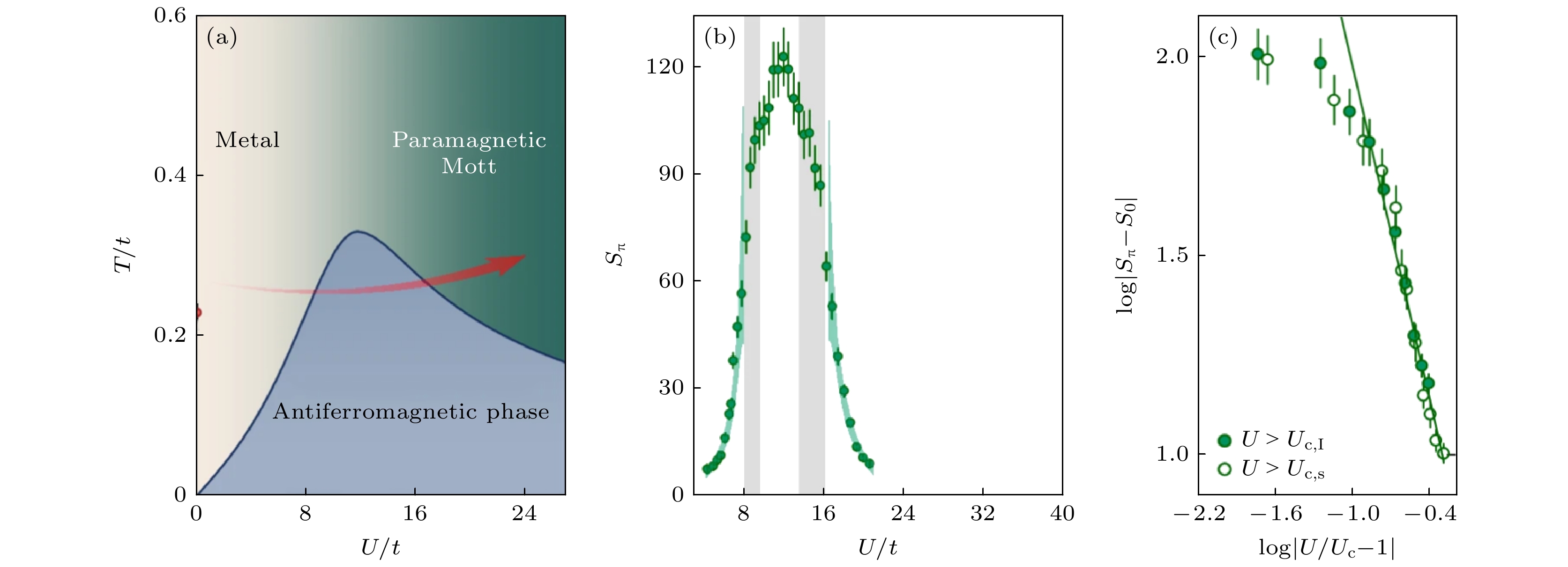
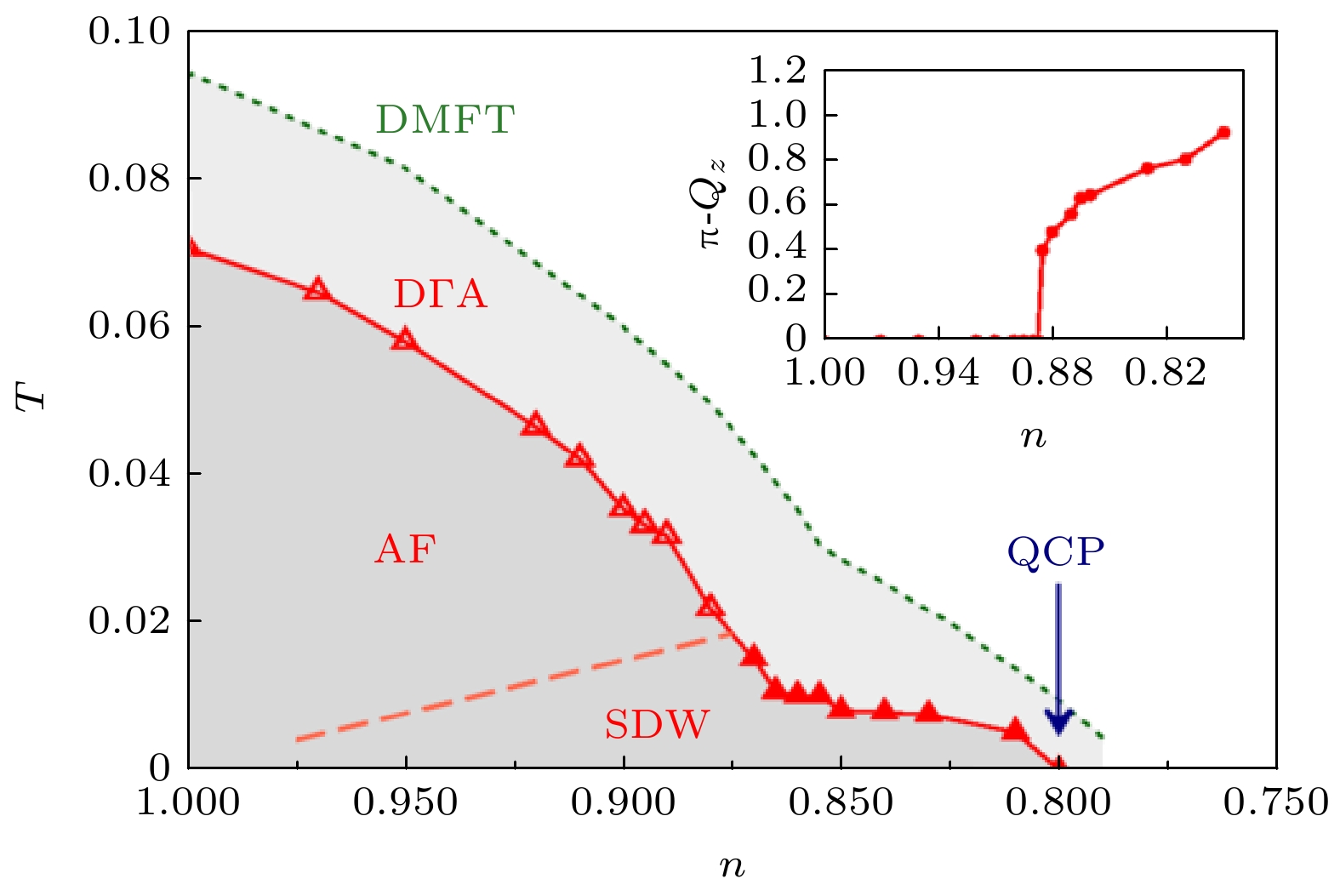
Fermi-Hubbard model is a fundamental lattice model describing correlated electron systems in condensed matter physics and is closely related to high-temperature superconductivity. In recent years, cold-atom quantum simulations have become an important paradigm for studying the Fermi-Hubbard model, and advances in quantum many-body computations have contributed to our understanding of its fundamental properties. Notably, a recent ultracold-atom experiment achieving the well-known antiferromagnetic (AFM) phase transition in the three-dimensional (3D) Hubbard model represents a key step in quantum simulation, laying a foundation for exploring the link between the quantum magnetism and high-temperature superconductivity. In this paper, the experimental and theoretical research progress of Fermi-Hubbard model in 3D systems is reviewed, the development history and present status in this field are discussed, and the future development direction is also prospected.The paper is organized as follows. To begin with, recent progress of observing AFM phase transitions in the 3D Hubbard model is reviewed, focusing on an ultracold-atom experiment conducted by the research group at the University of Science and Technology of China (USTC). Next, a theoretical introduction to the fundamental properties of the 3D Hubbard model is provided, in which prior theoretical studies is summarized, the current research status is outlined, and some unresolved or under-explored problems are discussed. In Section 3, the quantum simulation of the Hubbard model using ultracold atoms in optical lattices is discussed, and the basic principle, historical developments and key challenges are outlined. The USTC team overcame these challenges through innovative techniques such as atom cooling, large-scale uniform box traps, and precise measurements of the AFM structure factor. Their work successfully confirms the AFM phase transition via the critical scaling analysis. Finally, the significance of this achievement is emphasized, and the future research prospects of the 3D Hubbard model are discussed, including experimental studies on the doped regions and related theoretical benchmarks.














 DownLoad:
