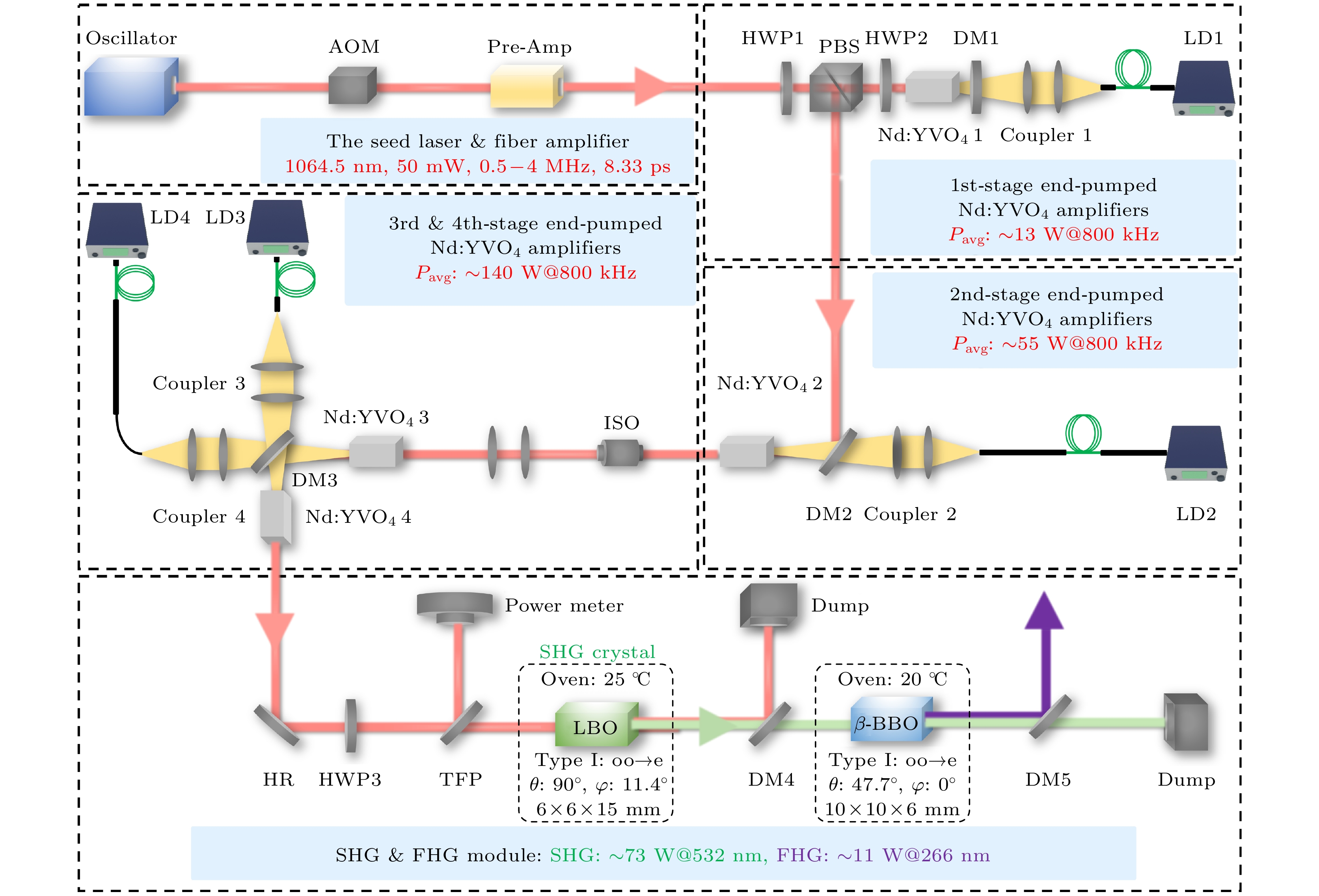
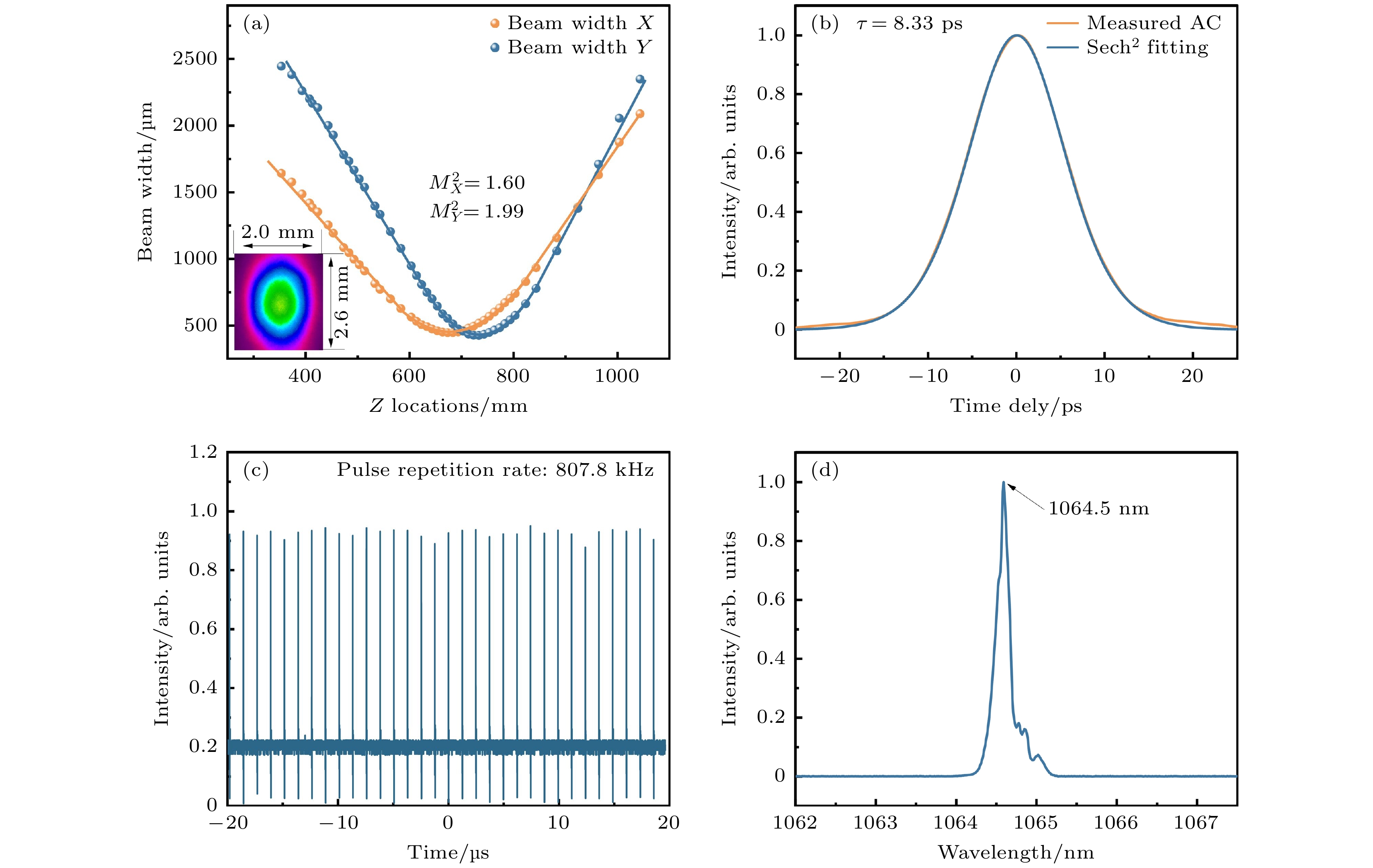
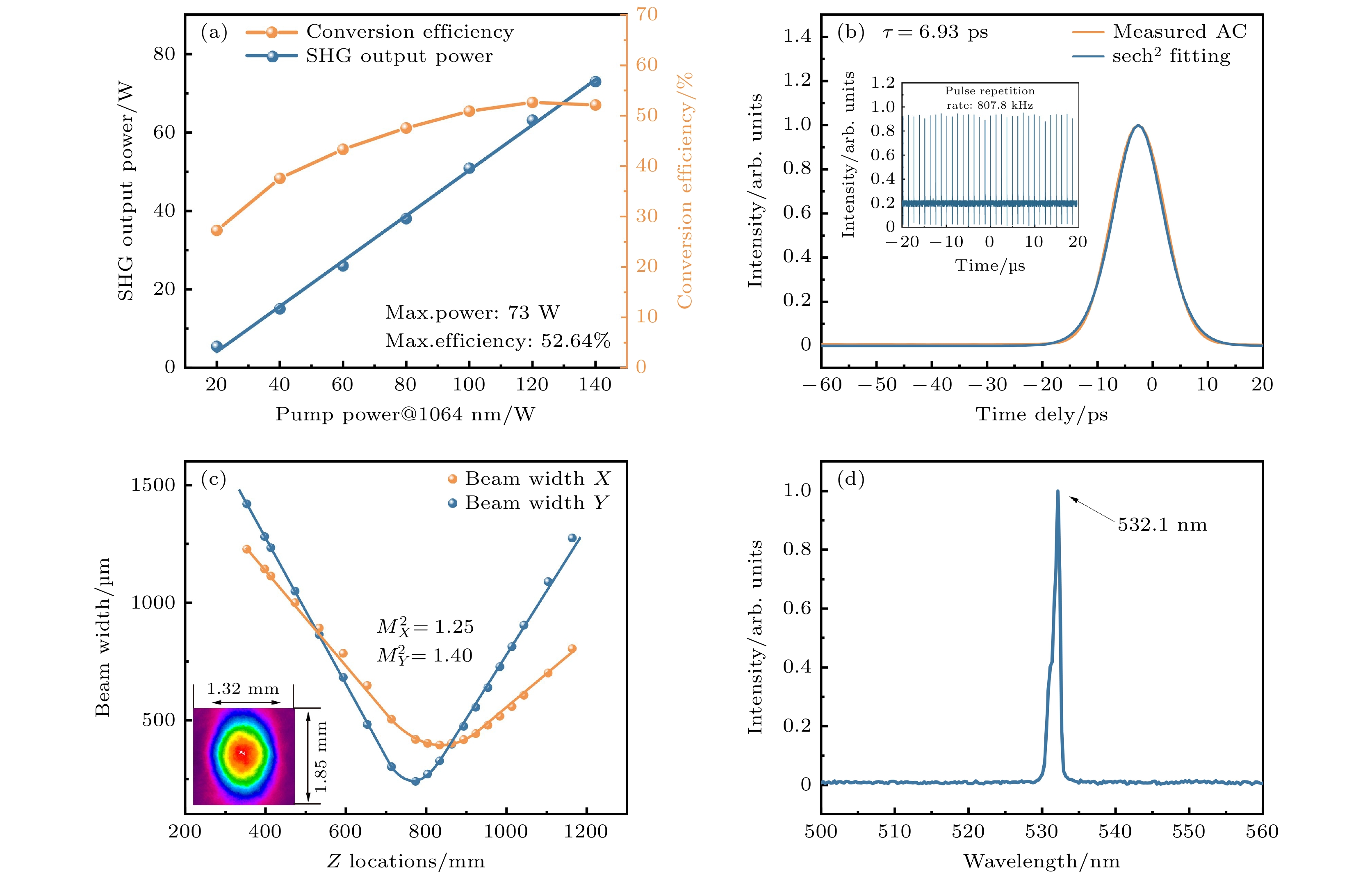
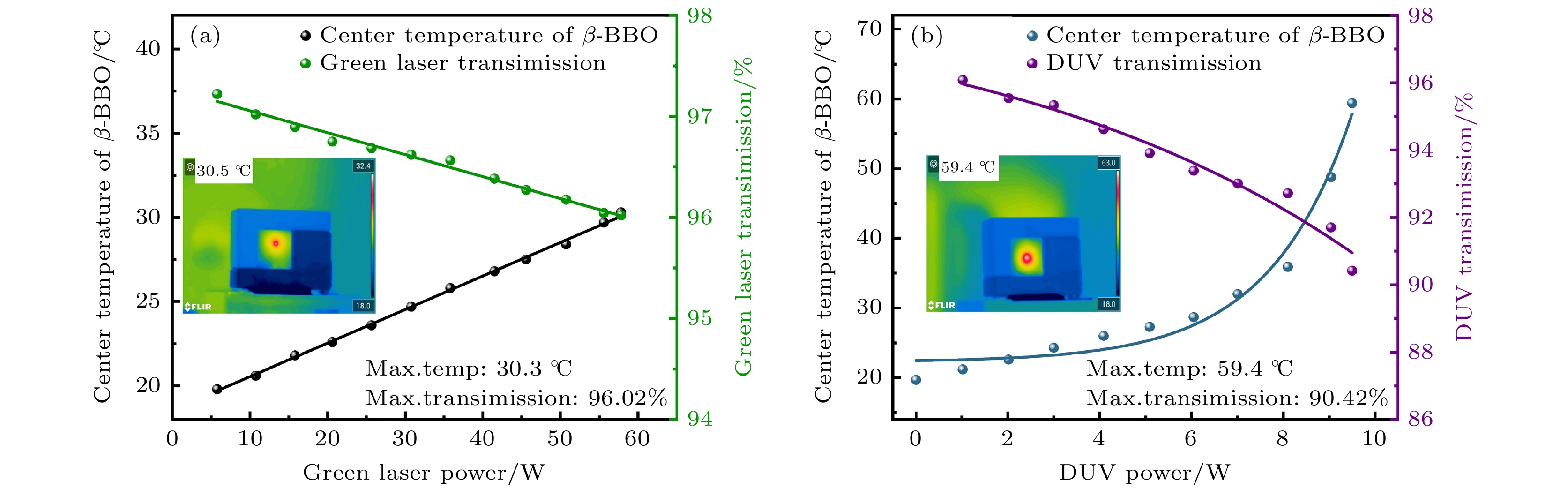
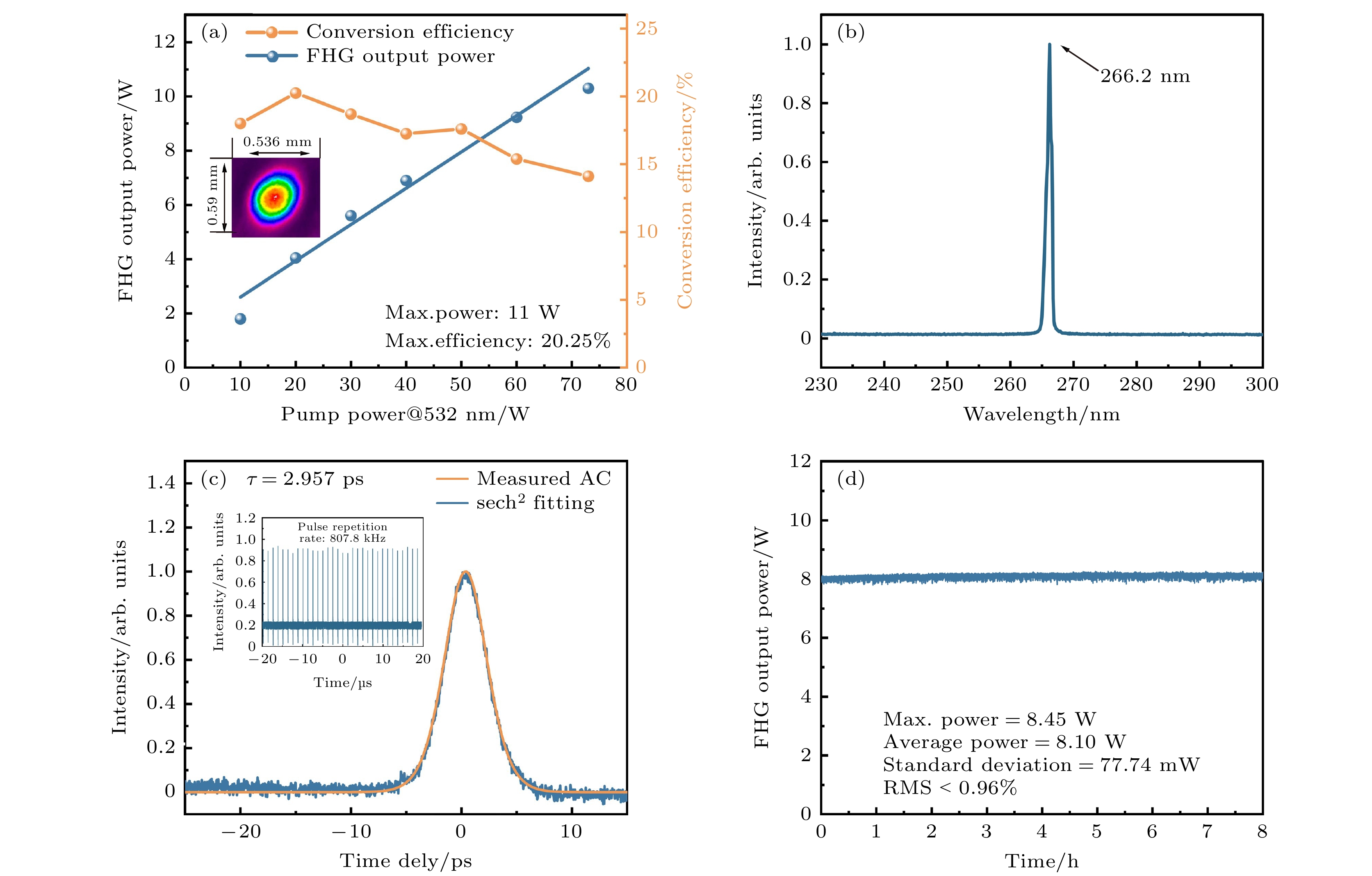
Deep ultraviolet (DUV) picosecond lasers, operating in a 200–280 nm wavelength range, possess significant advantages, such as high photon energy and high resolution. These attributes make them highly promising for applications like semiconductor detection, ensuring the production of high-quality, defect-free semiconductor devices, as well as for advanced scientific research and industrial processing. High-power DUV picosecond lasers are typically generated via nonlinear frequency conversion of infrared lasers based on master oscillator power amplifier (MOPA) configurations. Among various DUV laser technologies, systems based on β-BBO crystals are particularly valuable due to their simple design and cost-effectiveness. However, the linear two-photon absorption, as well as the formation of dynamic color centers in BBO, are significant limitations for high-power, high-repetition-rate UV radiation, leading to thermal effects. Hence, it is important to carefully study the performance characteristics of BBO for high-power, high-repetition-rate pulse generation in the UV at 266 nm.This study presents a high-power, all-solid-state DUV picosecond laser developed using a 1064 nm Nd:YVO4 MOPA amplification architecture. In this experimental setup, a 50 mW, 7.8 ps, 20 MHz all-fiber SESAM mode-locked laser is used as a seed source, achieving 140 W in amplified output power 8.33 ps in pulse duration at 1064 nm via MOPA. In the nonlinear frequency conversion process, the amplified laser pulses are initially focused onto an LBO crystal for secondary harmonic generation (SHG). Precise temperature control of the LBO crystal can generate a 532 nm output with 73 W in power and 6.93 ps in pulse duration, while achieving 52.64% in conversion efficiency. Two-photon absorption is a key factor limiting the further enhancement of deep ultraviolet (DUV) laser power. By investigating the transmittance and temperature rise of a high-power dual-wavelength laser in a β-BBO crystal, the results indicate that strong two-photon absorption occurs under high-power DUV irradiation. This absorption induces significant thermal effects, resulting in a temperature gradient within the crystal and leading to phase mismatch, which severely affects frequency conversion efficiency and output stability.To solve this problem and further increase the DUV output power, a large-spot pumping scheme (spot size: 1.5 mm × 1 mm) is adopted in this work. Under a pump peak power density of less than 1.11 GW/cm2, the thermal gradient caused by two-photon absorption is effectively suppressed, achieving maximum fourth-harmonic output power of 11 W. The corresponding single-pulse energy reaches 13.75 μJ. The root mean square (RMS) jitter, measured in an 8-hour period, is less than 0.96%.This all-solid-state DUV laser demonstrates excellent performance characteristics, including high average power, stability, resolution, and peak power, making it a strong candidate for applications requiring efficient and high-precision processing or detection. By further increasing the pump power and optimizing the temperature control system, the output power of the laser can be significantly enhanced, thereby broadening its applicability and competitiveness in high-end fields such as semiconductor manufacturing, advanced research, and industrial processing.














 DownLoad:
