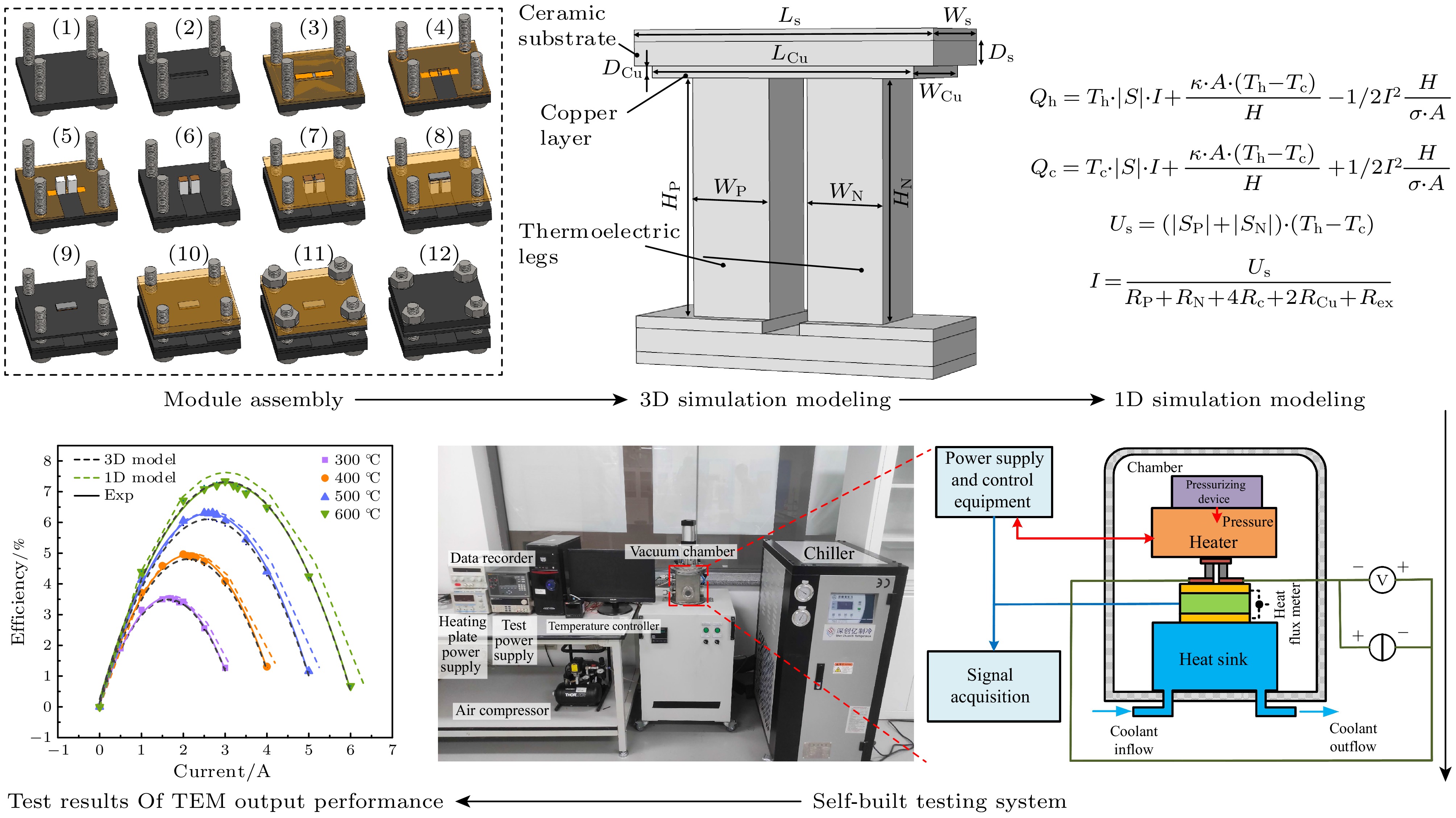
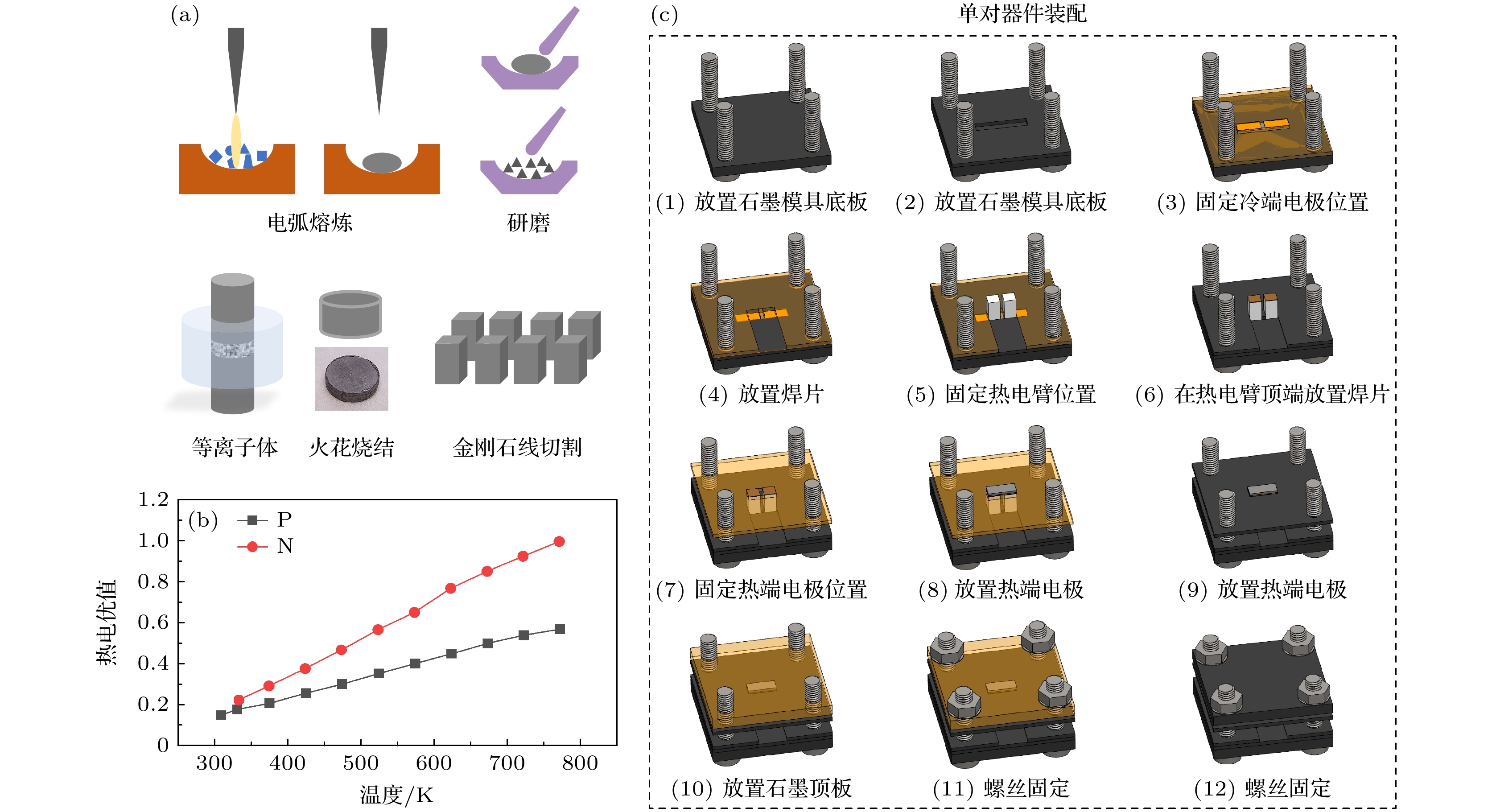
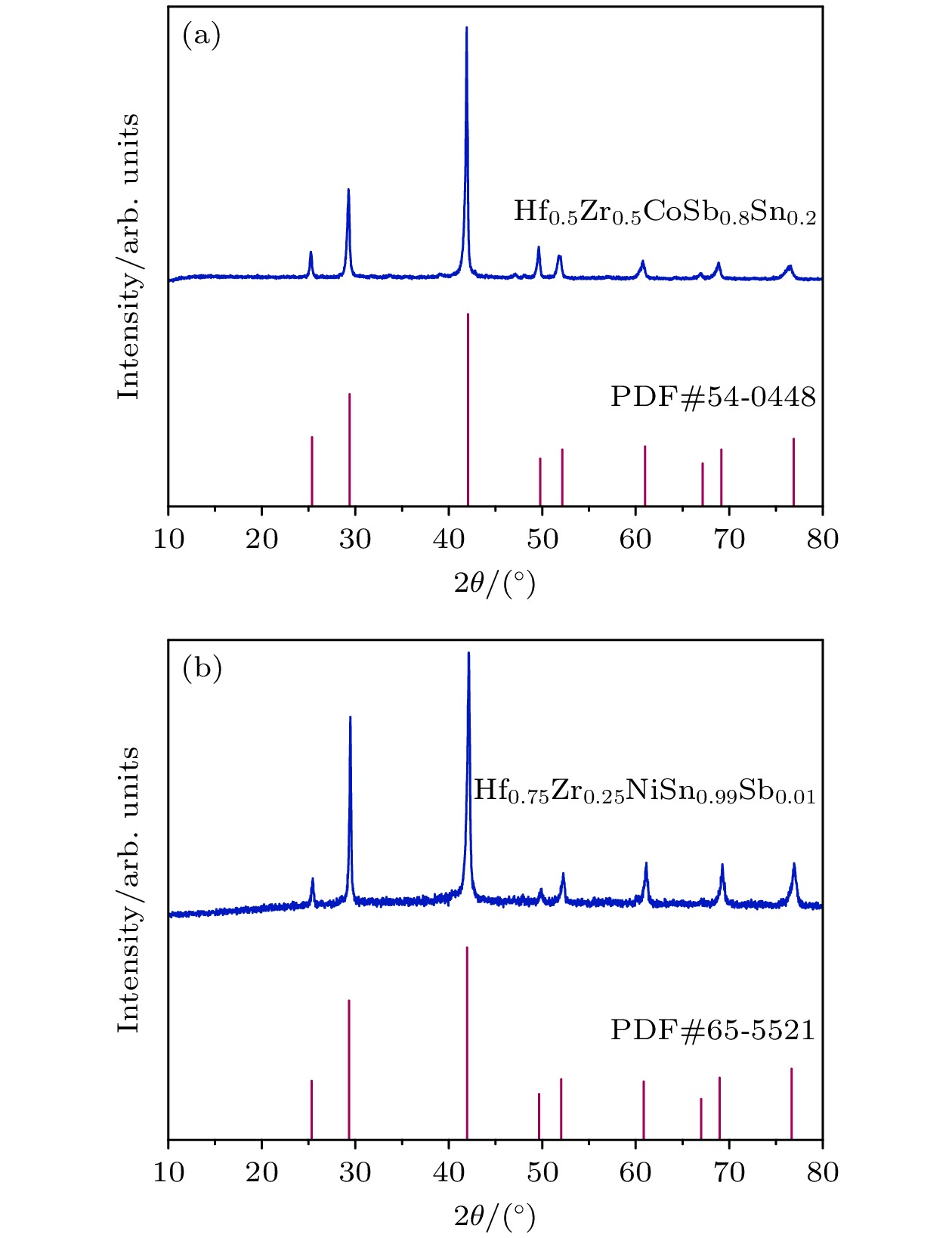
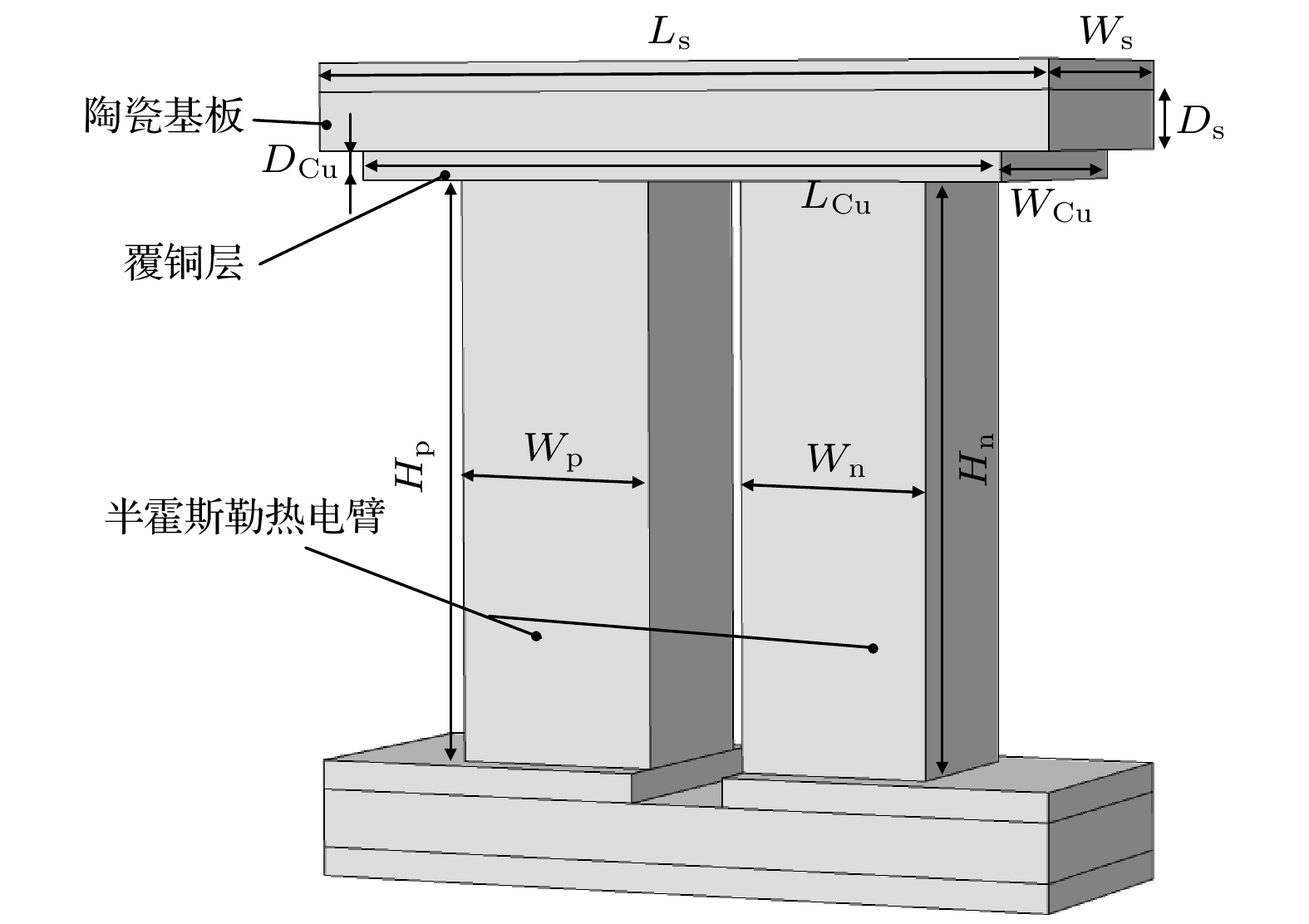
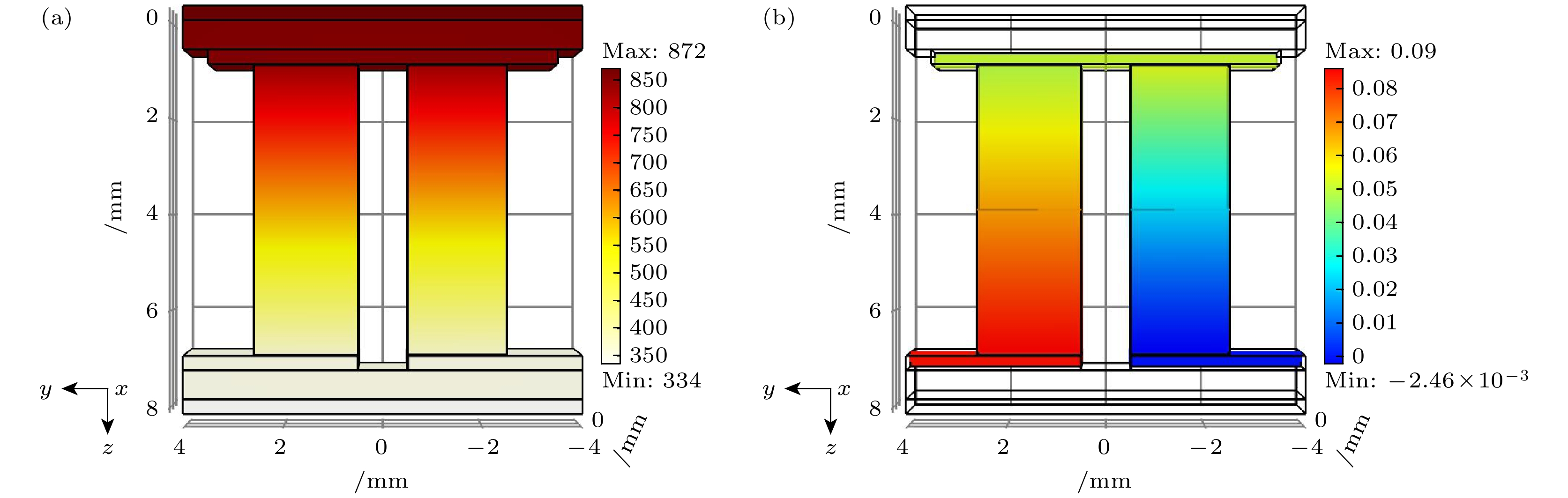
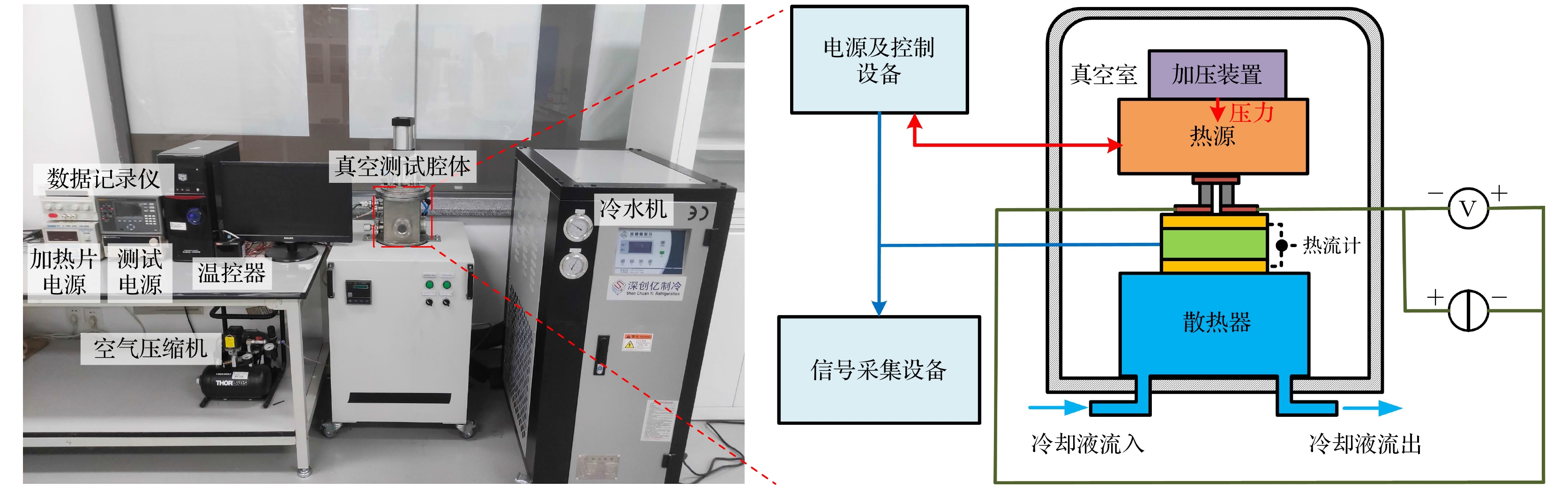
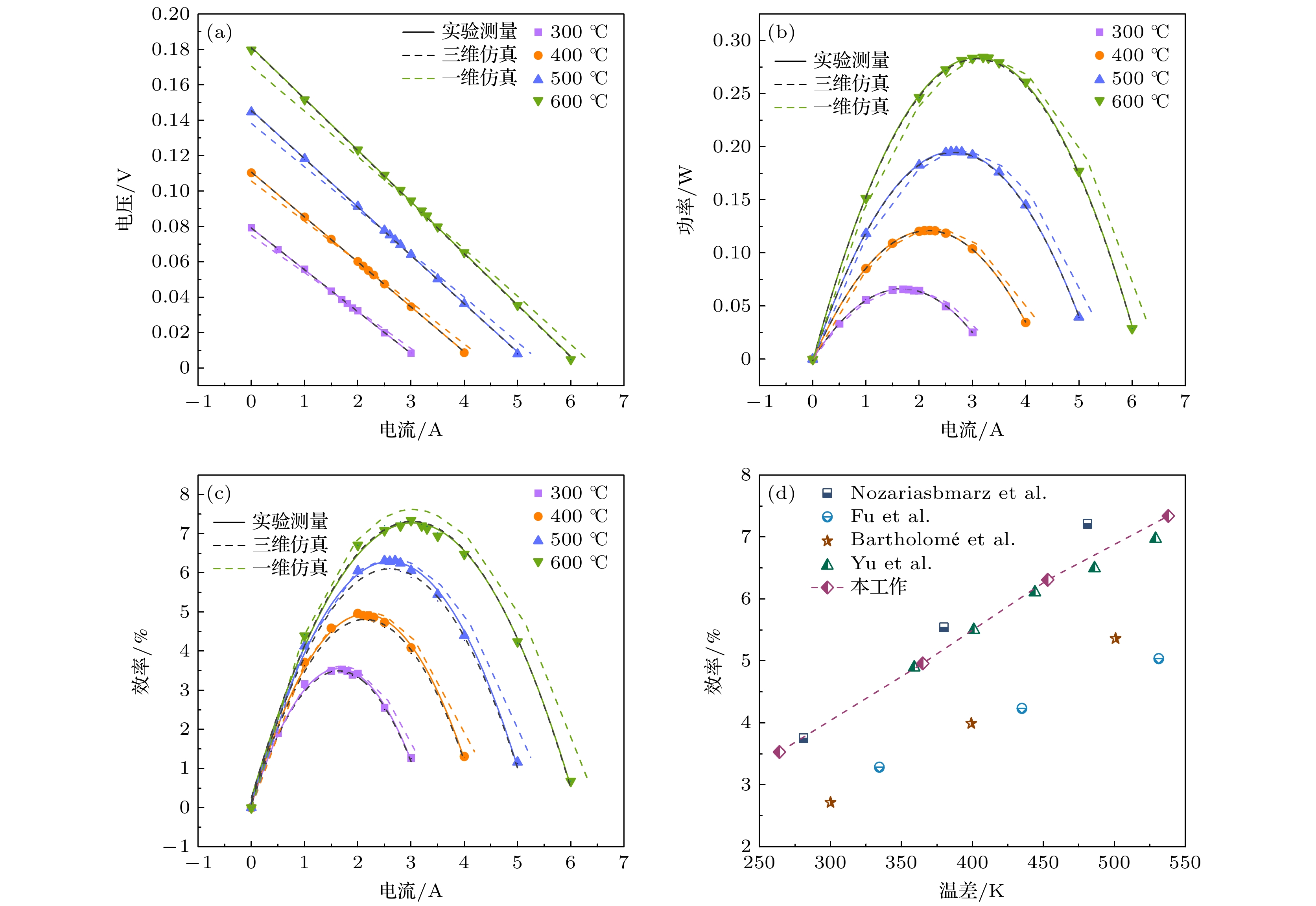
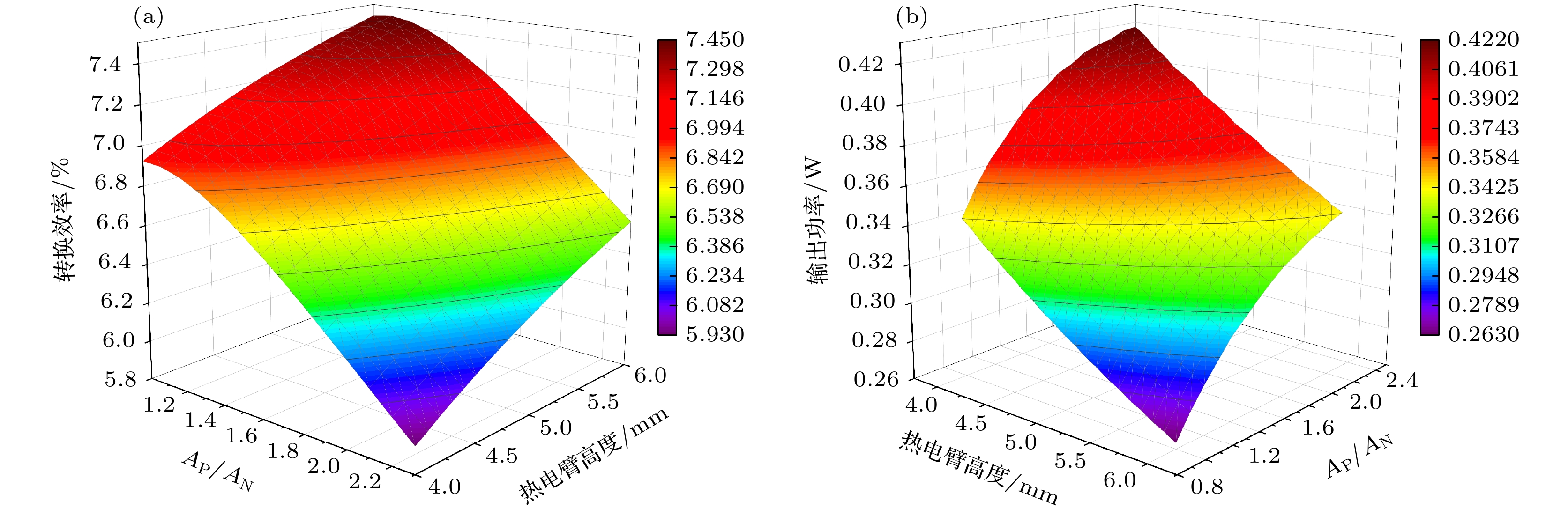
Due to the ability to directly convert thermal energy into electrical energy, thermoelectric devices operating in the medium-to-high temperature range hold significant potential for applications such as deep space exploration and industrial waste heat recovery. Among candidate materials, half-Heusler alloys have emerged as promising options for device fabrication in this temperature range, owing to their excellent mechanical properties, thermal stability, and favorable thermoelectric performance. However, research on half-Heusler-based thermoelectric devices remains far behind study of the materials, which limits their large-scale industrial application. In this study, high-performance P-type Hf0.5Zr0.5CoSb0.8Sn0.2 and N-type Hf0.75Zr0.25NiSn0.99Sb0.01 half-Heusler alloys are firstly synthesized. Then the single-pair thermoelectric module is successfully brazed and assembled by using the graphite mold designed by ourselves. After that, three-dimensional (3D) finite element modeling and one-dimensional (1D) numerical modeling are conducted to simulate the module behaviors, and their results are highly consistent with experimental measurements, thereby validating the accuracy of the simulation models. Using the established simulation models, the influence of geometric parameters on module performance is investigated. The result shows that optimizing the leg height and cross-sectional area ratio is critical for achieving maximum conversion efficiency. Additionally, a self-integrated comprehensive testing system (Model: TE-X-MS) is developed to systematically characterize key thermoelectric properties, including output power and conversion efficiency. The fabricated device achieves a maximum output power of 0.28 W and a peak conversion efficiency of 7.34% at a temperature difference of 538 K, which is comparable to the best-performing devices reported to date. These results provide valuable reference for fabricating, modeling, and characterizing the half-Heusler thermoelectric devices in practical applications.













 DownLoad: CSV

 DownLoad:
