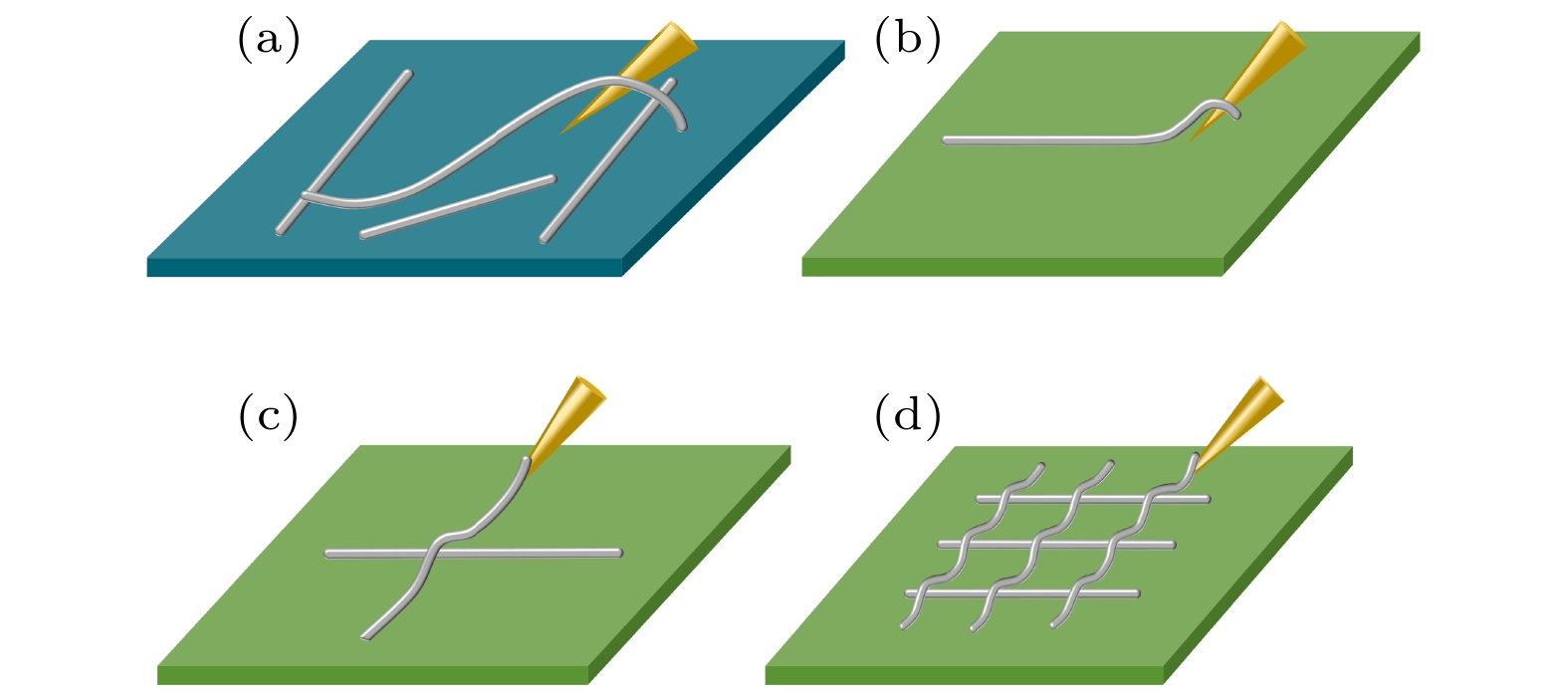
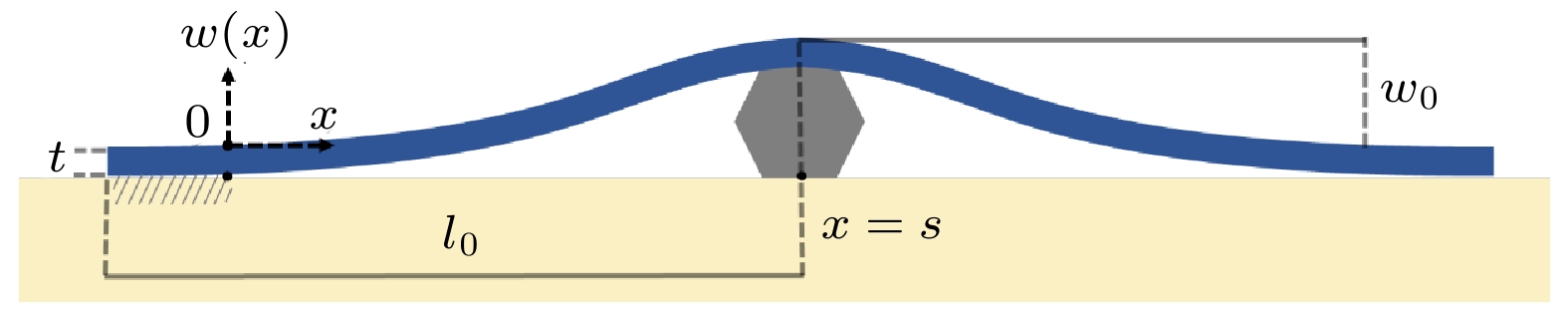
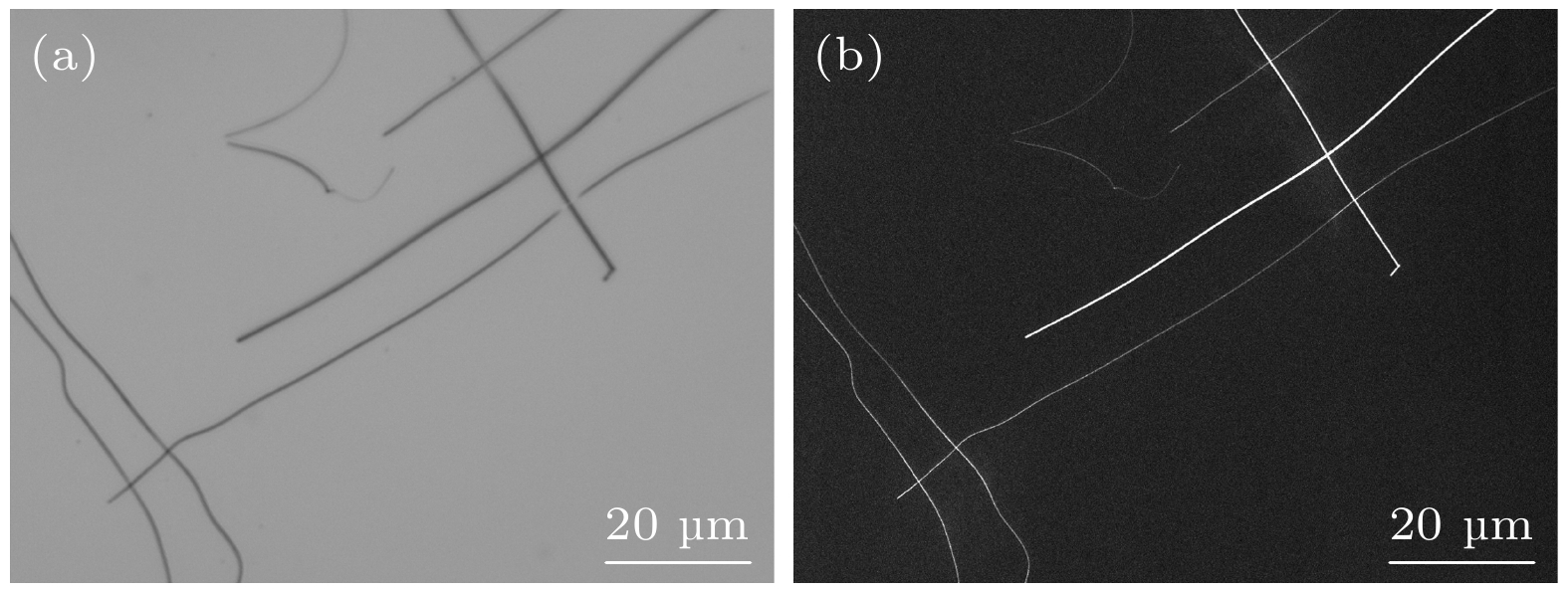
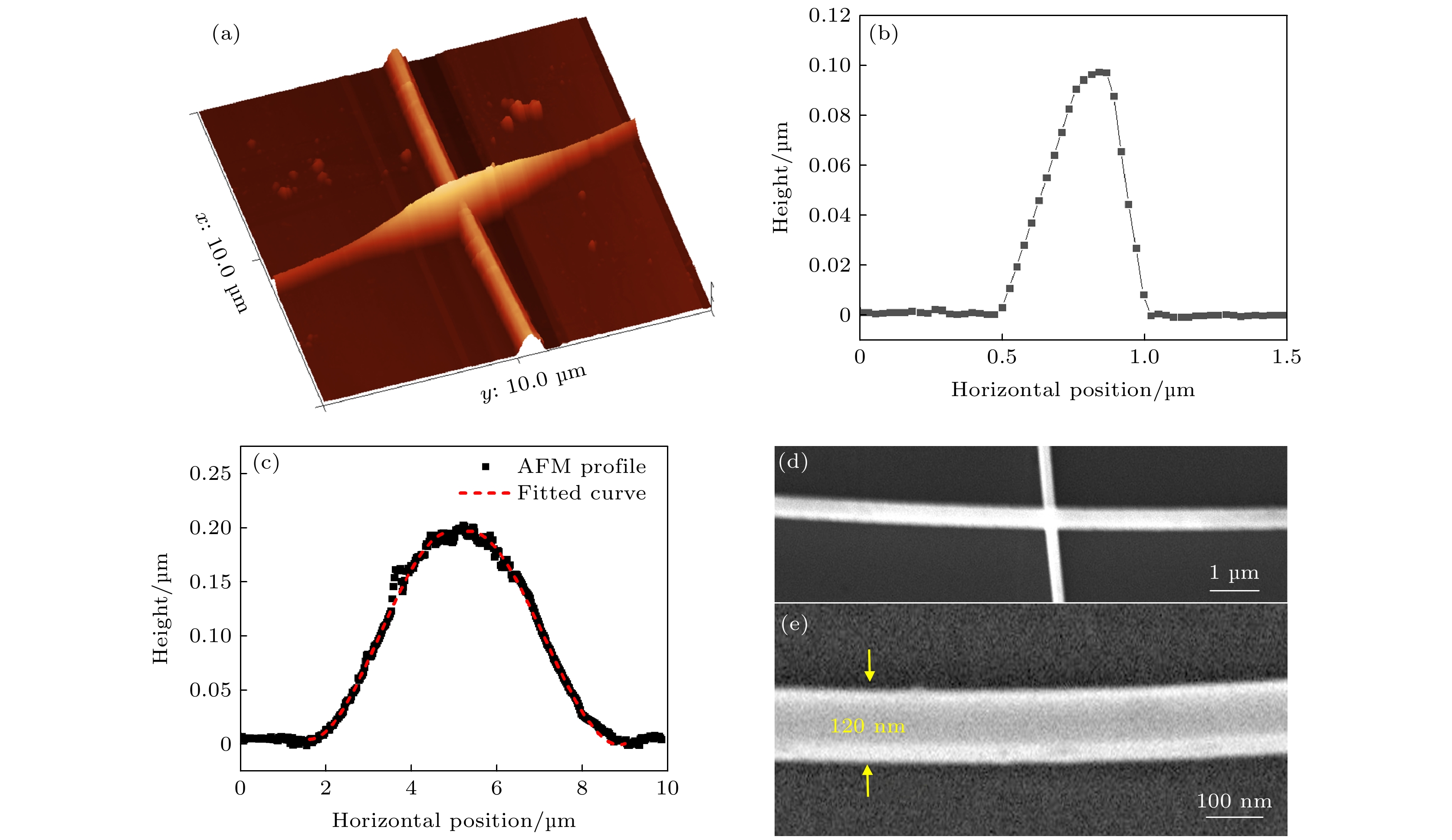
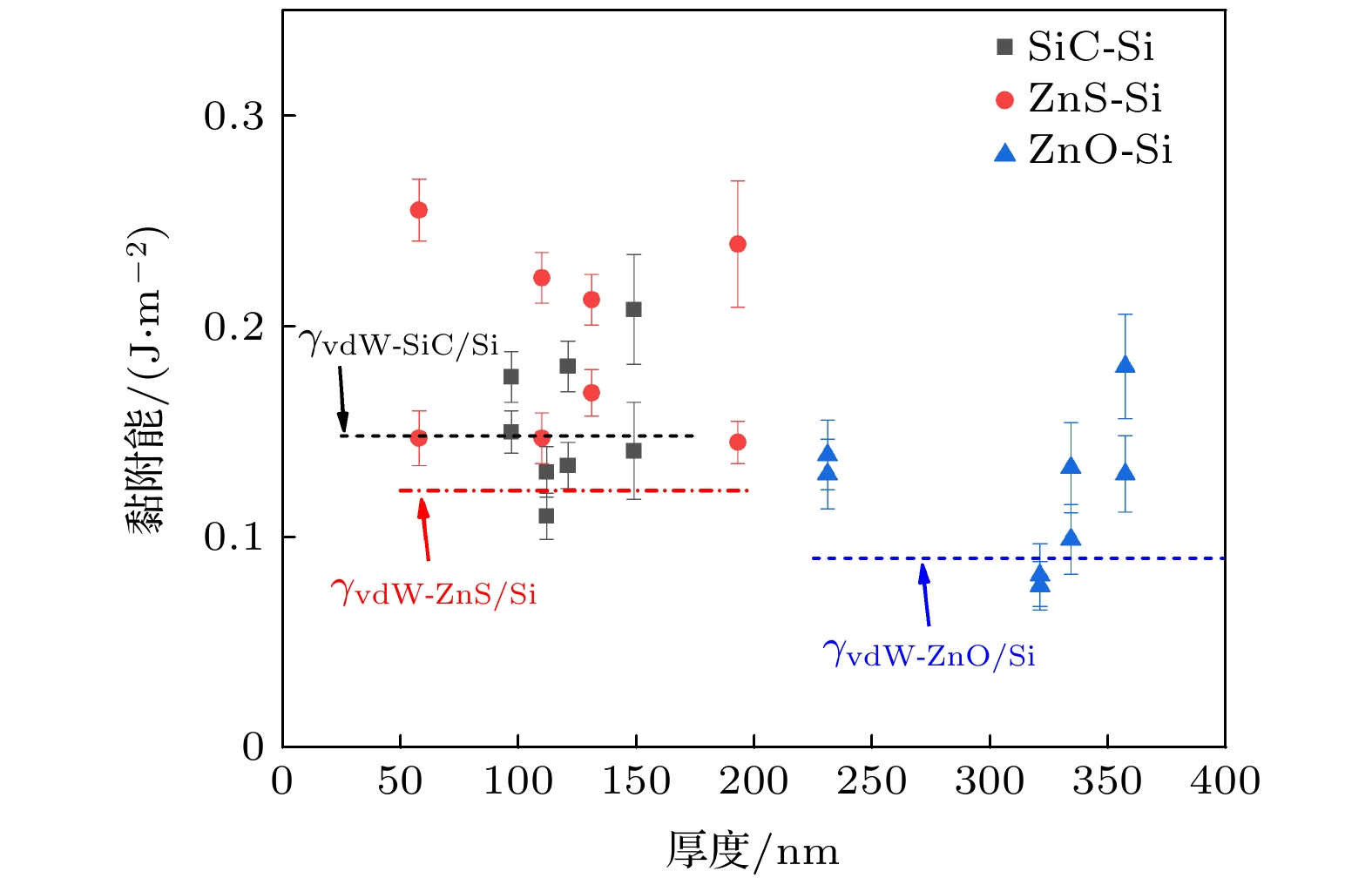
Adhesion at the nanowire-substrate interface plays a critical role in determining the performance, integration density, and long-term reliability of micro/nano devices. However, existing measurement techniques, such as peeling tests based on atomic force microscopy and in-situ electron microscopy techniques, often suffer from operational complexity, limited environmental applicability, and large measurement uncertainties. To solve these problems, this study proposes a cross-stacked bridge testing method based on optical microscopy nanomanipulation (OMNM), which can directly and quantitatively measure nanowire-substrate interfacial adhesion energy under ambient conditions. In this method, nanowires are precisely stacked on the target substrate to form a grid structure, where miniature bridges spontaneously appear at the intersections. The bridge geometry is governed by the mechanical balance between nanowire bending deformation and interfacial adhesion. By combining Euler–Bernoulli beam theory with the principle of energy conservation, a quantitative model is established to correlate arch geometry with adhesion energy, thereby realizing reliable measurement. Using this method, we measure the adhesion energies of SiC, ZnO, and ZnS nanowires on Si substrates. The SiC/Si system yields an adhesion energy of (0.154 ± 0.030) J/m2, which is in excellent agreement with the van der Waals (vdW) theoretical value (~0.148 J/m2), confirming that its interfacial behavior is dominated by vdW forces. In contrast, the measured adhesion energies for ZnO/Si ((0.120 ± 0.034) J/m2) and ZnS/Si ((0.192 ± 0.043) J/m2) are significantly higher than their corresponding vdW predictions (0.090 J/m2 and 0.122 J/m2, respectively). This discrepancy is attributed to surface polarization in ZnO and ZnS nanowires, which induces additional electrostatic attraction and thus enhances interfacial adhesion. These findings not only reveal the coupling mechanism between vdW forces and electrostatic interactions in polar nanowire systems but also provide new experimental evidence for understanding complex interfacial phenomena. The proposed OMNM-based cross-stacked bridge testing method offers advantages of operational simplicity, high accuracy, and broad applicability. In addition to nanowires, it can be extended to other low-dimensional nanostructures, such as nanotubes and two-dimensional materials. Looking forward, this approach holds promise as an efficient platform for building adhesion energy databases of realistic systems and for advancing mechanistic insights into interfacial adhesion. Furthermore, it can provide valuable guidance for the design, optimization, and reliability evaluation of next-generation nanoelectronic and optoelectronic devices, thereby contributing to micro/nano fabrication and functional device engineering.














 DownLoad:
