













-
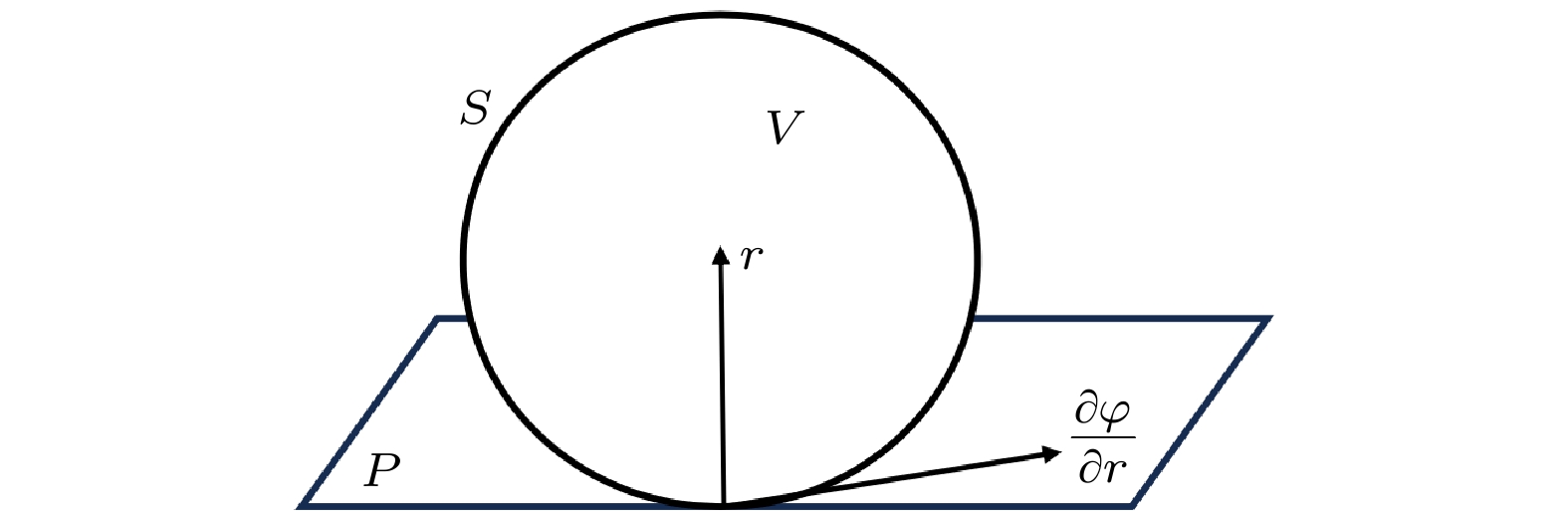
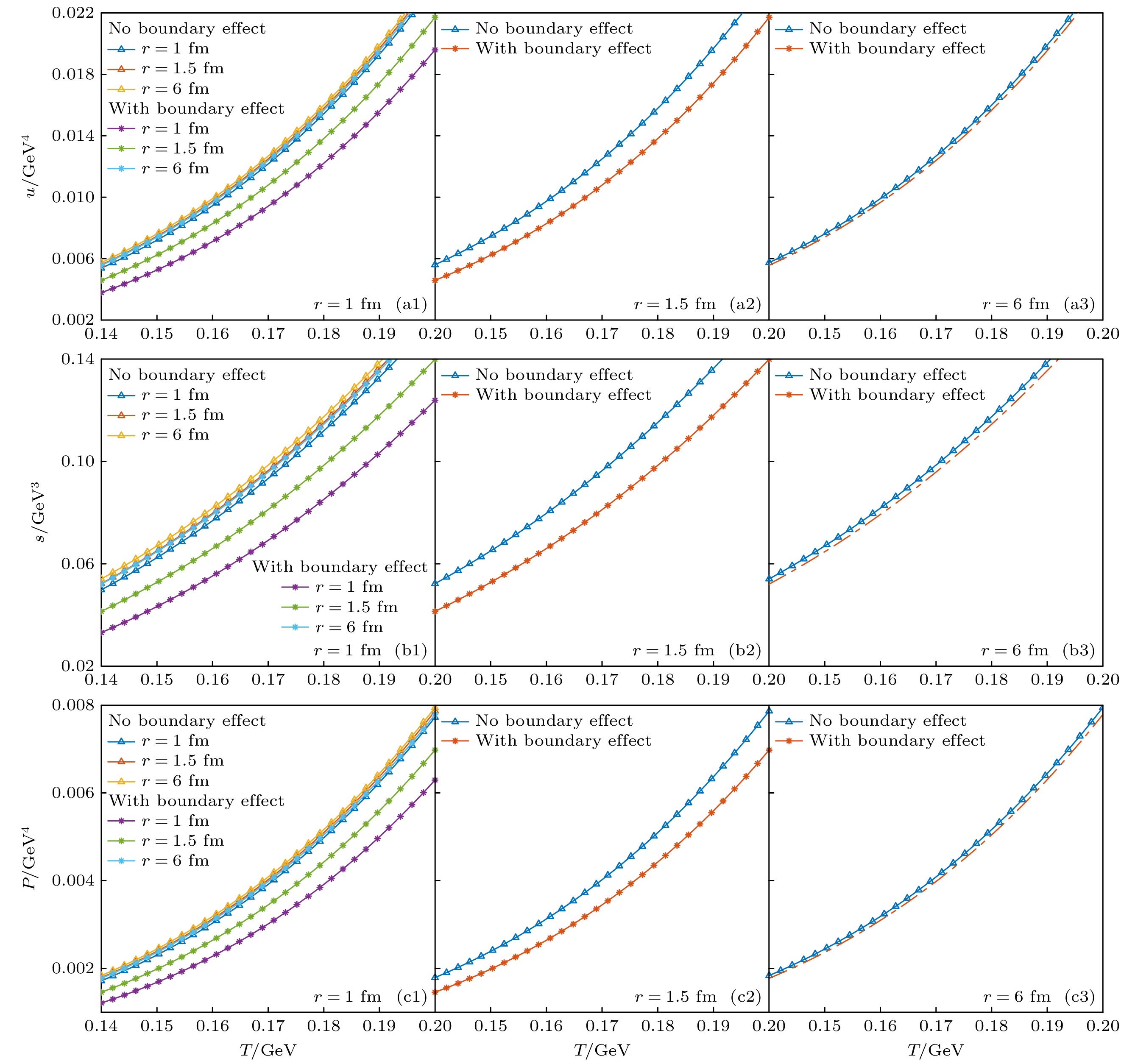
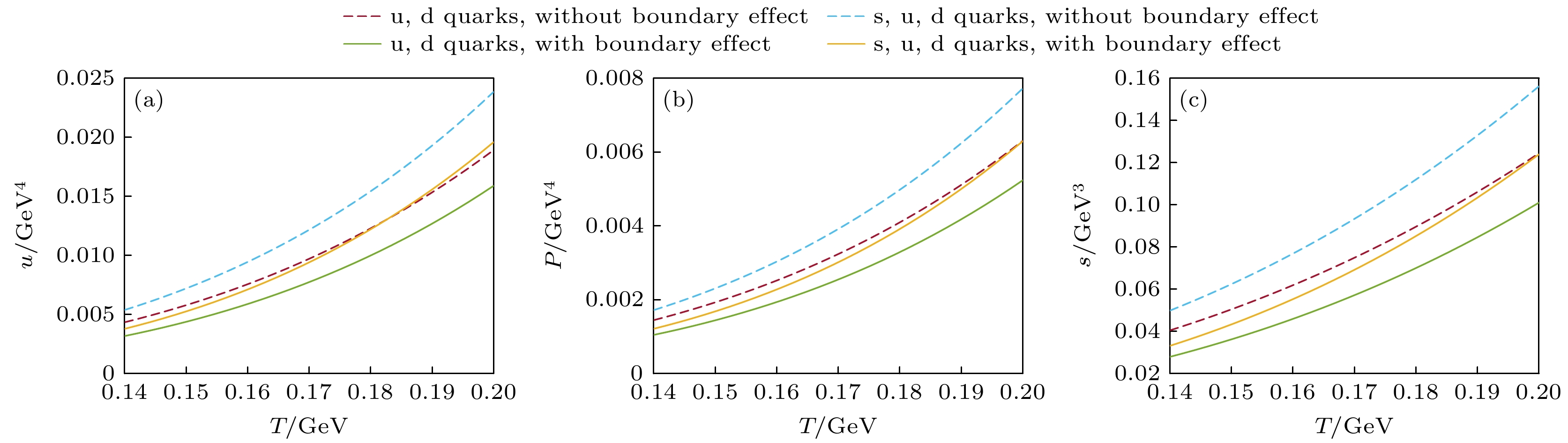
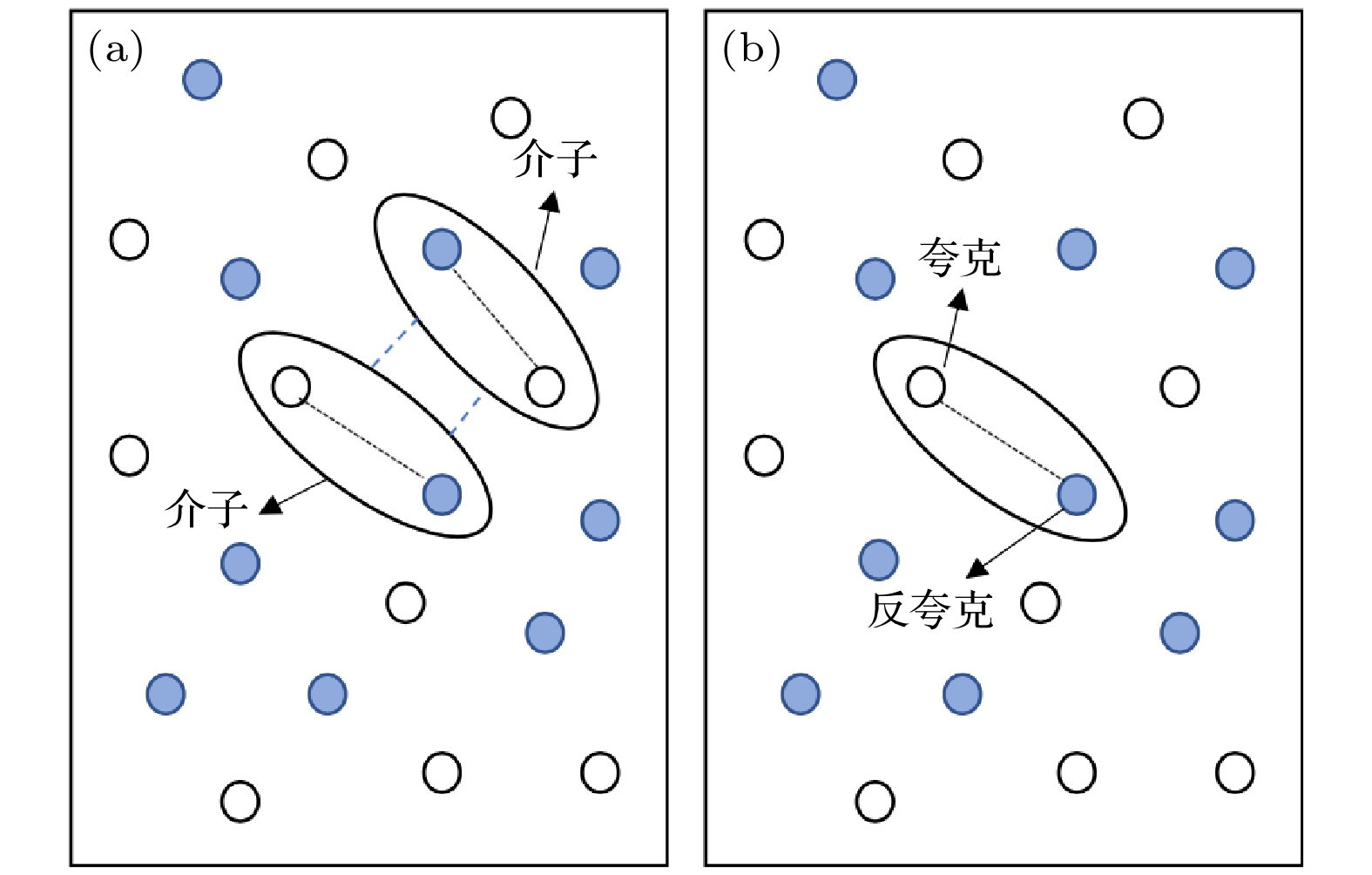
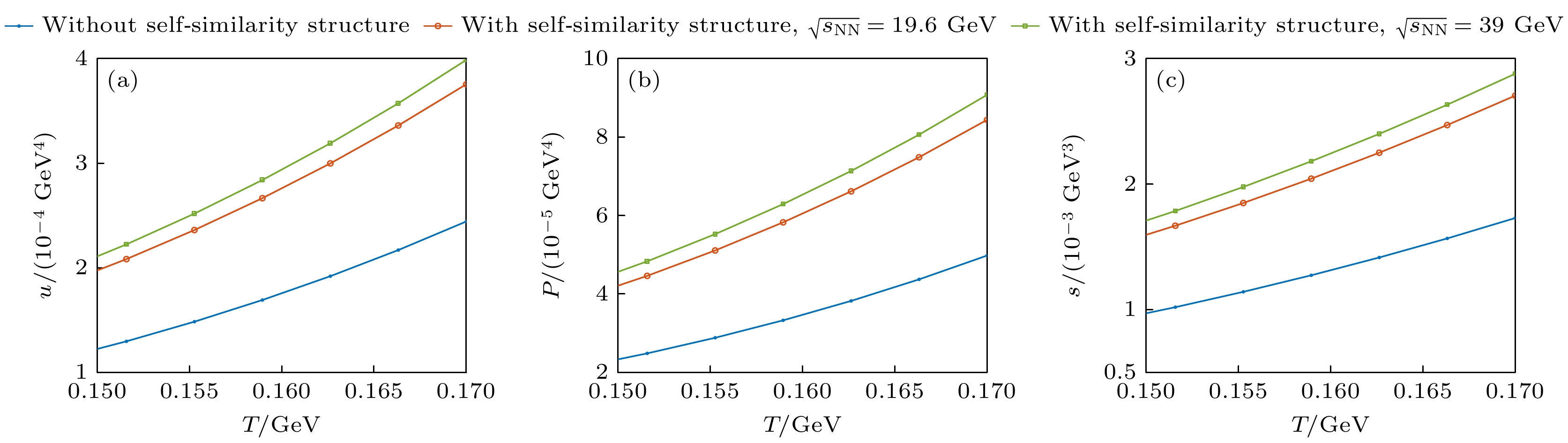
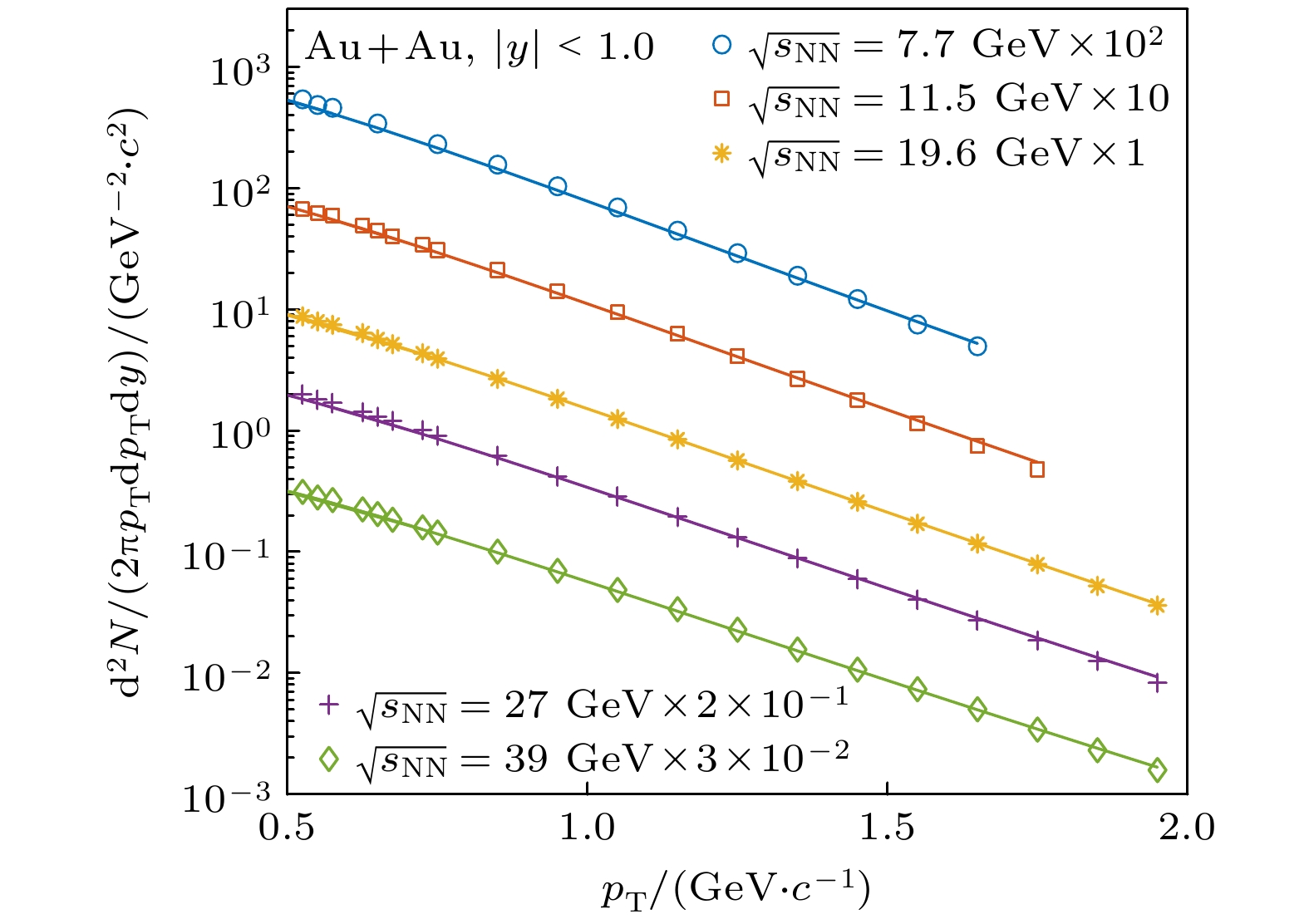
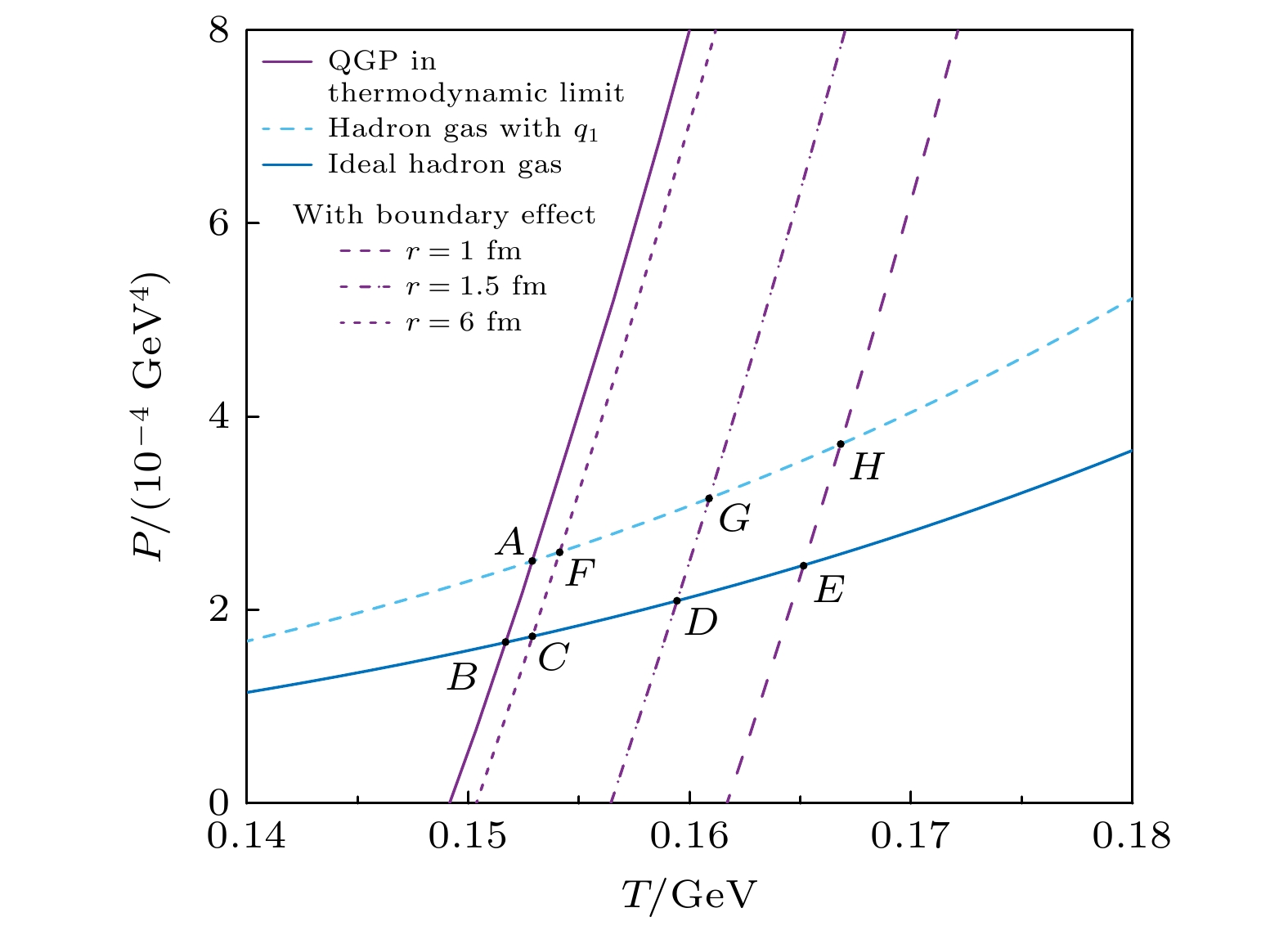
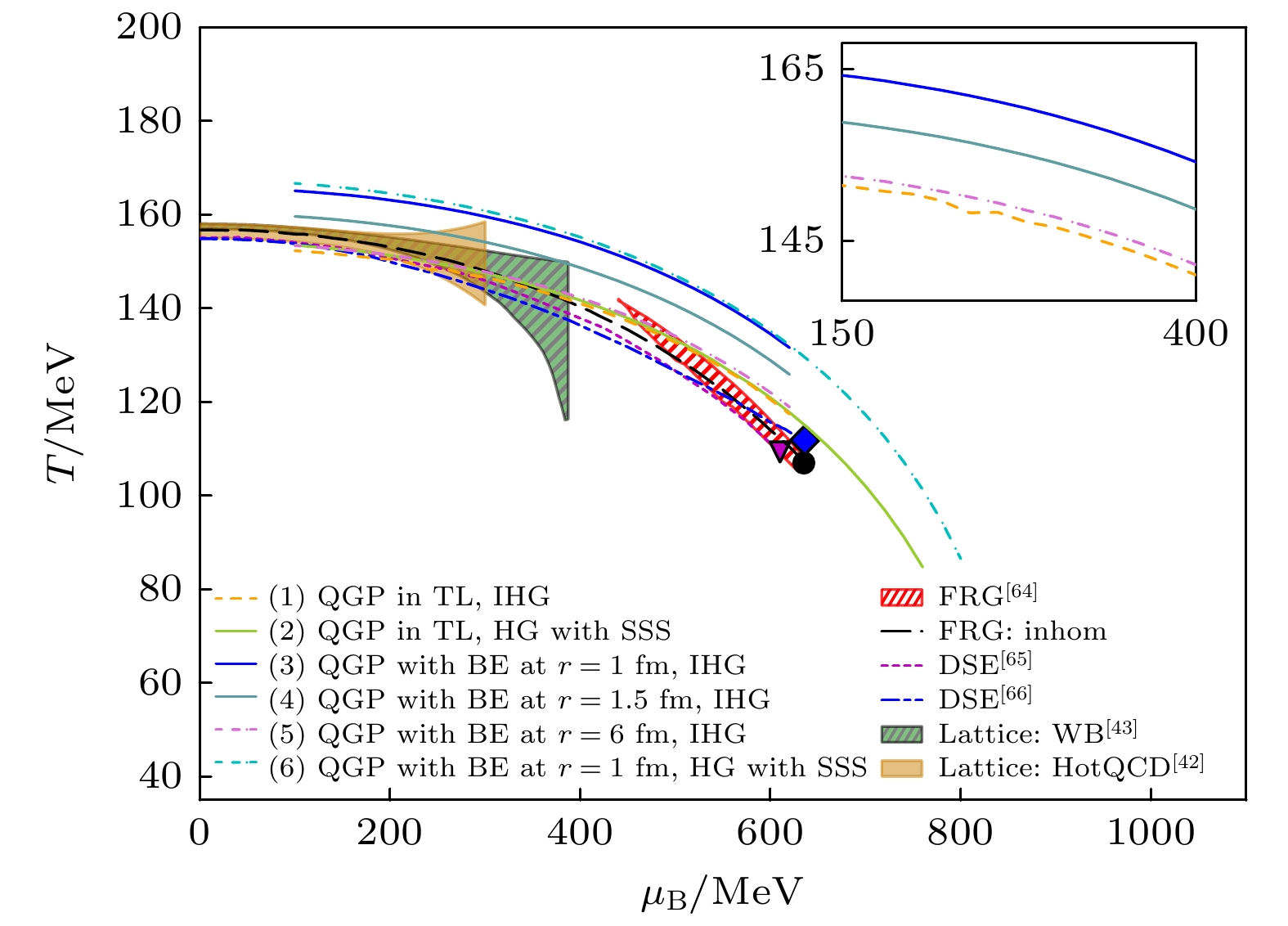
We investigate the boundary effect of small-scale s quark matter and the self-similarity structure influence of strange hadrons in the hadron gas on quark-gluon plasma (QGP)-hadron phase transition. In this study, the multiple reflection expansion method is used to investigate the boundary effect of QGP droplets containing s quarks. The calculation reveals that under the influence of boundary effect, small-scale s quark matter exhibits that energy density, entropy density, and pressure are all lower. In the hadron phase, there exists a two-body self-similarity structure between K mesons and neighboring π mesons, subjected to collective flow, quantum correlations, and strong interactions. By using two-body fractal model to study the self-similarity structure of the K meson in meson and quark aspects, it is found that the self-similarity structure of the K meson exists in hadron phase, resluting in an increase in the energy density, entropy density, and pressure of the K meson. Furthermore, under the influence of self-similarity structure, the derived transverse momentum spectrum of K meson shows excellent agreement with experimental data (
Fig. (a) ). This study predicts that in the HIAF energy region, the self-similarity structure factor of K meson $ q_{1} $ approaches 1.042. Additionaly, under the combined influence of boundary effects and self-similarity structure of K and π mesons, the phase transition temperature of s quark matter increases (Fig. (b) ). Morover, if the boundary of s quark matter is more curved, the increase of phase transition temperature becomes more pronounced compared to the effect of self-similarity structure alone.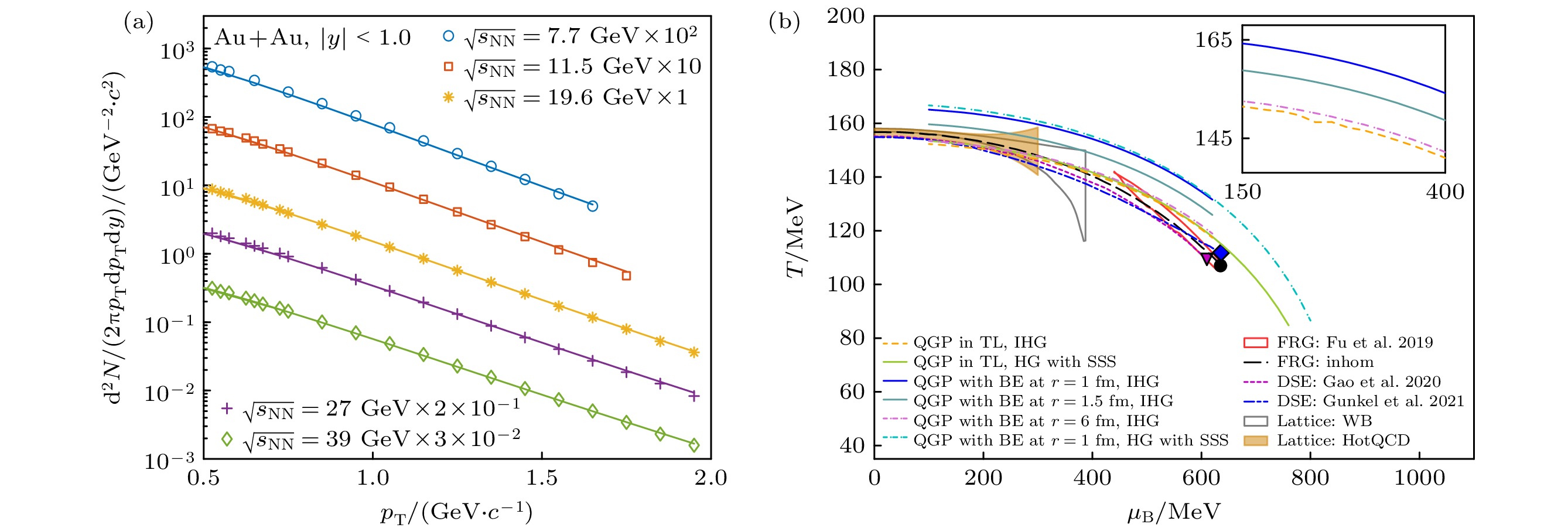
-
Keywords:
- s quark /
- boundary effect /
- self-similarity structure /
- quantum chromodynamics phase transition
[1] [2] [3] [4] [5] [6] [7] [8] [9] [10] [11] [12] [13] [14] [15] [16] [17] [18] [19] [20] [21] [22] [23] [24] [25] [26] [27] [28] [29] [30] [31] [32] [33] [34] [35] [36] [37] [38] [39] [40] [41] [42] [43] [44] [45] [46] [47] [48] [49] [50] [51] [52] [53] [54] [55] [56] [57] [58] [59] [60] [61] [62] [63] [64] [65] [66] -
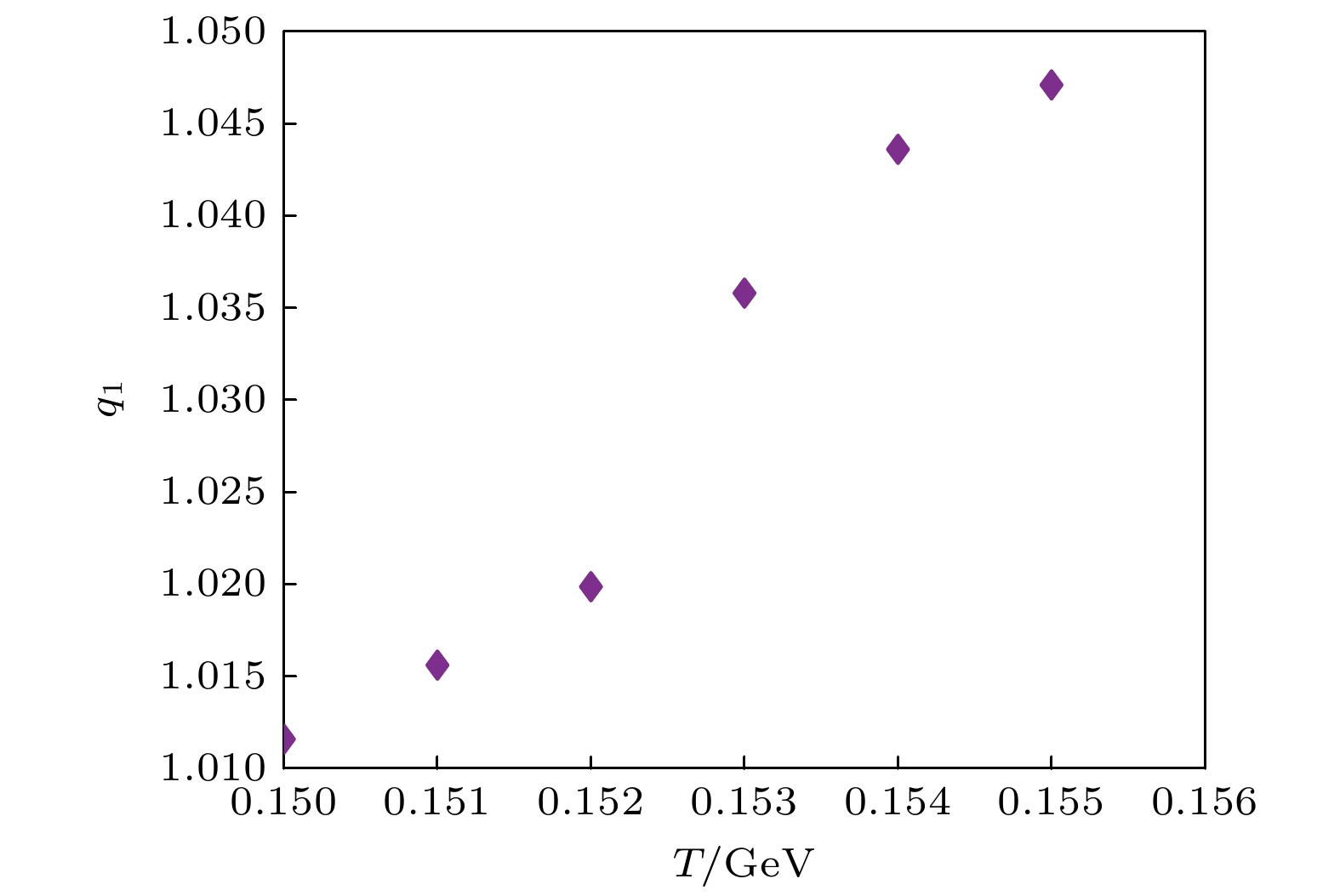
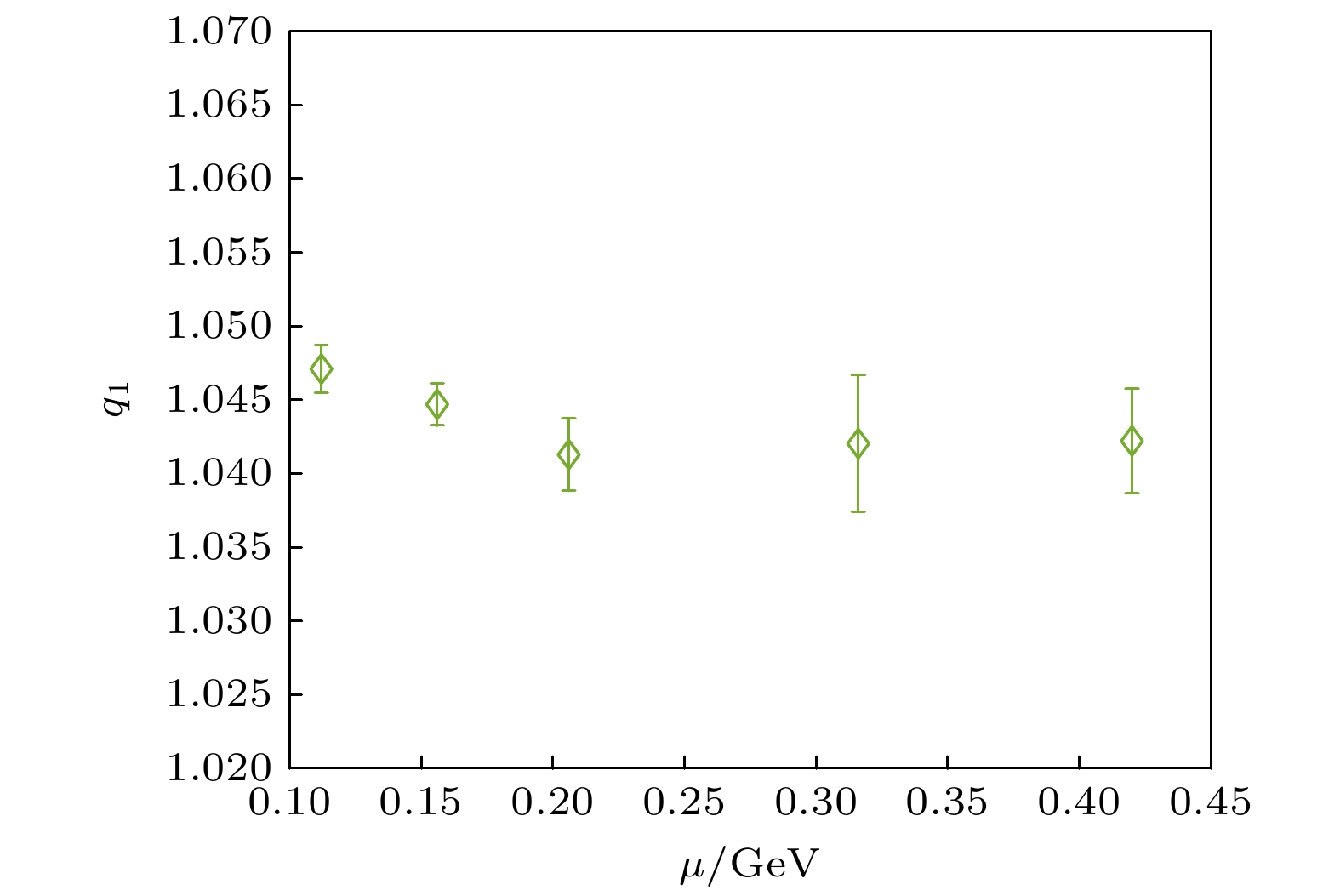
$ \sqrt{s_{\text{NN}}}/\text{GeV} $ $ T / \text{GeV} $ $ \mu_{\text{B}} / \text{GeV} $ $ r_{\text{min}}/\text{fm} $ $ r_{0}/\text{fm} $ $ q_{1} $ $ q_{2} $ 7.7 0.1424 $ \pm $ 0.00137 0.42 0.11 6.3 1.04222 $ \pm $ 0.003525 1.13941 $ \pm $ 0.010415 11.5 0.1483 $ \pm $ 0.00142 0.316 0.11 6.5 1.04204 $ \pm $ 0.004635 1.12682 $ \pm $ 0.01063 19.6 0.1527 $ \pm $ 0.00147 0.206 0.09 6.75 1.04129 $ \pm $ 0.002445 1.14432 $ \pm $ 0.005105 27 0.1541 $ \pm $ 0.00148 0.156 0.1 6.8 1.04470 $ \pm $ 0.001435 1.12251 $ \pm $ 0.00039 39 0.155 $ \pm $ 0.00149 0.112 0.1 6.85 1.04710 $ \pm $ 0.001615 1.11388 $ \pm $ 0.00012  DownLoad: CSV
-
[1] [2] [3] [4] [5] [6] [7] [8] [9] [10] [11] [12] [13] [14] [15] [16] [17] [18] [19] [20] [21] [22] [23] [24] [25] [26] [27] [28] [29] [30] [31] [32] [33] [34] [35] [36] [37] [38] [39] [40] [41] [42] [43] [44] [45] [46] [47] [48] [49] [50] [51] [52] [53] [54] [55] [56] [57] [58] [59] [60] [61] [62] [63] [64] [65] [66]

 DownLoad:
Catalog
Metrics
- Abstract views: 1761
- PDF Downloads: 139
- Cited By: 0