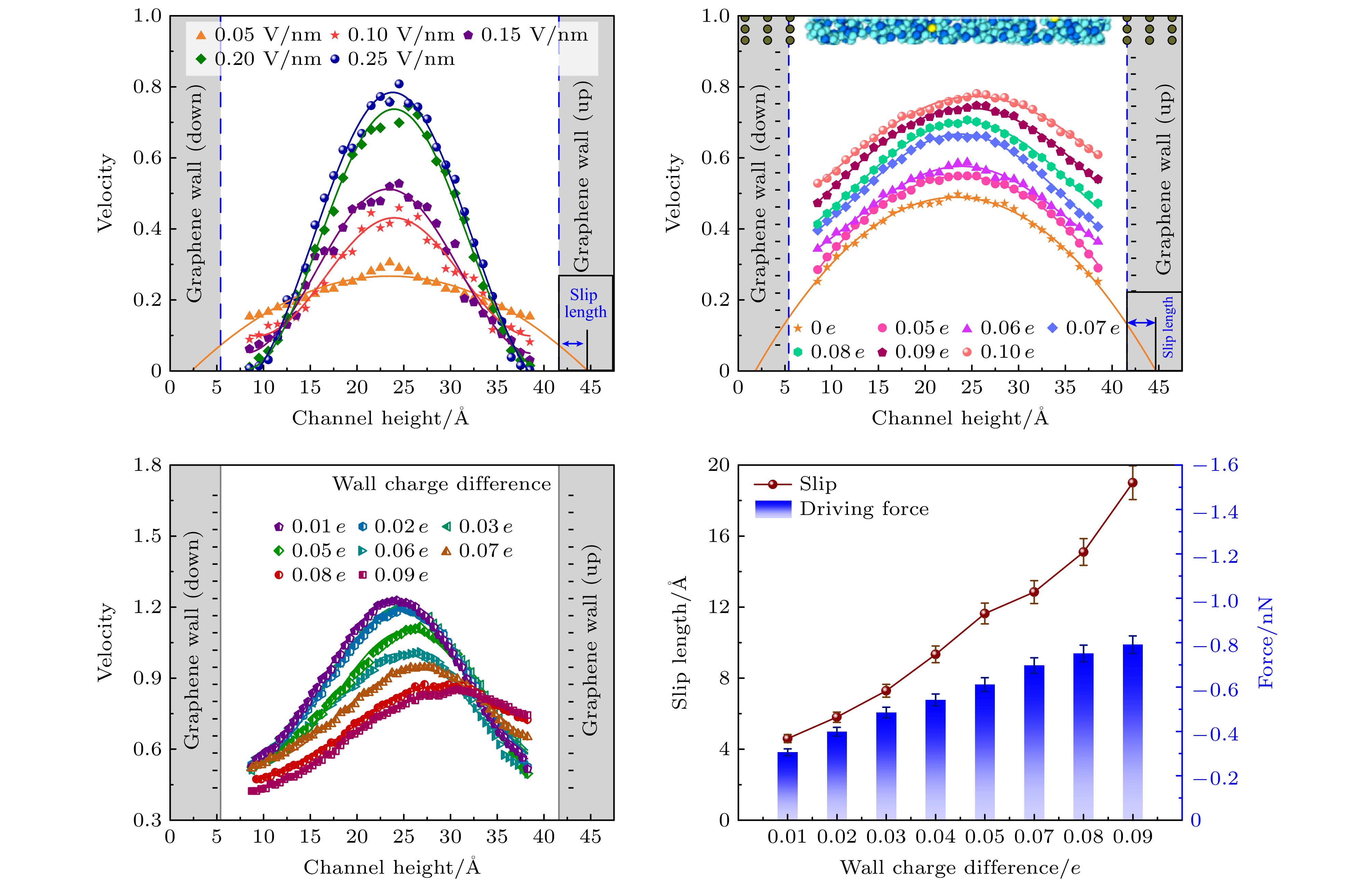
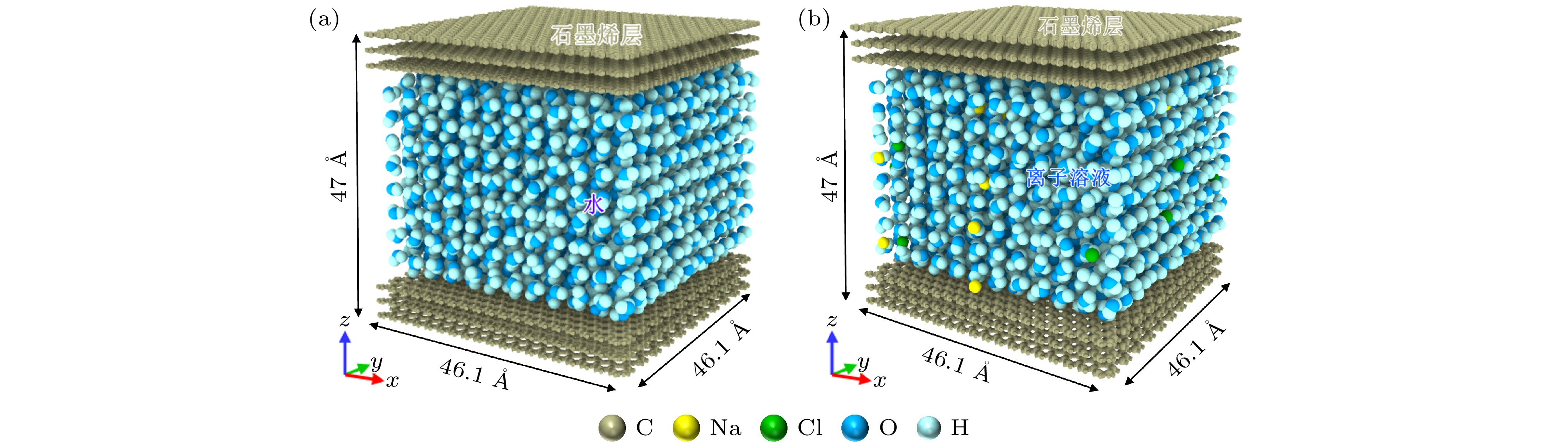
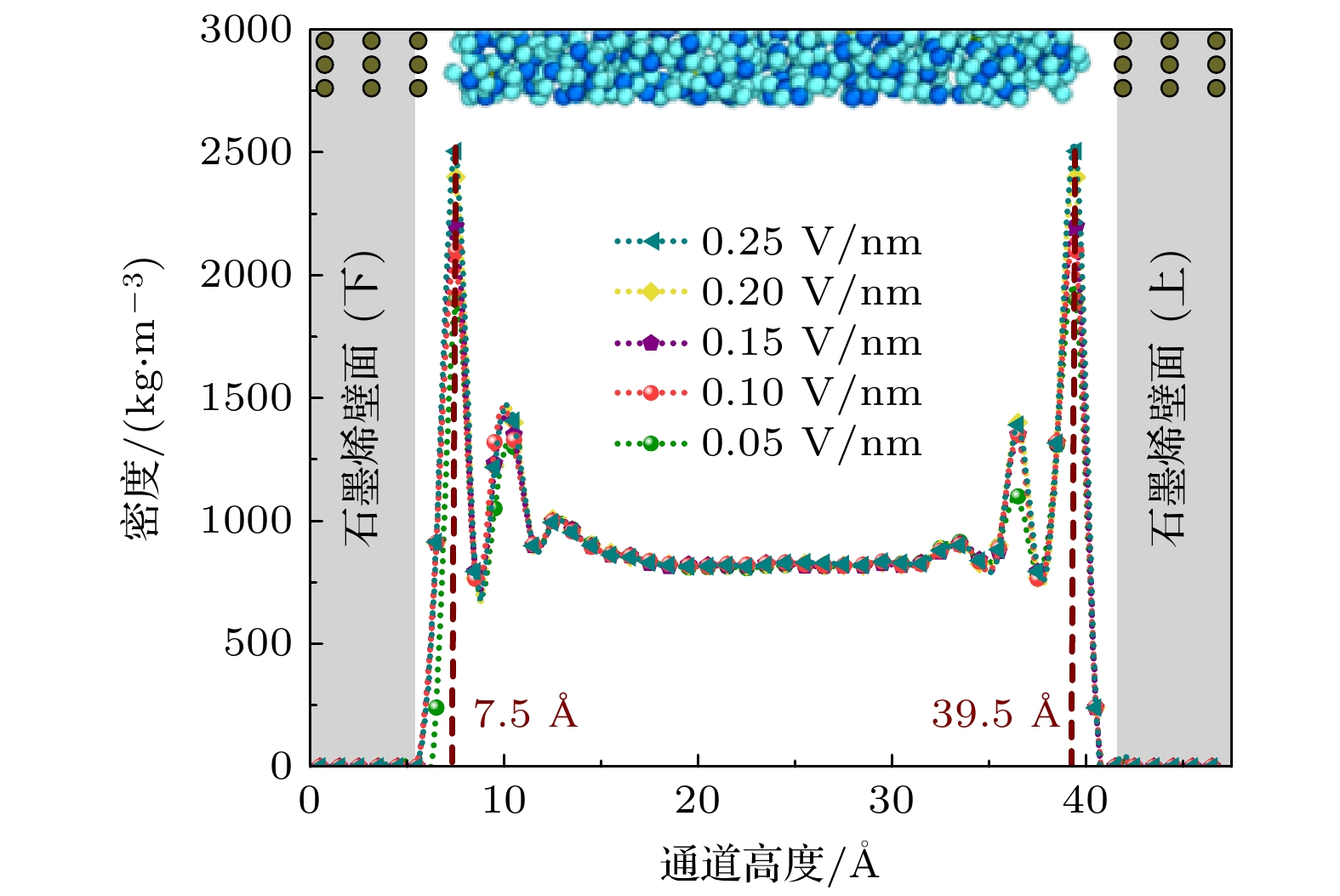
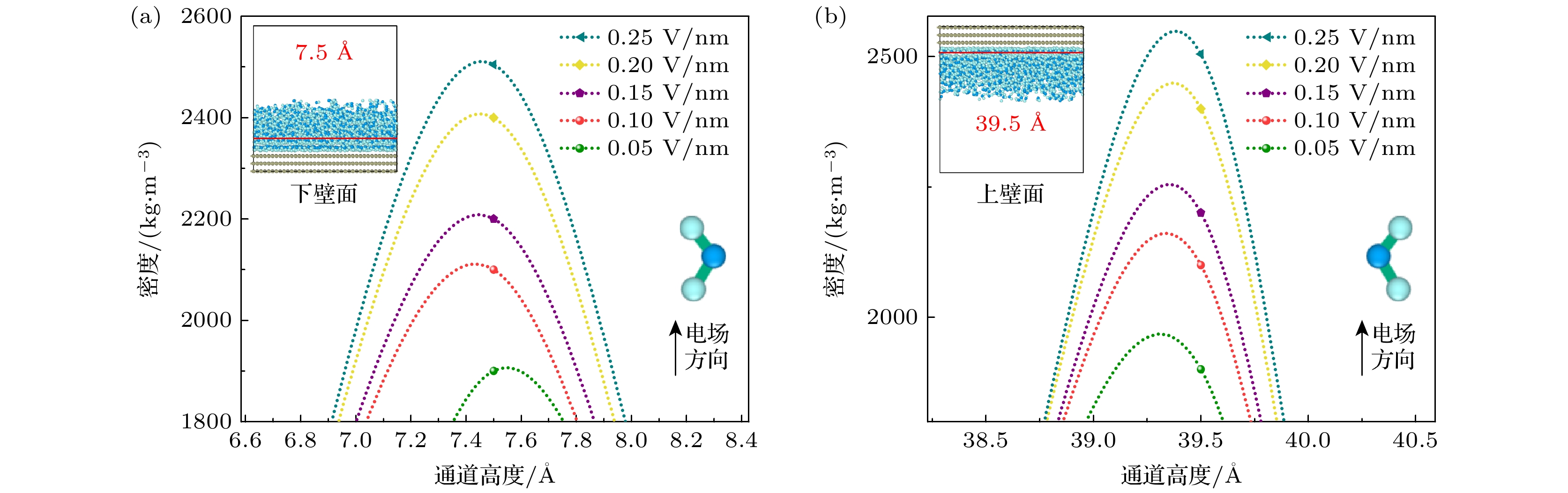
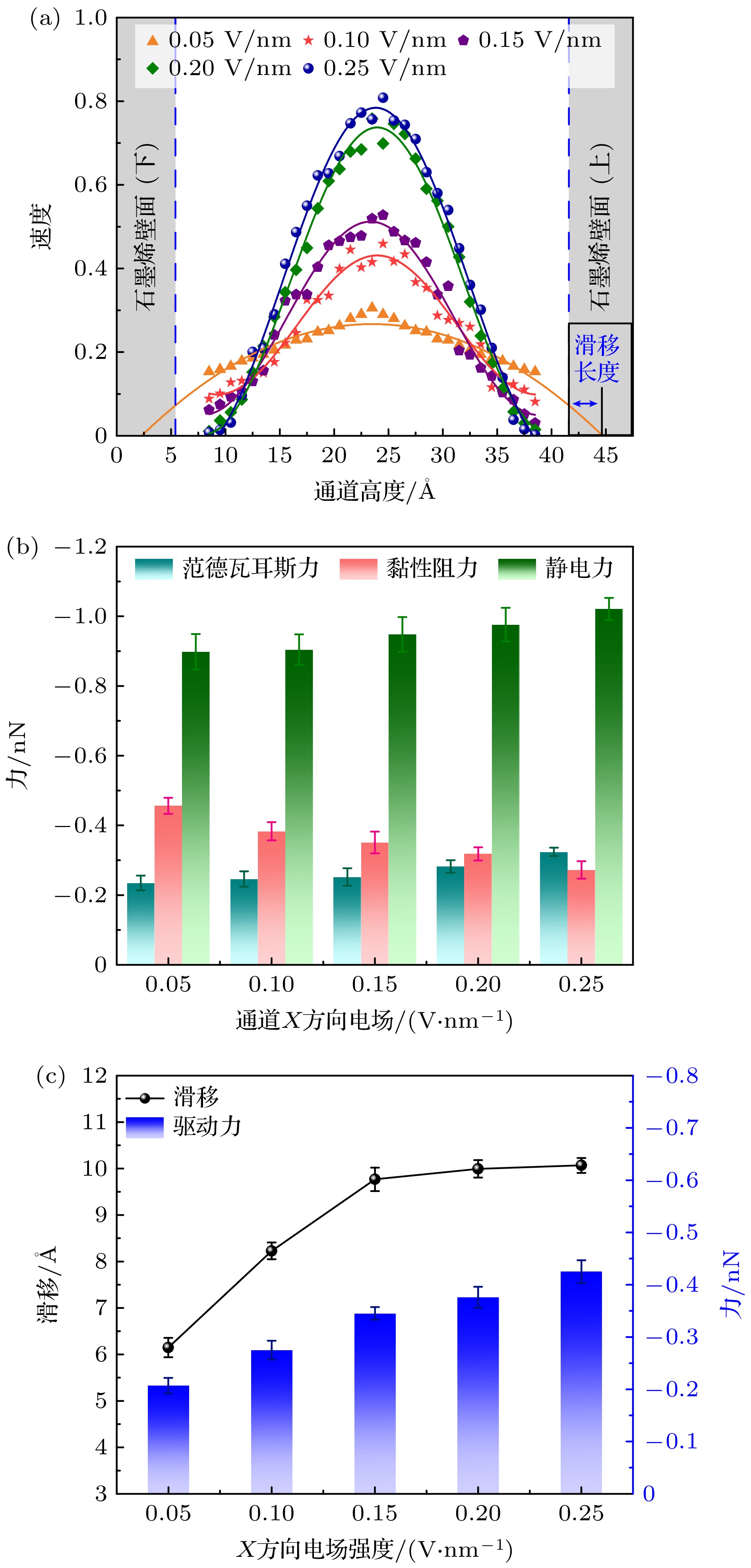
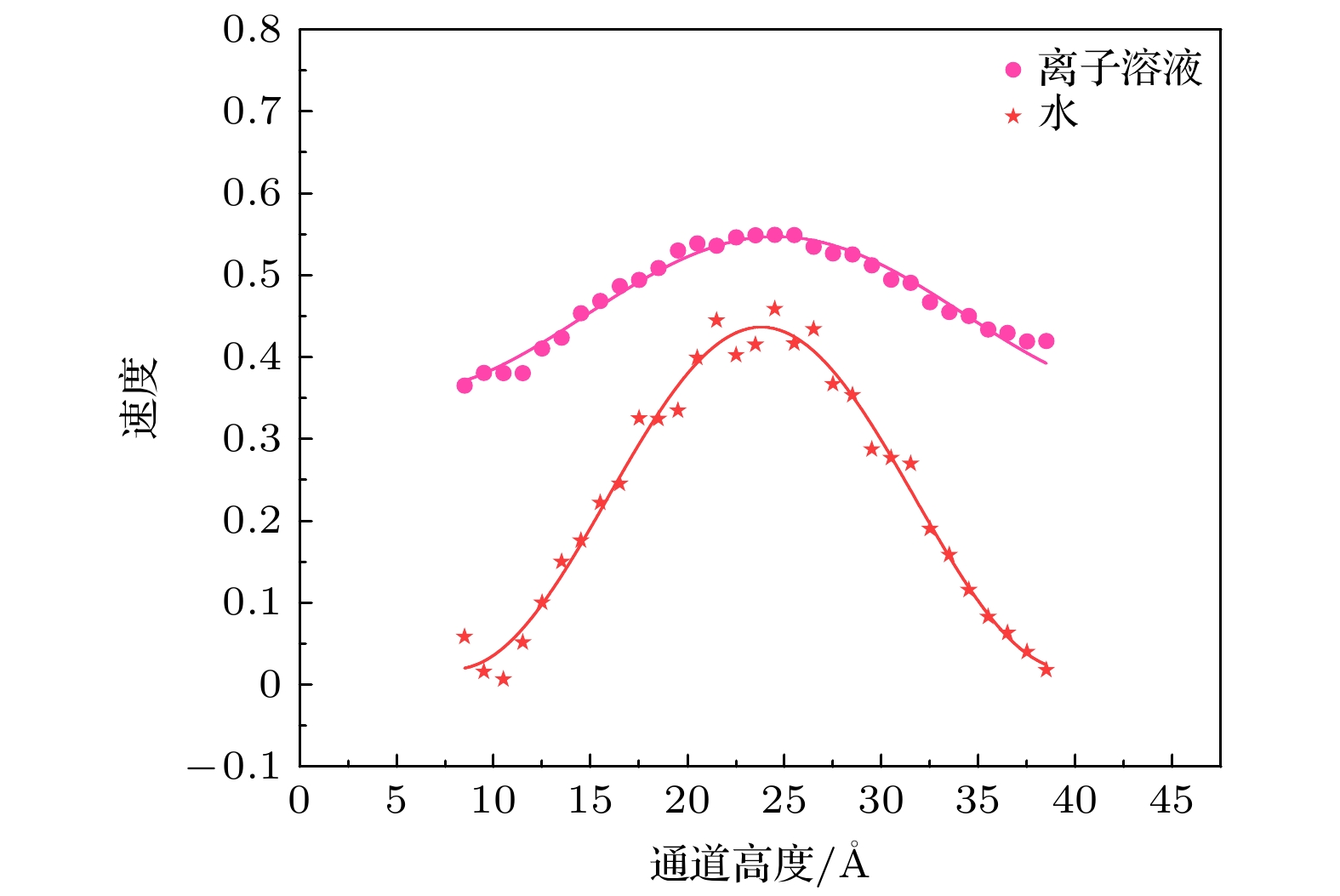
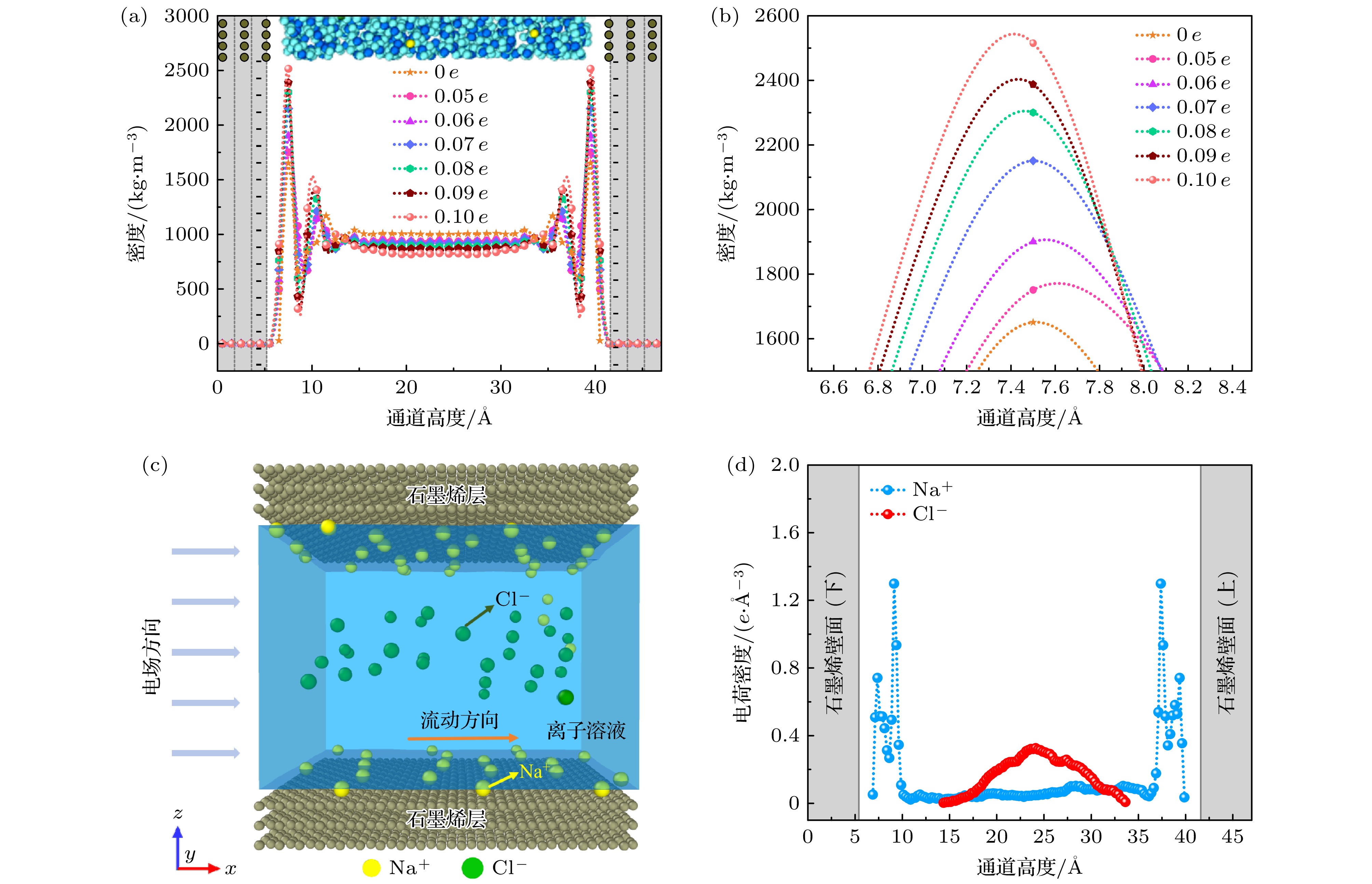
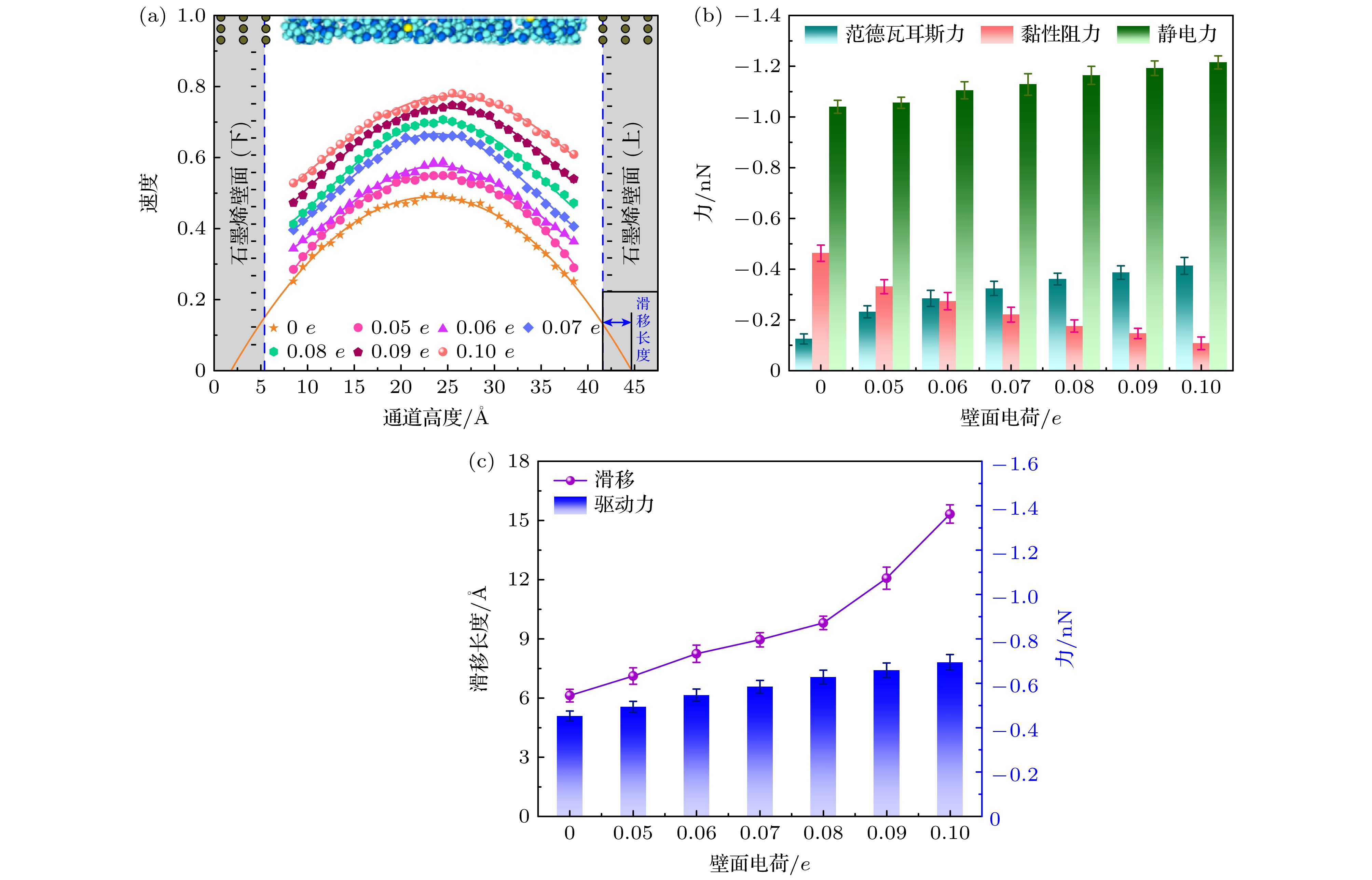
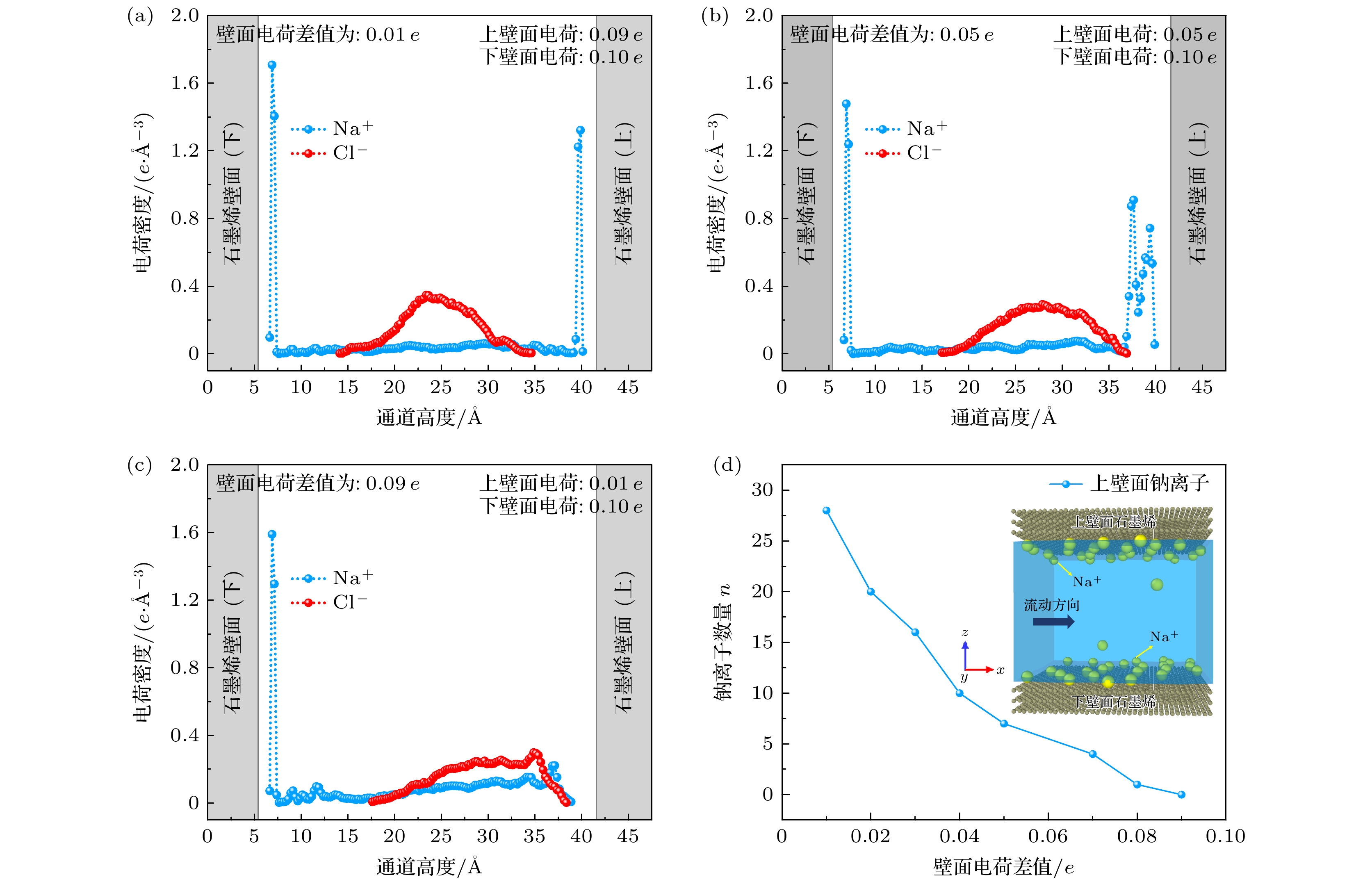
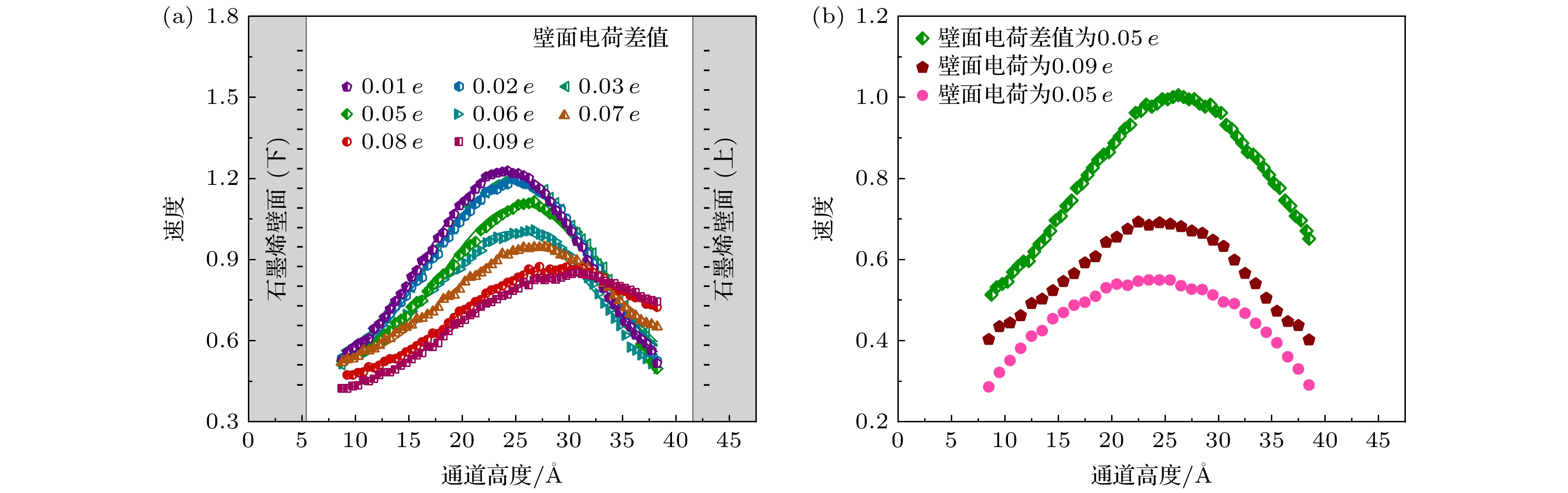
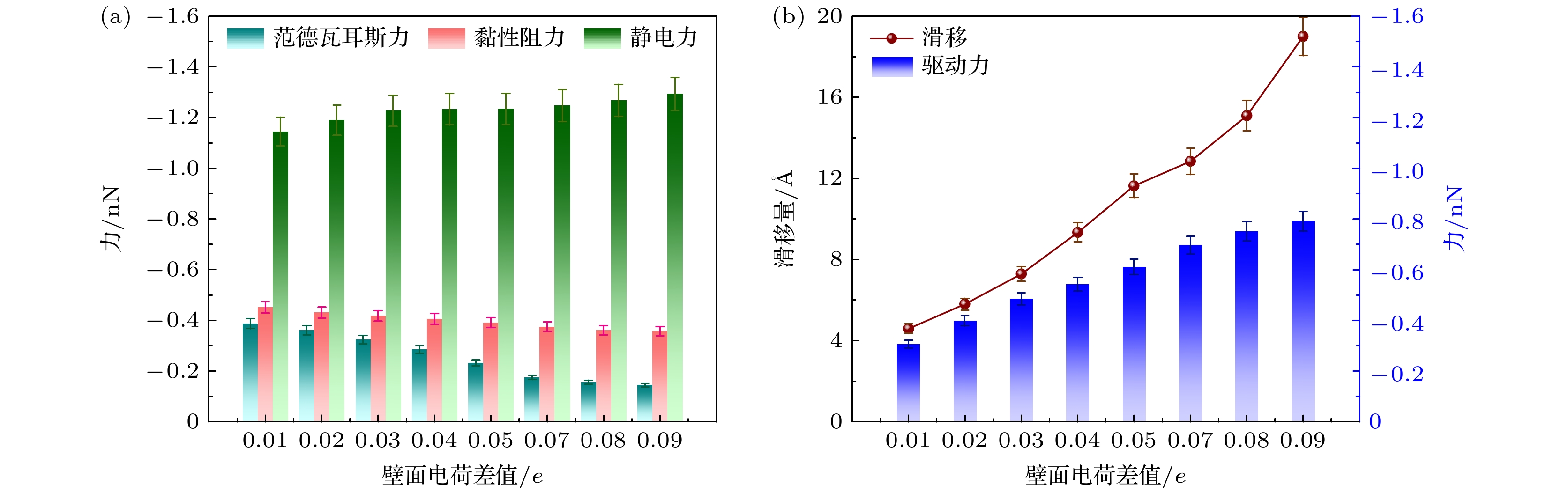
Electroosmosis drives a large slip velocity at the interface by altering the electrokinetic double layer effect at the fluid-solid interface, thereby generating high shear rates within the channel. In this paper, molecular dynamics simulations are used to construct an electroosmotic flow nanochannel model, and the fluid flow characteristics and wall slip reduction properties within graphene charged-wall nanochannels are investigated. The results show that the electroosmotic flow changes the structure of the bilayer to increase the mobility of its diffusion layer, and at the same time, the ions in the diffusion layer under the action of the applied electric field undergo directional migration and drive the overall fluid flow through the viscous effect, which enhances the mobility performance. After the introduction of ions, Na+ is adsorbed at the wall surface, which weakens the adsorption force between the fluid and the wall surface and enhances the driving force of the fluid in the confined domain space, thus increasing the slip length and flow rate. Finally, by modulating the charge size on the upper and lower wall surfaces, asymmetric channel wall charges are formed. The electric field gradient superimposed on the applied electric field further enhances the driving force of ions, changes the distribution of the of Na+ adsorption layer and the migration behavior of Cl–, thereby increasing the transport of the solution in the channel. Therefore, in this paper, a method is proposed to realize the ultrafast transport of solution in the channel by modulating the asymmetric wall charge of graphene, successfully achieving the slip reduction effect of the electroosmotic flow of solution in the graphene channel. A theoretical basis is laid for the fast and energy-saving transportation of microfluidics in the nano-limited space.













 DownLoad: CSV

 DownLoad:
