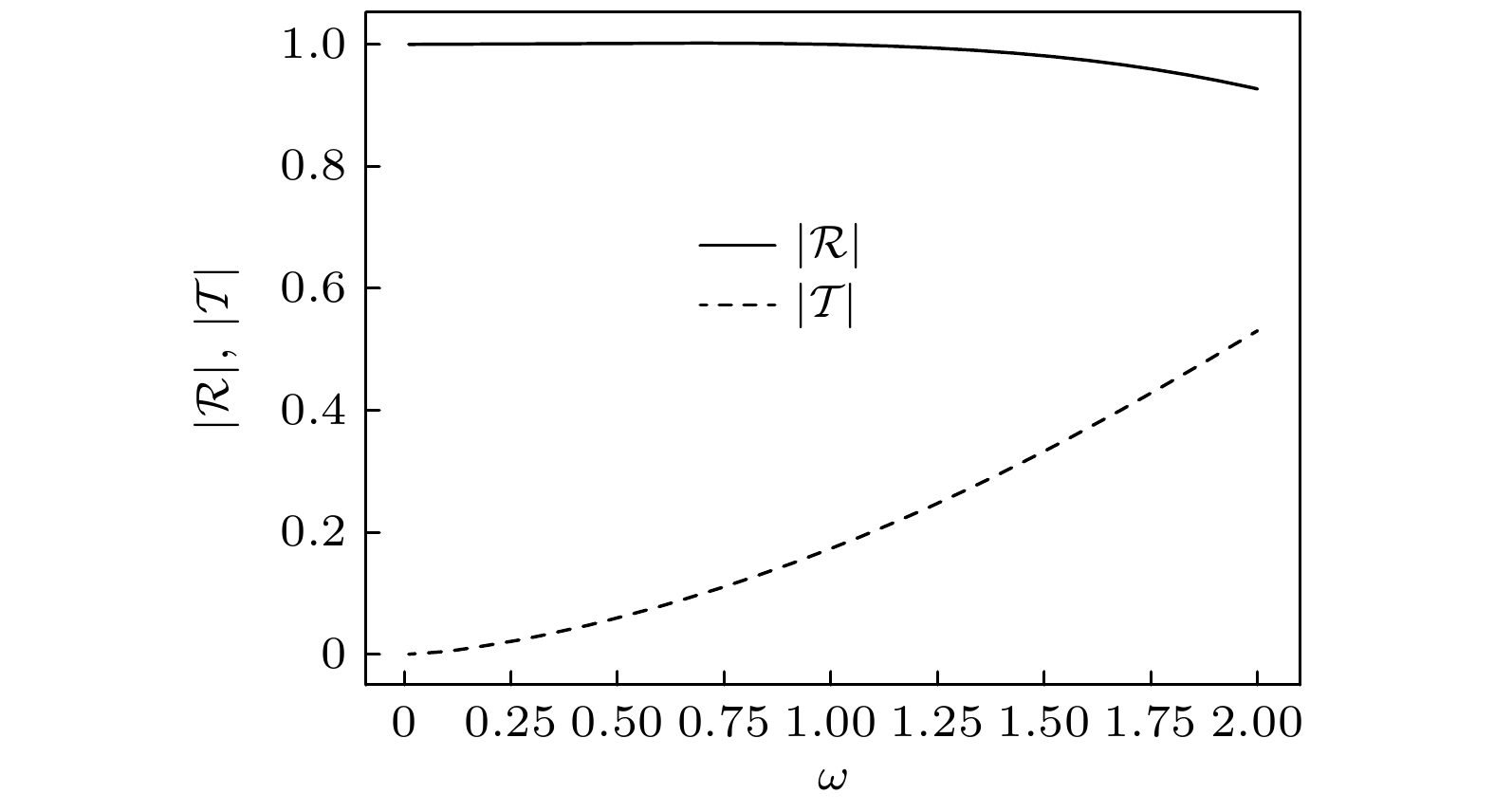
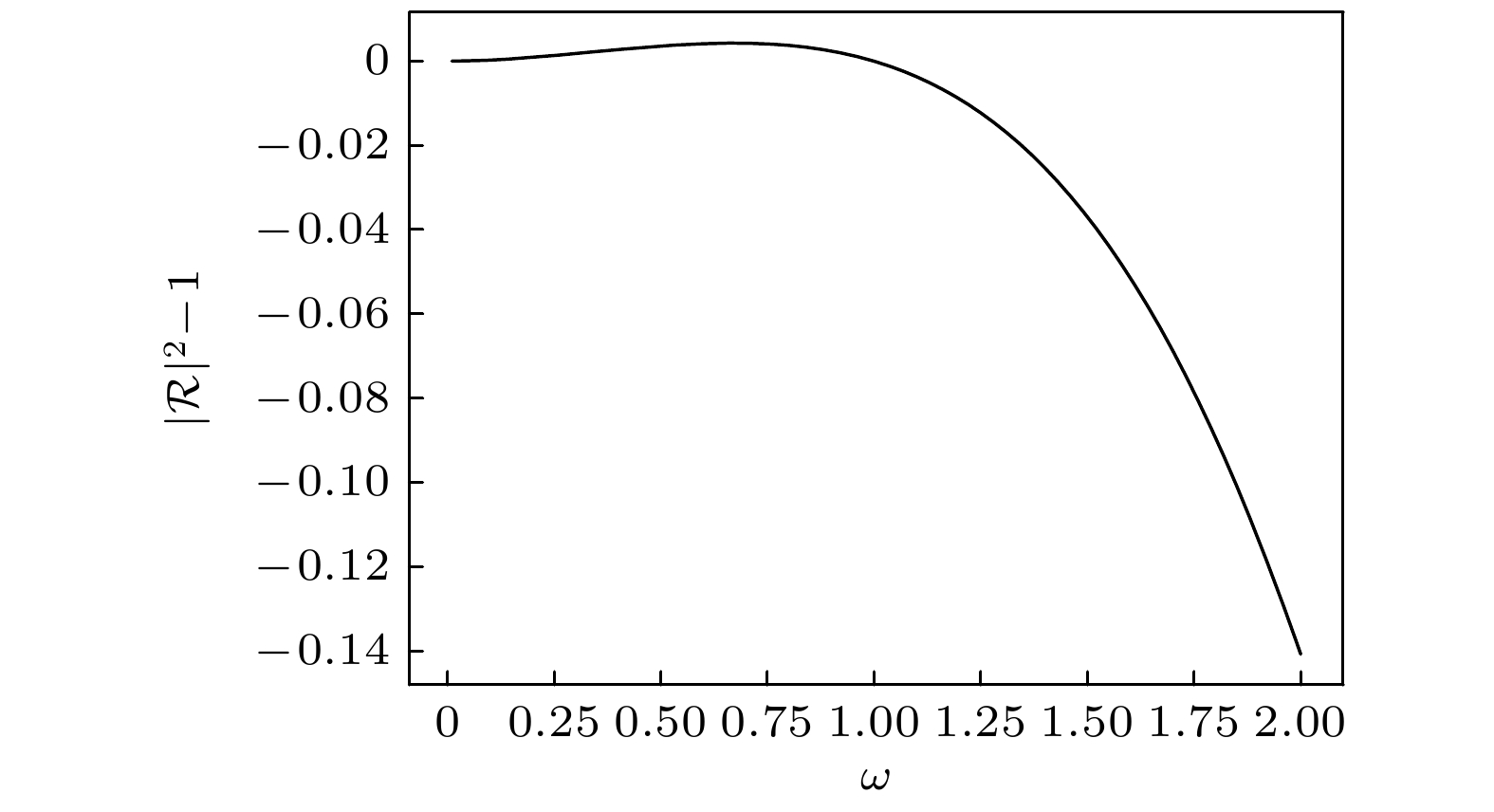
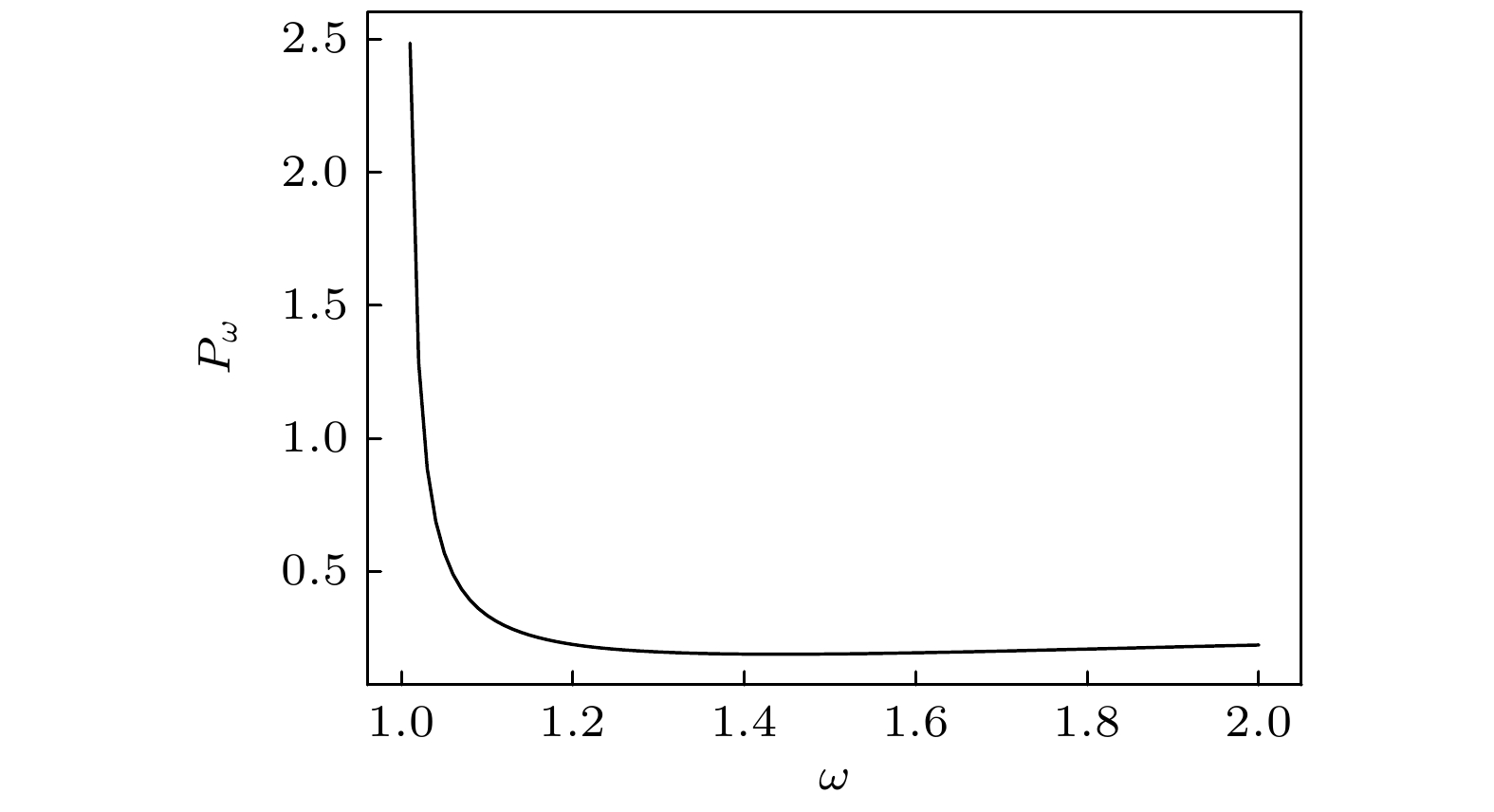
This paper conducts numerical studies on superradiance and Hawking radiation of a specific rotating acoustic black hole model characterized by parameters A and B, within the framework of analogue gravity. The standard radial wave equation for scalar perturbations in the effective metric of this model is solved numerically by using an adaptive Runge-Kutta method with tortoise coordinates; this approach necessitates careful numerical inversion of the coordinate transformation near the horizon via a root-finding algorithm. By imposing appropriate boundary conditions, we extract the reflection coefficient $\mathcal{R}$ and transmission coefficient $\mathcal{T}$ in a range of frequencies ω. Our results clearly demonstrate superradiance, with the reflectivity $|\mathcal{R}|^2$ exceeding unity for $\omega < m\varOmega_{\rm{H}} = 1$ (where $m=-1$ and $\varOmega_{\rm{H}}=-1$), which confirms energy extraction from the rotating background. The high accuracy of our method is validated by the flux conservation relation, $|\mathcal{R}|^2 + $$ [(\omega - m\varOmega_{\rm{H}})/\omega]|\mathcal{T}|^2 = 1$, which typically has a numerical precision of $ 10^{-8}$. Furthermore, using the derived Hawking temperature and the rotation modified Bose-Einstein distribution, we calculate the Hawking radiation power spectrum $P_\omega$, and use the numerically obtained transmission coefficient $|\mathcal{T}|^2$ as the greybody factor of the model. A prominent feature of $P_\omega$ is its sharp enhancement (or divergence) as ω approaches the threshold $m\varOmega_{\rm{H}}$ from above, which is a characteristic directly related to the denominator of the Bose-Einstein factor. This research also reveals that superradiant amplification and Hawking spectrum characteristics are significantly dependent on the specific values of flow parameters A and B, even when the superradiant threshold $m\Omega_H$ is kept unchanged. This detailed numerical study provides quantitative results for the scattering and radiation properties of this model, and also for strong support for the analogue gravity framework.














 DownLoad:
