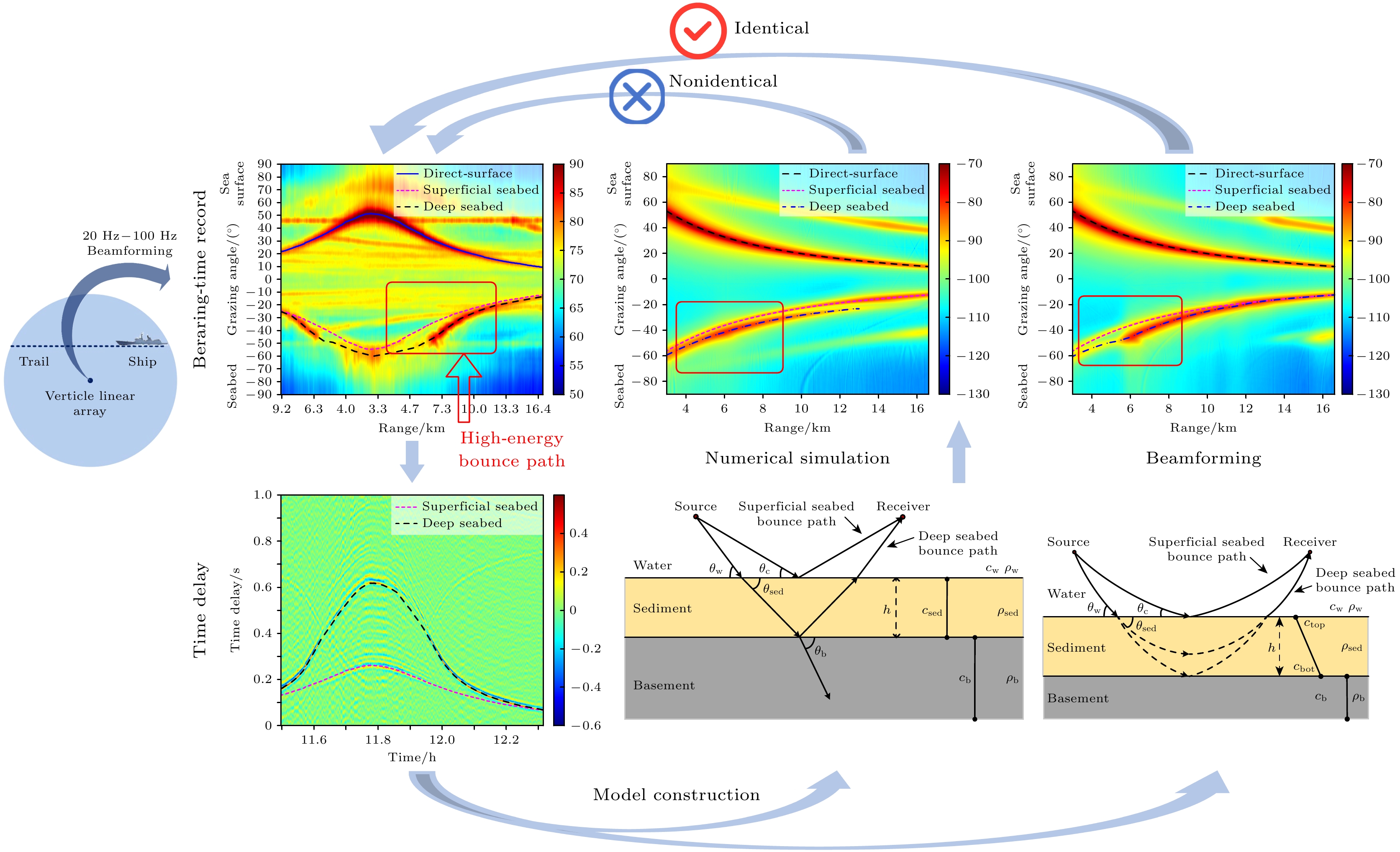
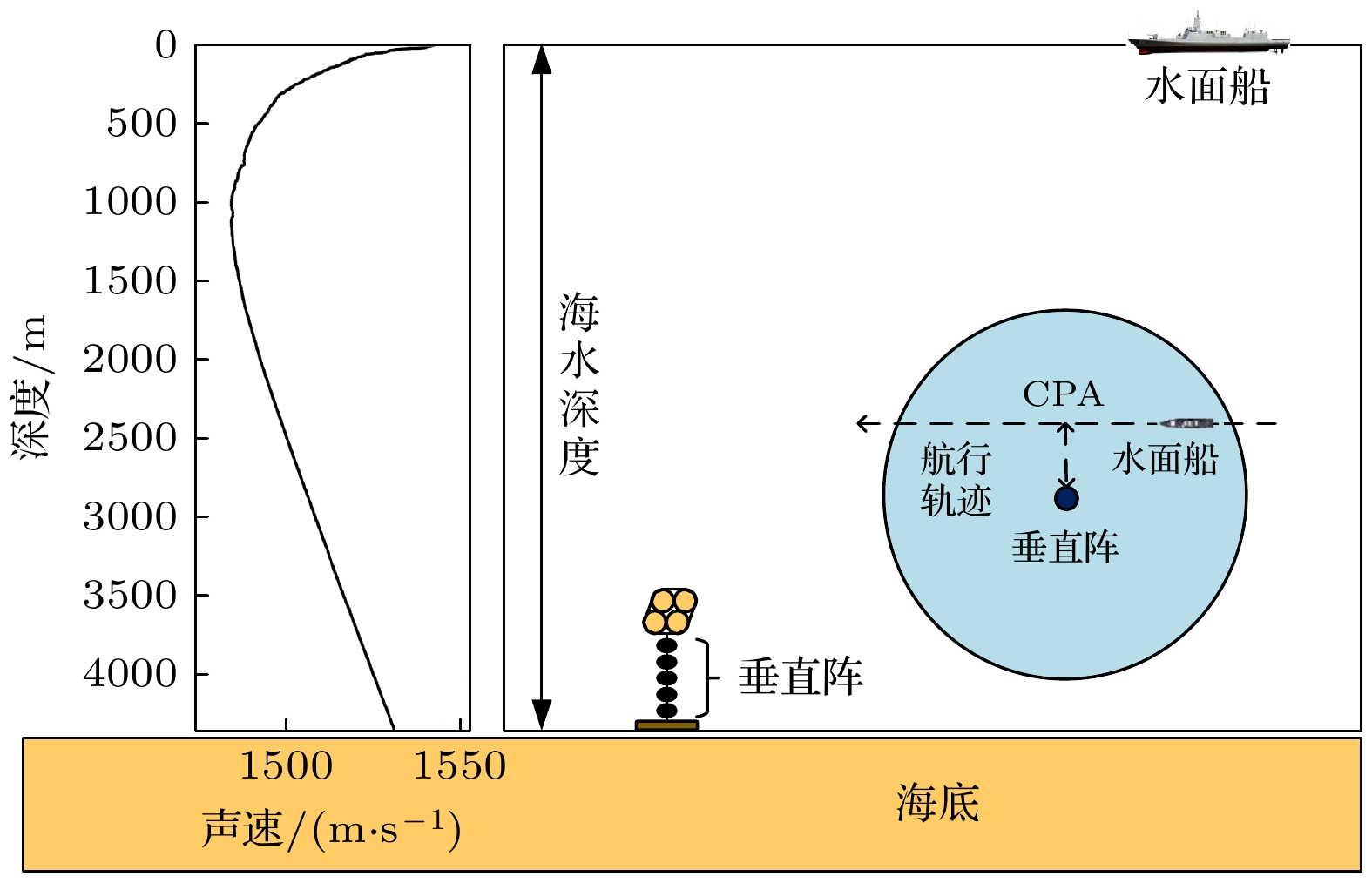
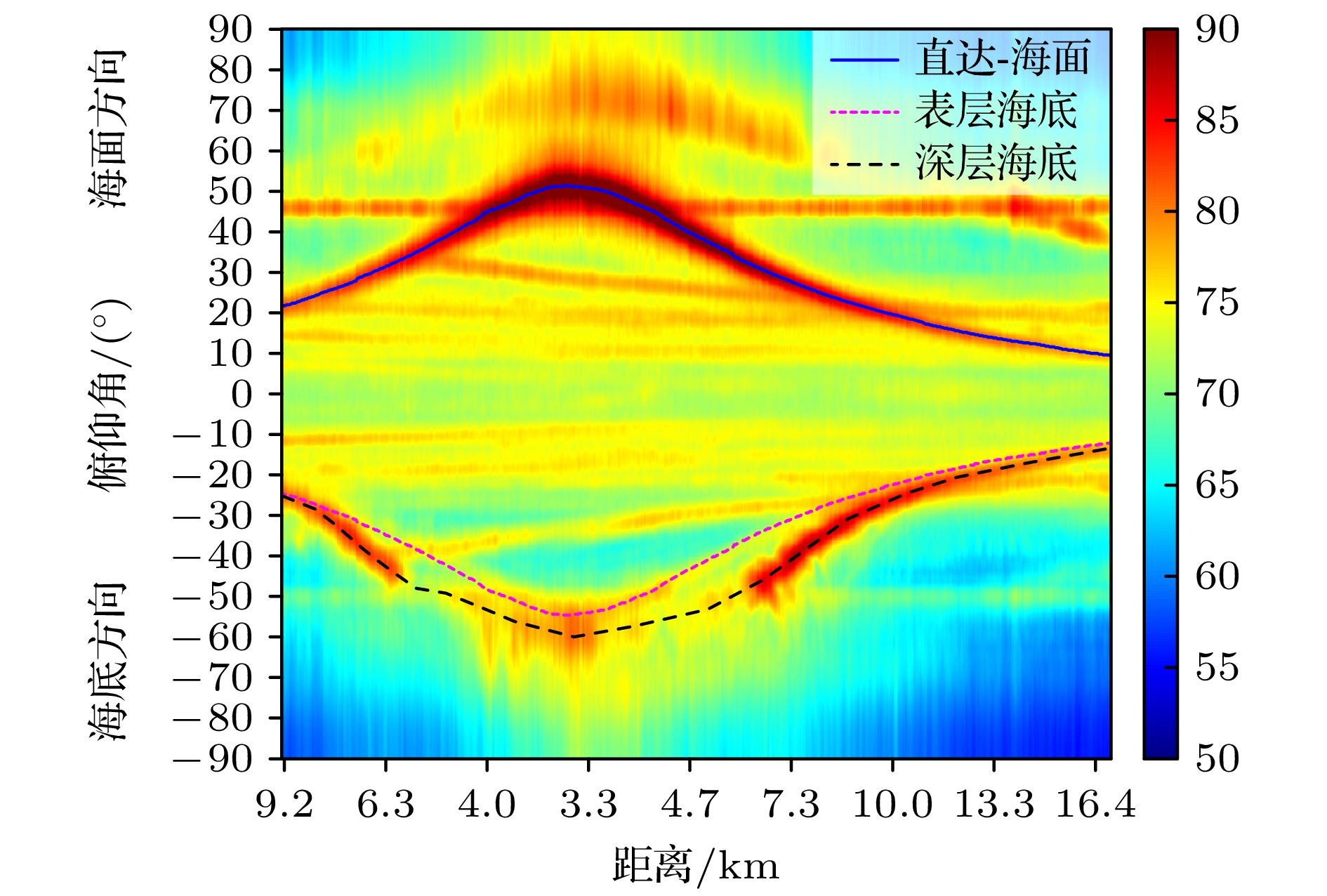
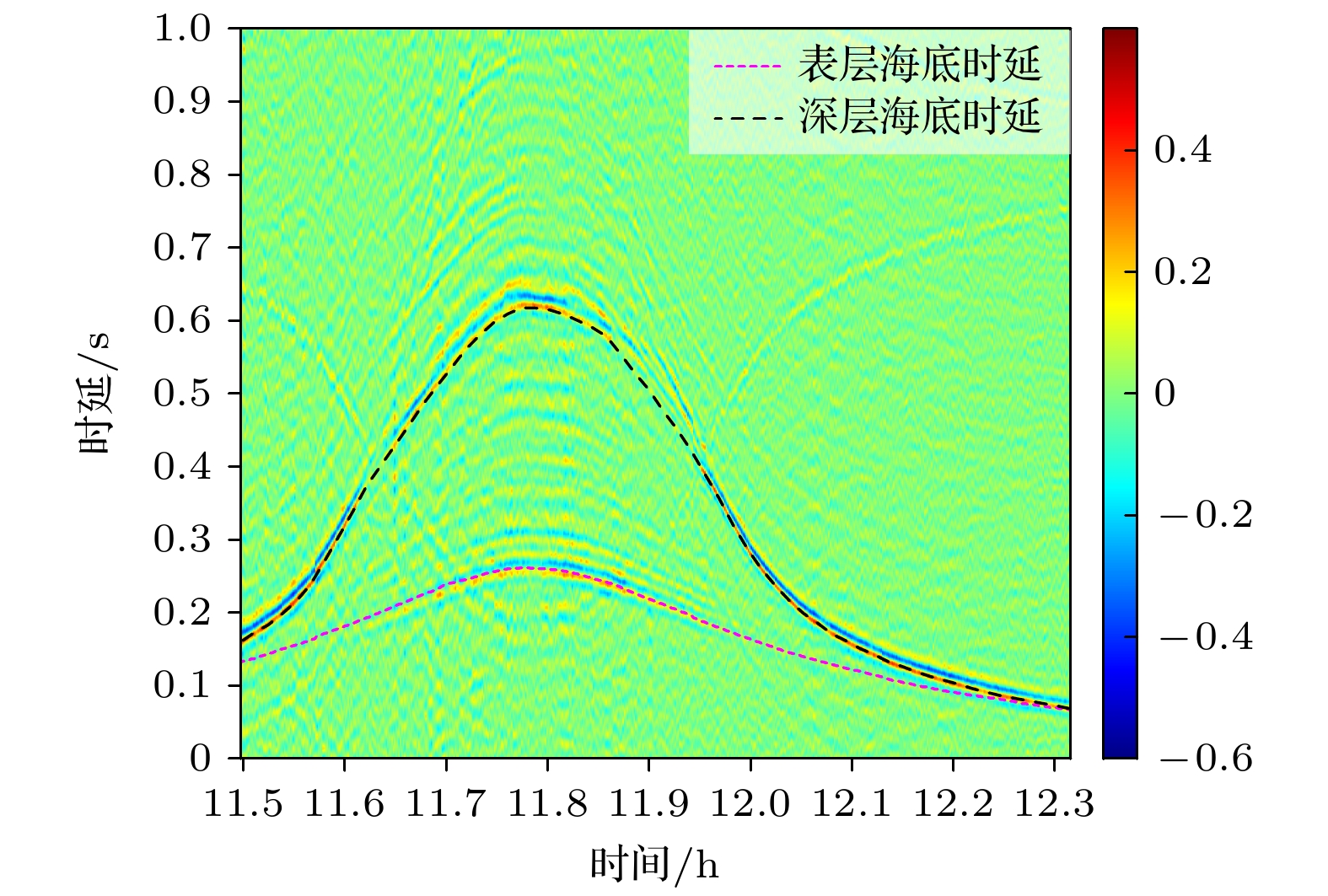
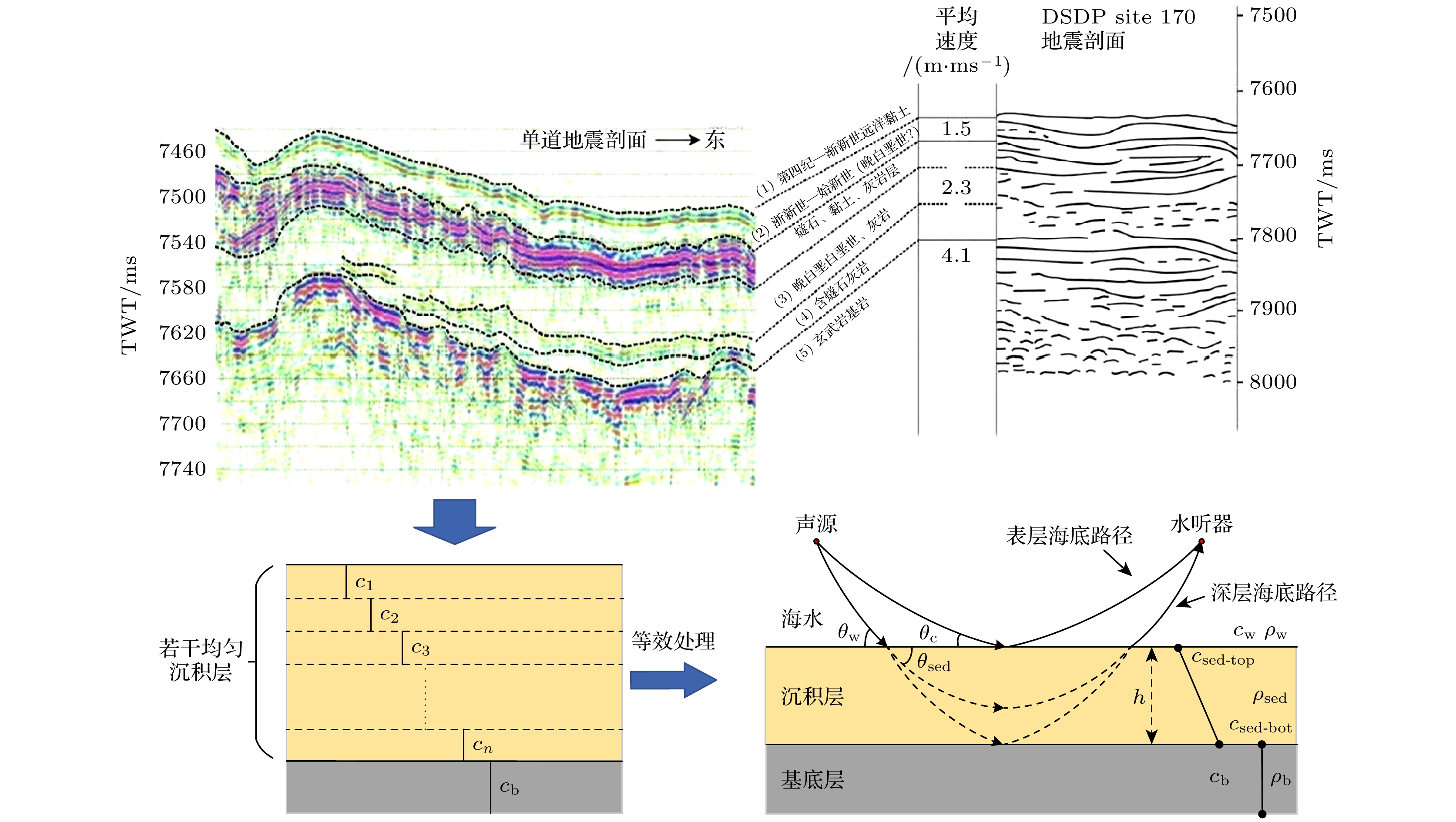
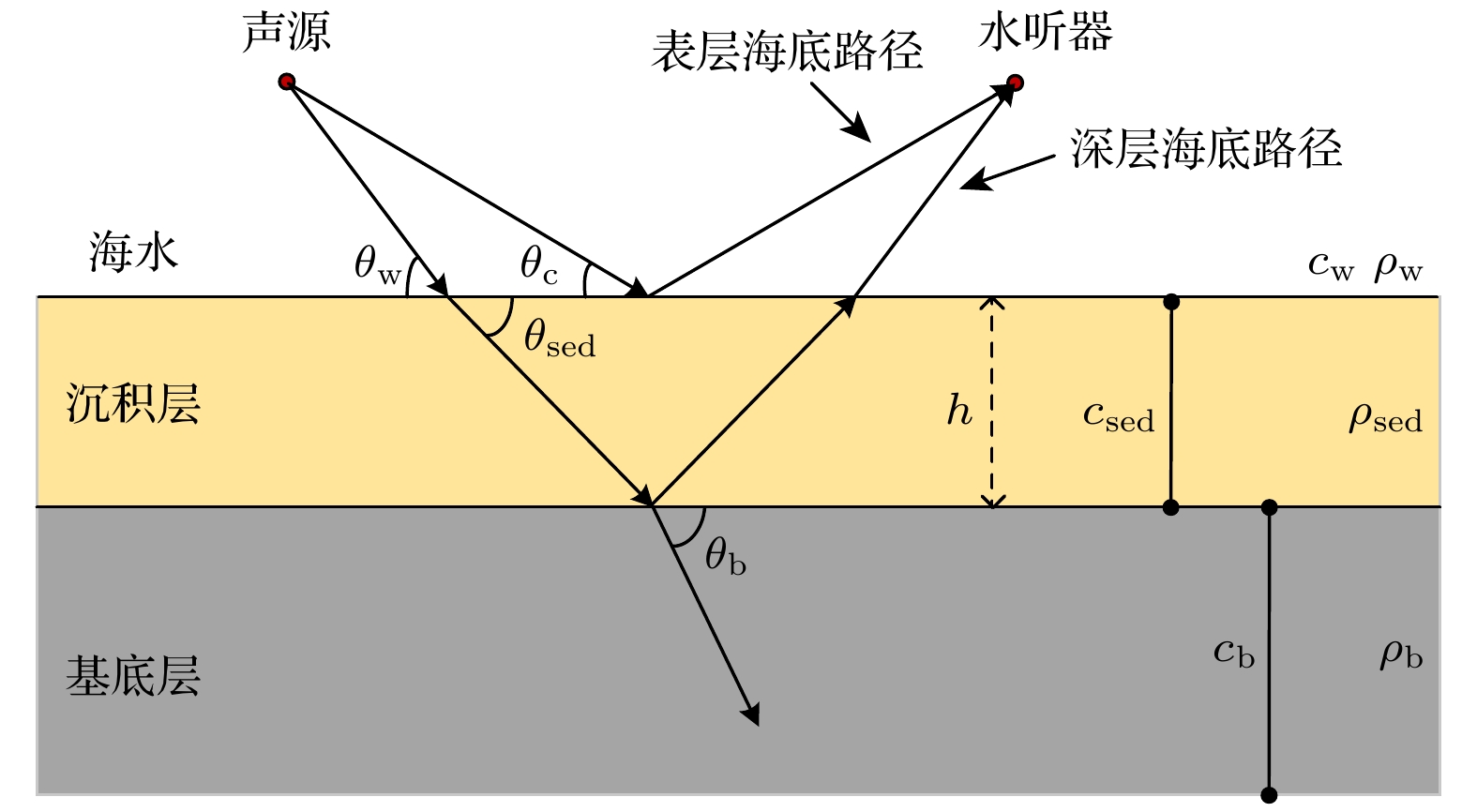
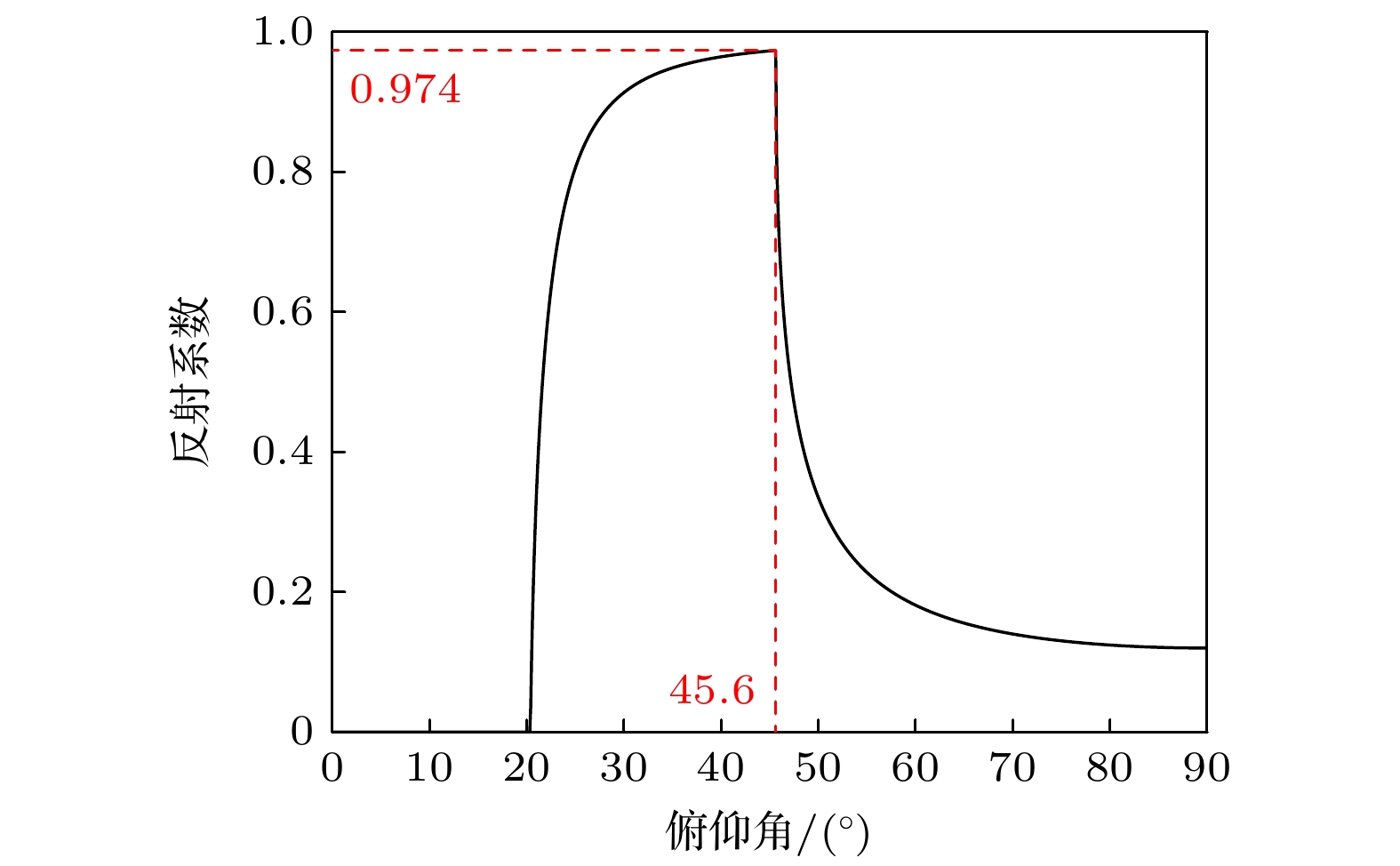
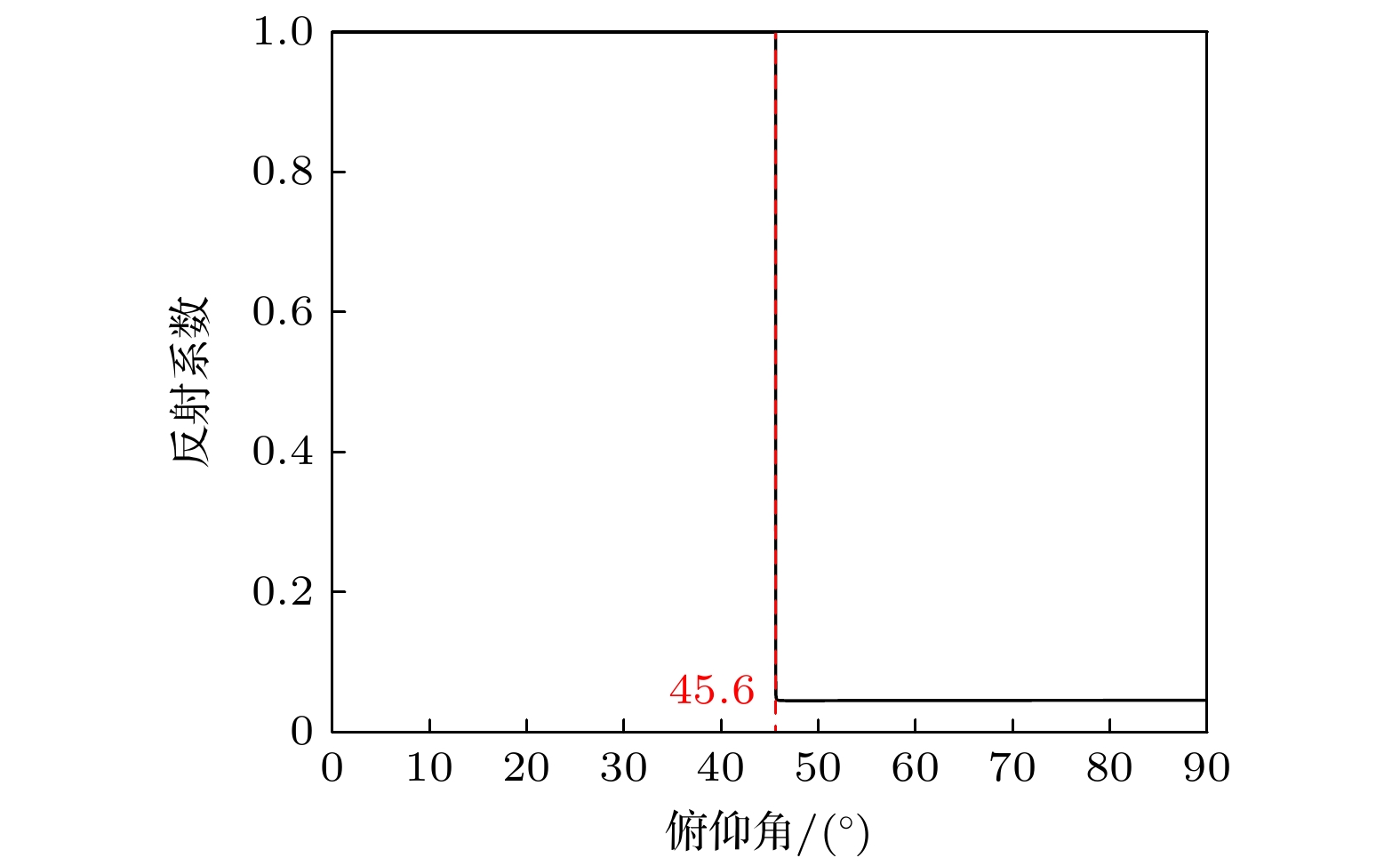
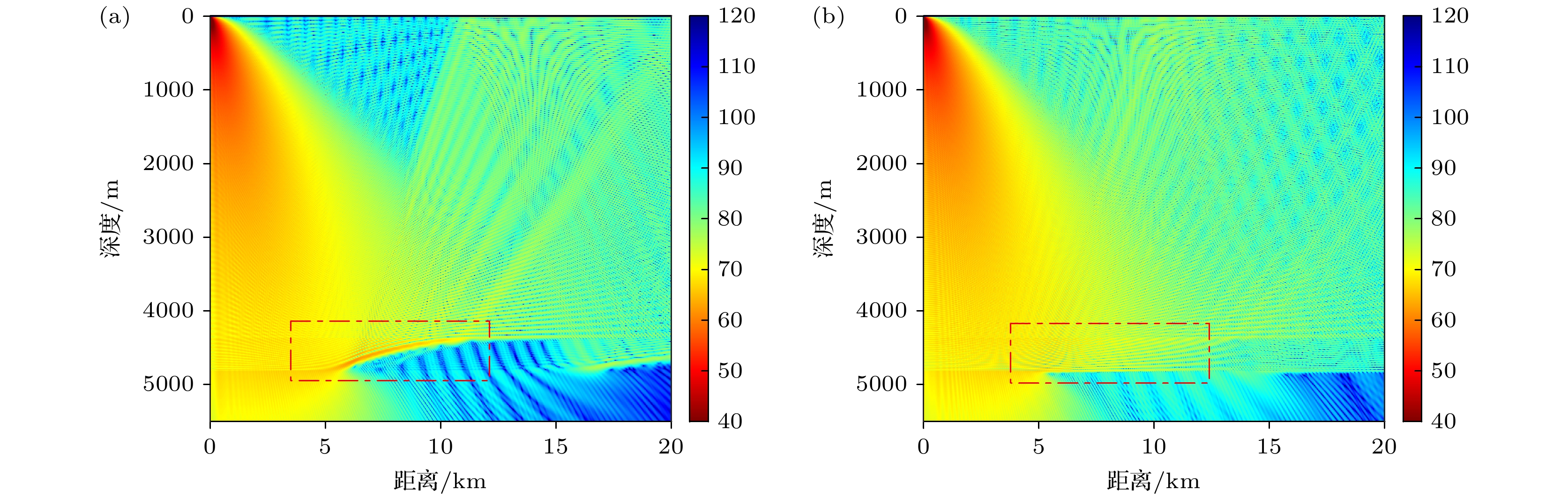
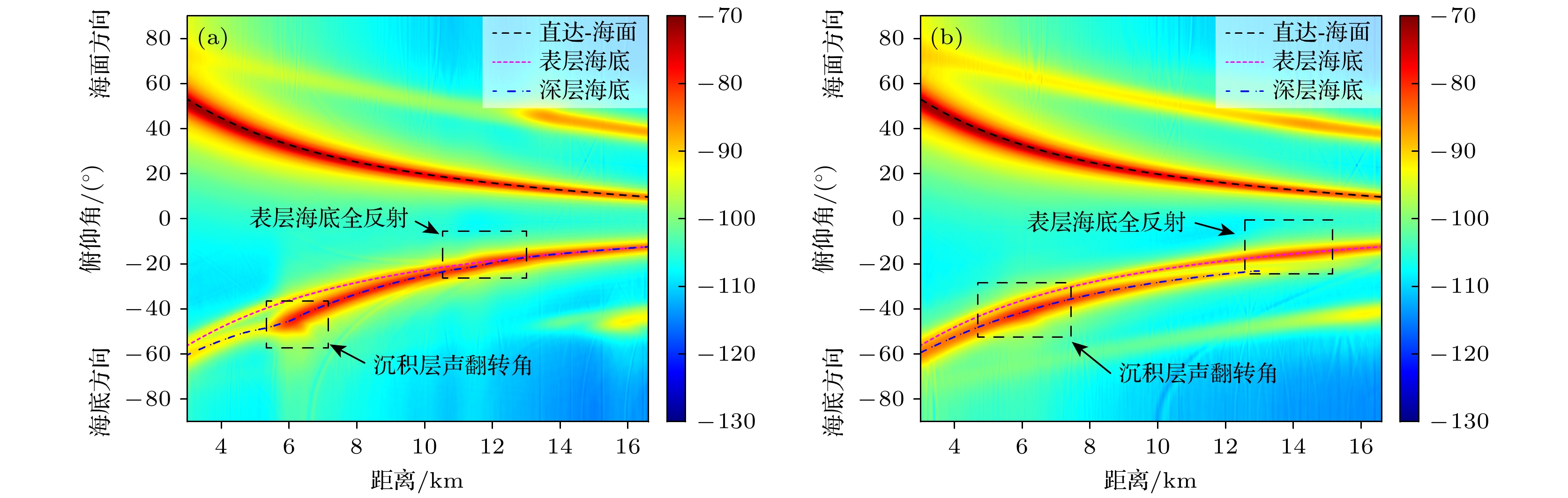
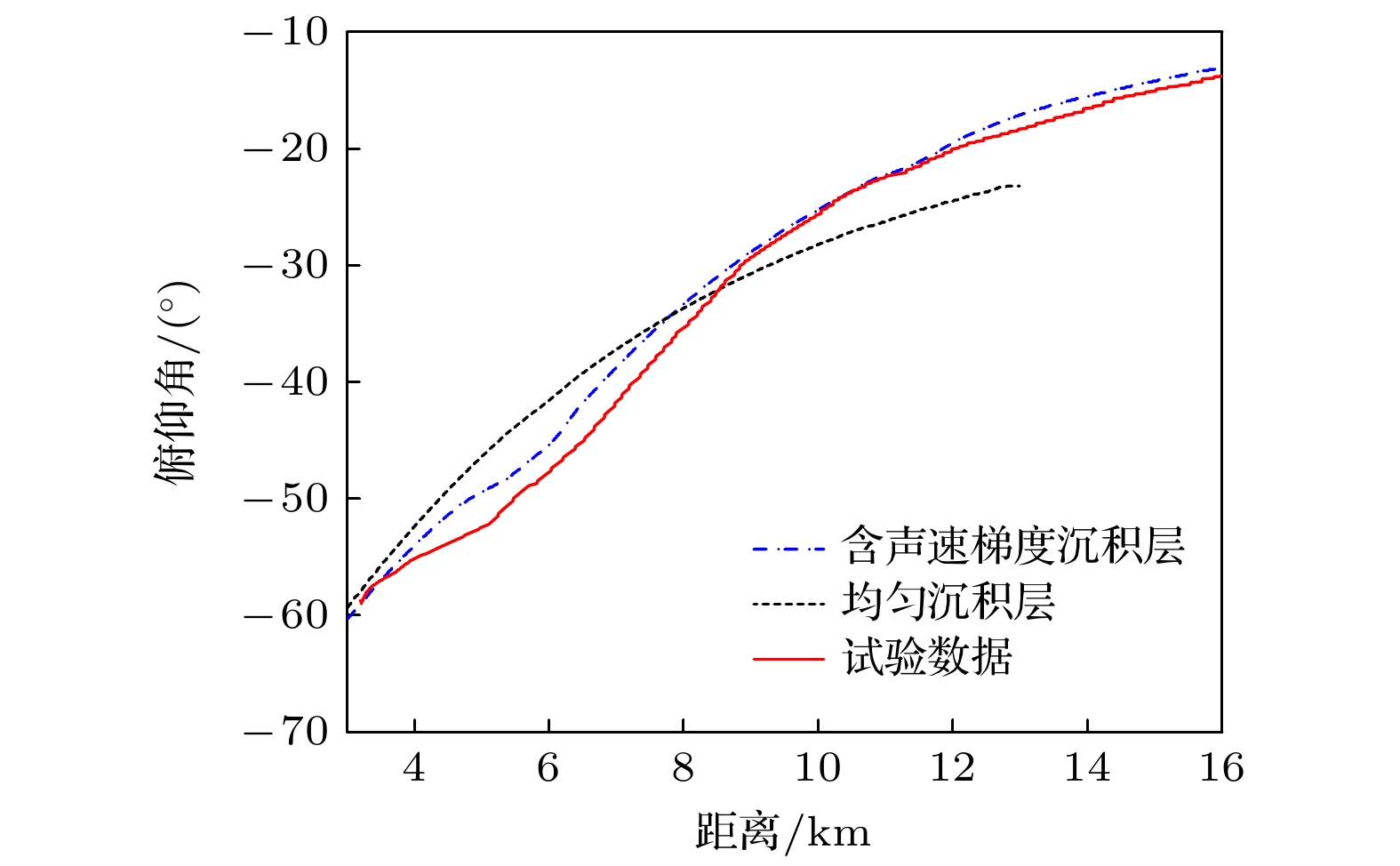
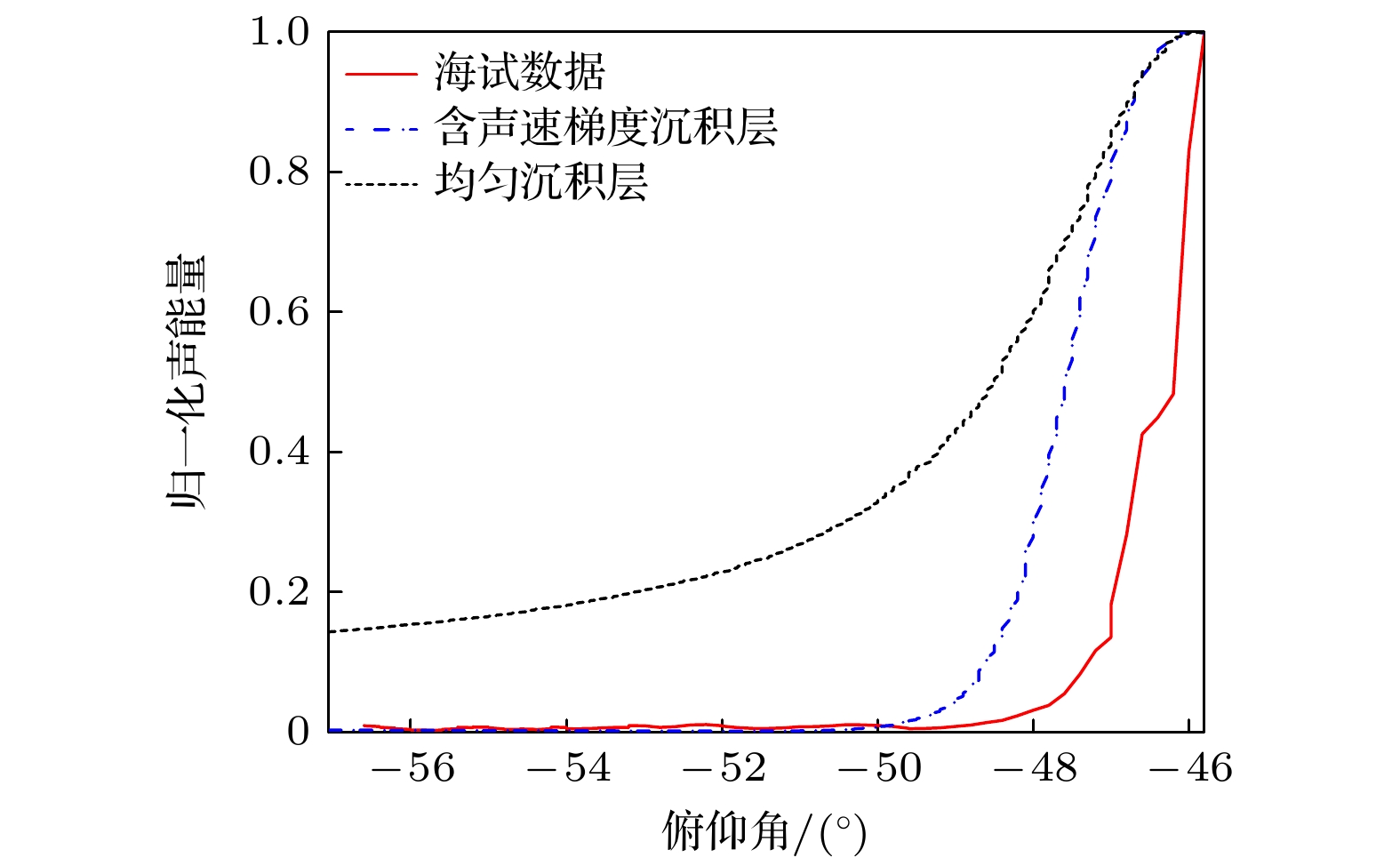
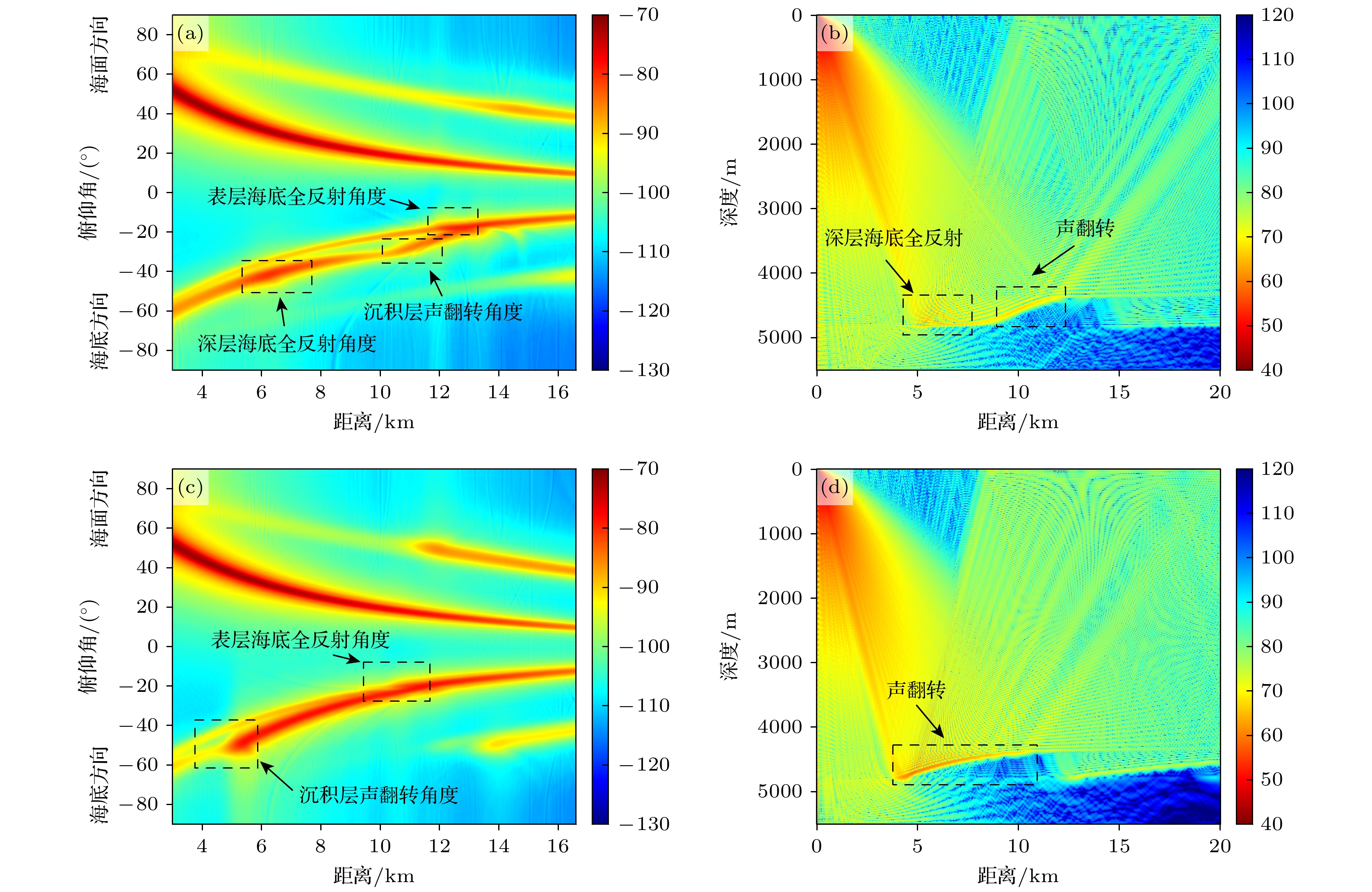
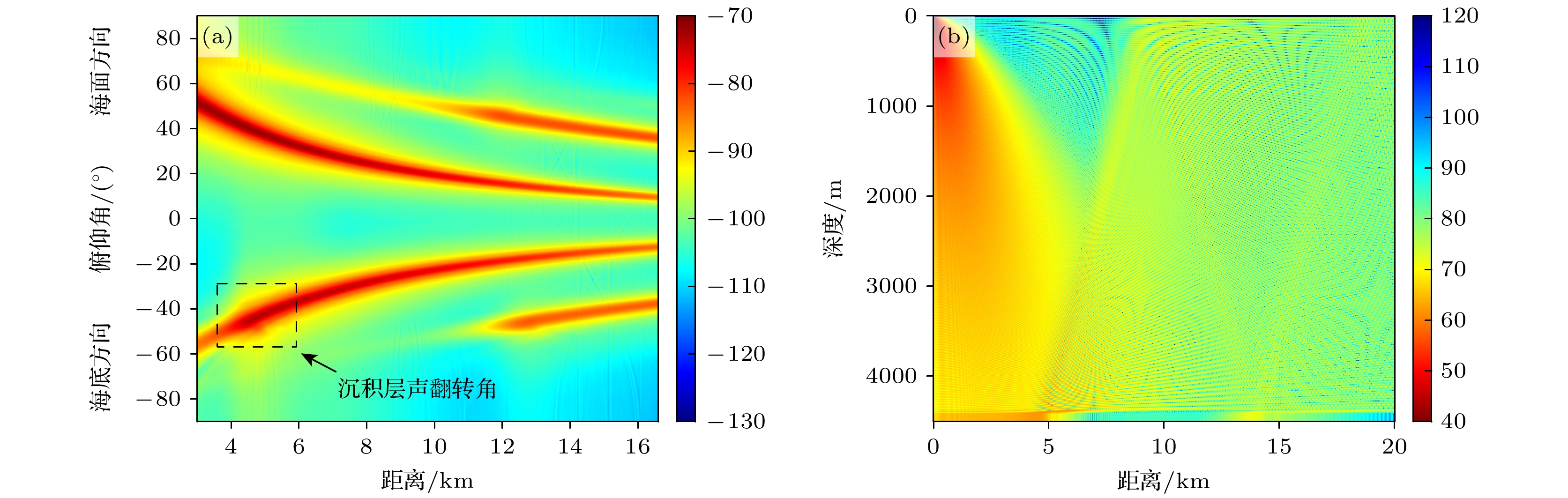
Very-low-frequency (VLF) (≤100 Hz) acoustic waves exhibit special propagation characteristics in the deep sea, owing to strong penetration capability and interaction with deep geological structures. In a deep sea experiment conducted in the South China Sea, a vertical linear array including 64 elements is moored to the bottom (approximately 4360 m depth) to receive the acoustic signal. In the bearing-time record (BTR) processed by beamforming, a high-energy bottom bounce path is observed from the ship noise received by the bottom-moored vertical linear array, which shows an abrupt increase in energy near a grazing angle of 45°. However, the physical mechanism causing this phenomenon is still unclear, and we investigate it further in this work. According to the data processing, we develop an environmental model of the seabed by combining continuous speed gradient, which arises from long-term geological compaction processes, in the sediment. This model is compared with a traditional stratified model under the assumption of a uniform sediment layer. The wavenumber integration method is adopted in numerical simulation to accurately calculate the pressure field and analyze the cross-media propagation. The numerical simulations show that the positive velocity gradient (increasing from 1600 m/s to 2144 m/s) causes an ‘acoustic turning’ effect, which reradiates substantial acoustic energy back into the water column and generates the observed high-energy bounce paths. This is supported by theoretical analysis in the WKB approximation, where the calculated reflection coefficient shows a sharp transition in the acoustic turning point, explaining the energy fluctuations observed in the experimental BTR. Further analysis shows that the thickness of sediment influences the angular separation between bottom bounce paths, while its sound speed structure determines the turning angle. These findings offer new insights into VLF acoustic propagation in the deep sea and also provide critical evidence for supporting a transition from simplified stratified models to a more realistic model with a continuous gradient structure. Furthermore, the discovery of high-energy bottom bounce paths provides a new way for enhancing the capabilities of underwater detection, and these observed features also provide reliable pressure field characteristics for inverting deep seabed parameters.













 DownLoad: CSV

 DownLoad:
