













-
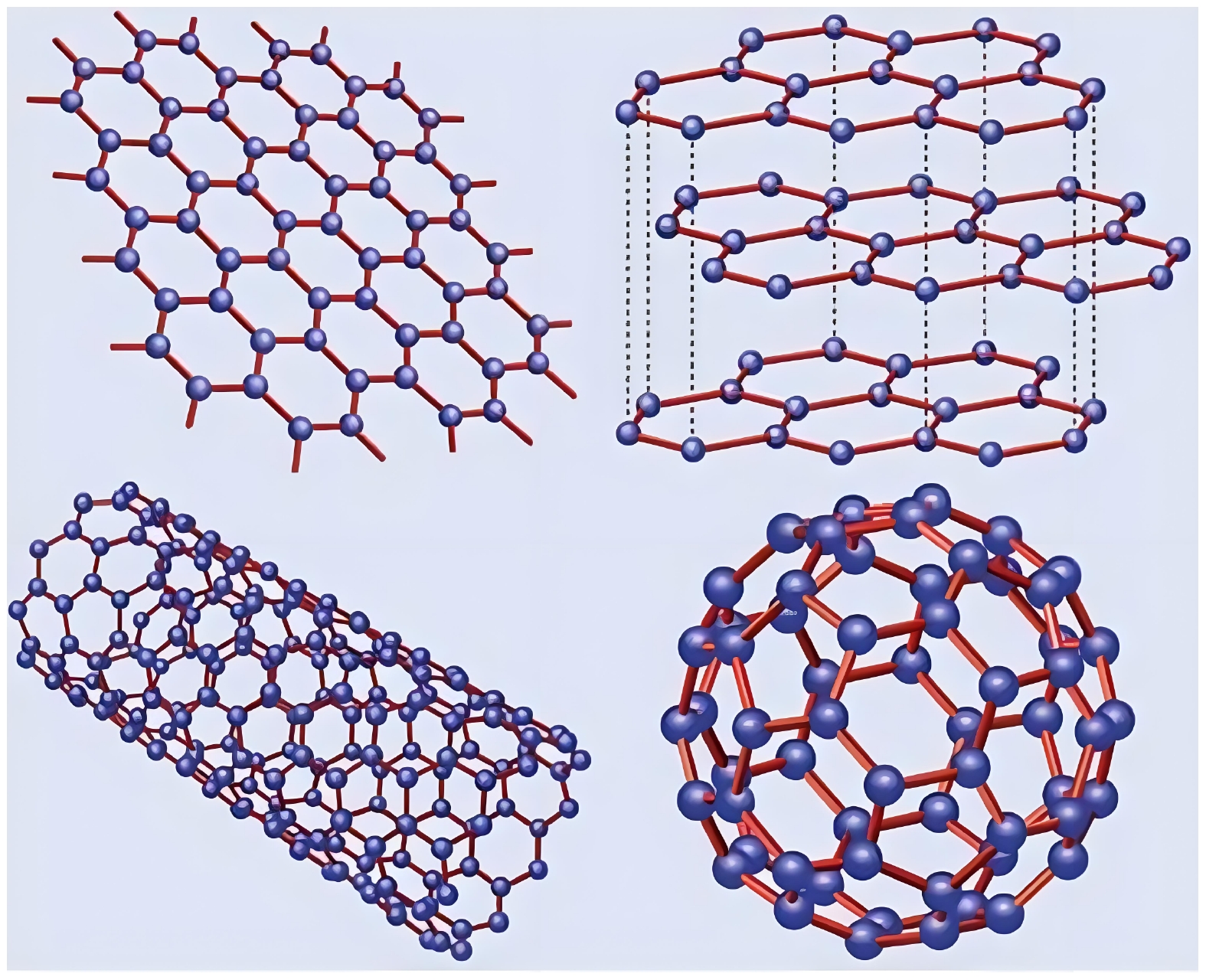
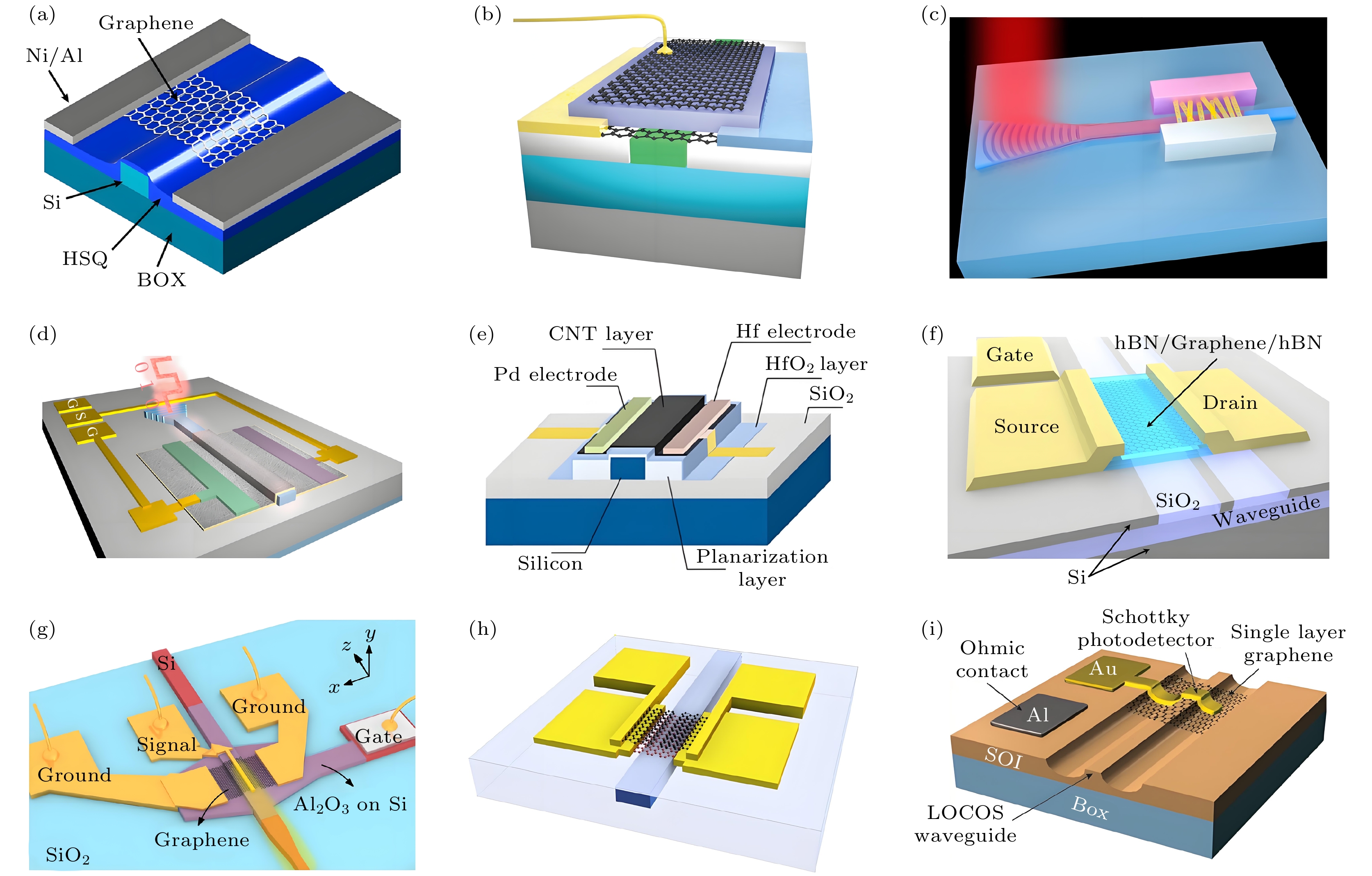
Carbon-based materials, such as graphene and carbon nanotubes (CNTs), have garnered significant attention for next-generation infrared photodetection due to their unique and excellent physical properties, including ultra-high carrier mobility and exceptionally broad spectral absorption. These characteristics present vast application prospects in fields such as optical communications, military sensing, biomedical imaging, and energy. However, a critical bottleneck for their practical application is the inherently weak light-matter interaction stemming from their low-dimensional nature. For example, a single layer of graphene absorbs only 2.3% of incident light, which severely limits the sensitivity and overall performance of photodetectors. To overcome this fundamental limitation, integrating carbon-based materials with photonic waveguides has emerged as a highly effective and promising strategy. This approach confines light within the waveguide and utilizes the evanescent field to couple with the carbon material over a long interaction length, greatly enhancing the total light absorption. Furthermore, its intrinsic compatibility with CMOS fabrication processes paves the way for low-cost, high-density, and large-scale manufacturing, meeting the stringent demands of future optoelectronic systems. This paper comprehensively reviews the latest developments in waveguide-integrated carbon-based infrared photodetectors, systematically summarizing and analyzing the progress made in three major integration aspects: silicon-on-insulator (SOI), silicon nitride (SiNx), and advanced heterostructures such as plasmonic and slot waveguides). Various performance enhancement strategies are detailed by exploring different photodetection mechanisms, including the photovoltaic effect (PVE), photothermoelectric effect (PTE), photobolometric effect (PBE), and internal photoemission effect (IPE). Key breakthroughs are highlighted, such as achieving ultra-high bandwidths exceeding 150 GHz on SOI, realizing a superior balance of high responsivity (~2.36 A/W) and high speed (~33 GHz) on SiNx, and enhancing responsivity to over 600 mA/W while extending the detection range to the mid-infrared (5.2 μm) using advanced heterostructure waveguides. Finally, the current development bottlenecks are discussed, including challenges in material transfer, interface quality control, and thermal management. Future research directions are also suggested, such as the development of novel carbon-based heterostructures, deeper integration with on-chip photonic systems, and the exploration of new waveguide materials for long-wave infrared applications. This work provides a clear roadmap for the continously developing high-performance, waveguide-integrated carbon-based infrared detectors. -
Keywords:
- carbon-based materials /
- graphene /
- waveguide integration /
- infrared detector
[1] [2] [3] [4] [5] [6] [7] [8] [9] [10] [11] [12] [13] [14] [15] [16] [17] [18] [19] [20] [21] [22] [23] [24] [25] [26] [27] [28] [29] [30] [31] [32] [33] [34] [35] [36] [37] [38] [39] [40] [41] [42] [43] [44] [45] [46] [47] [48] [49] [50] [51] [52] [53] [54] [55] [56] [57] [58] [59] [60] [61] [62] [63] [64] [65] [66] [67] [68] [69] [70] [71] [72] [73] [74] [75] [76] [77] [78] [79] [80] [81] [82] -




工作
机制文献 年份 碳基
材料类型 波长/nm 响应率
/(mA·W–1)带宽
/GHz暗电流 创新点 PVE [47] 2013 石墨烯 机械剥离 1450—1590 108 20 极低(零偏压) 非对称金属电极构建内建电场,
实现零偏压高速探测[48] 2013 石墨烯 机械剥离 1310—1650 30—50 18 极低(零偏压) CMOS兼容工艺, 全波段覆盖 [50] 2013 石墨烯 机械剥离 1550—2750 130 — 低(异质结抑制) 石墨烯/硅异质结结合悬浮波导,
将探测范围拓展至2.75 μm[51] 2014 石墨烯 湿法转移 1550 57 3 零偏压无暗电流 调制-探测双功能集成 [49] 2014 石墨烯 湿法转移 1550 7 41 零偏压无暗电流 晶圆级CVD材料+50 Gbit/s链路 [52] 2020 CNT — 1530 12.5 — <1 nA(@ –0.5 V) 单片集成、零偏压工作、
光电子系统兼容性作[53] 2023 CNT — 1550 73.62 48 0.157 μA(@ –2 V) 电极位置优化、实现高带宽与
低暗电流的平衡[54] 2024 CNT — 1550 51.04 34 0.389 μA(@ –3 V) 波导平面化工艺、热稳定性提升 PTE [55] 2015 石墨烯 湿法转移 1500—1800 360 42 零偏压无暗电流 hBN封装提升性能+自相关功能 [56] 2016 石墨烯 湿法转移 1550 273 — 极低 槽波导光场局域化, 悬浮石墨烯
抑制声子散射[57] 2020 石墨烯 湿法转移 1500—2000 400 >40 低偏压下暗电流可控 混合等离子体波导平衡吸收与损耗,
支持中红外[58] 2021 石墨烯 湿法转移 1550 3500 >65 零暗电流 光热效应实现零偏压超高速,
50 Ω阻抗匹配IPE [59] 2016 石墨烯 湿法转移 1550 370 — 低 等离子体波导增强光吸收, 雪崩增益 PBE [60] 2025 石墨烯 湿法转移 1550—1640 68—200 155 低 等离激元谐振增强; 实现155 GHz带
宽和创纪录的192 GBaud数据传输 DownLoad: CSV
工作机制 文献 年份 碳基材料 类型 波长/nm 响应率 带宽/GHz 暗电流 创新点 PTE(零偏压)+
PBE(偏压)[64] 2015 石墨烯 湿法转移 1550 126 mA/W — — 实现氮化硅波导集成石墨烯探测器,
CMOS兼容性PVE(零偏压)+
PBE(偏压)[67] 2018 石墨烯 湿法转移 1550 2.36 A/W 33 20 μA 叉指电极减小载流子传输距离,
实现高响应率与高带宽PTE [66] 2019 石墨烯 湿法转移 1500—1600 12.2 V/W 42 零暗电流 等离子体波导增强光吸收,
零偏压高响应率与高带宽[65] 2020 石墨烯 湿法转移 1550 6 V/W 67 零暗电流 零偏置操作、聚合物介电优化、
超高带宽
DownLoad: CSV
工作机制 文献 年份 碳基材料 类型 波长/nm 响应率 带宽/GHz 暗电流 创新点 PTE [69] 2016 石墨烯 机械剥离 1550 35 mA/W 65 无 实现石墨烯PN结与硅波导集成,
突破性提升带宽[72] 2022 石墨烯 湿法转移 520 10 mA/W(零偏压),
1.5 V/W(偏压)>1 较高 硫系玻璃波导扩展至中红外,
分裂栅PN结PVE [71] 2018 石墨烯 湿法转移 400—1600 11 mA/W >50 零偏压下
可忽略石墨烯-P-I-N异质结
结合光子晶体波导[74] 2020 石墨烯 湿法转移 1550 360 mA/W >110 — 等离子体超强光限制,
超短载流子路径[70] 2022 石墨烯 湿法转移 1550 603.92 mA/W 78 — 双槽结构平衡光吸收与金属损耗
DownLoad: CSV
-
[1] [2] [3] [4] [5] [6] [7] [8] [9] [10] [11] [12] [13] [14] [15] [16] [17] [18] [19] [20] [21] [22] [23] [24] [25] [26] [27] [28] [29] [30] [31] [32] [33] [34] [35] [36] [37] [38] [39] [40] [41] [42] [43] [44] [45] [46] [47] [48] [49] [50] [51] [52] [53] [54] [55] [56] [57] [58] [59] [60] [61] [62] [63] [64] [65] [66] [67] [68] [69] [70] [71] [72] [73] [74] [75] [76] [77] [78] [79] [80] [81] [82]

 DownLoad:


Catalog
Metrics
- Abstract views: 1906
- PDF Downloads: 97
- Cited By: 0