













-
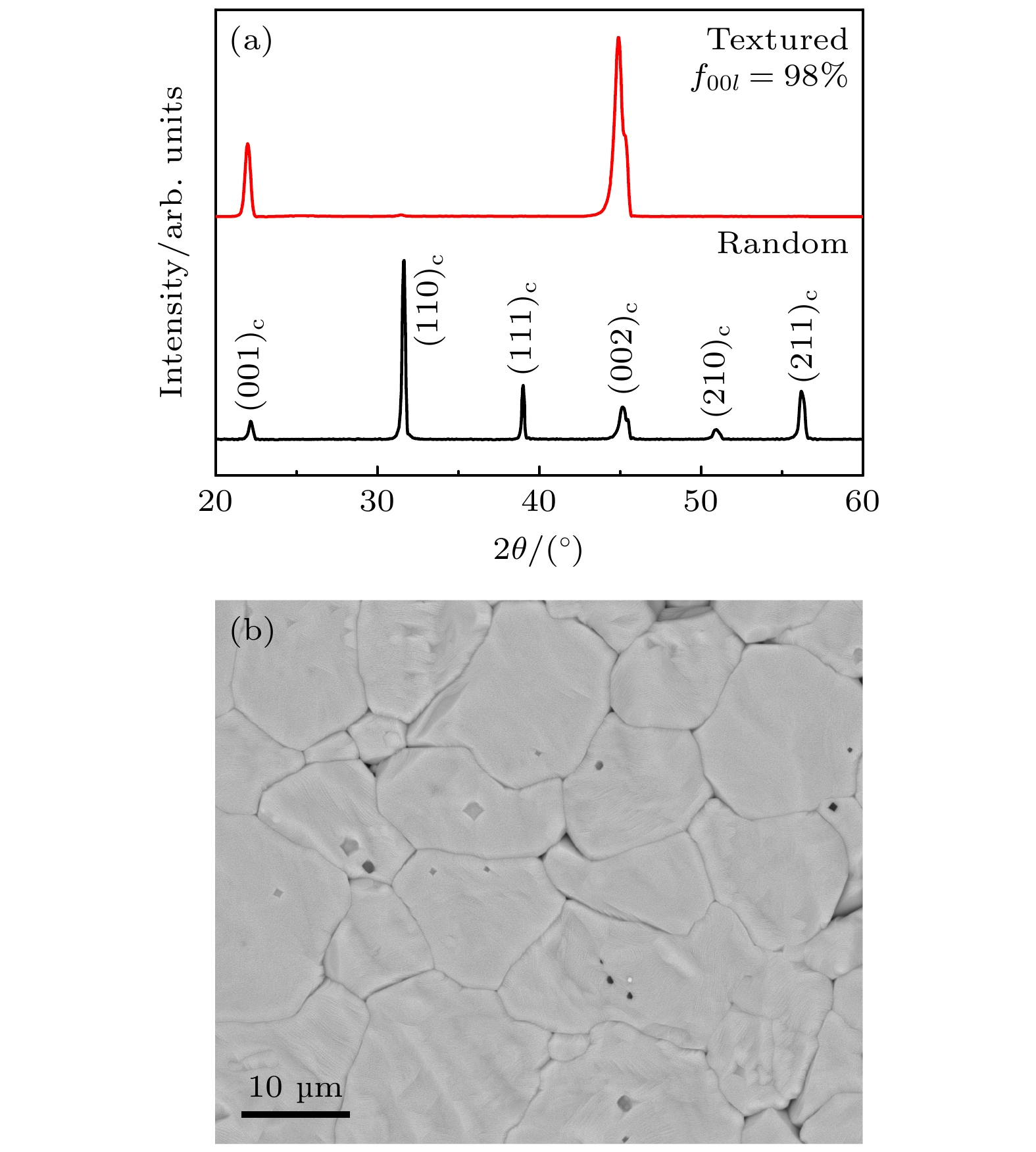
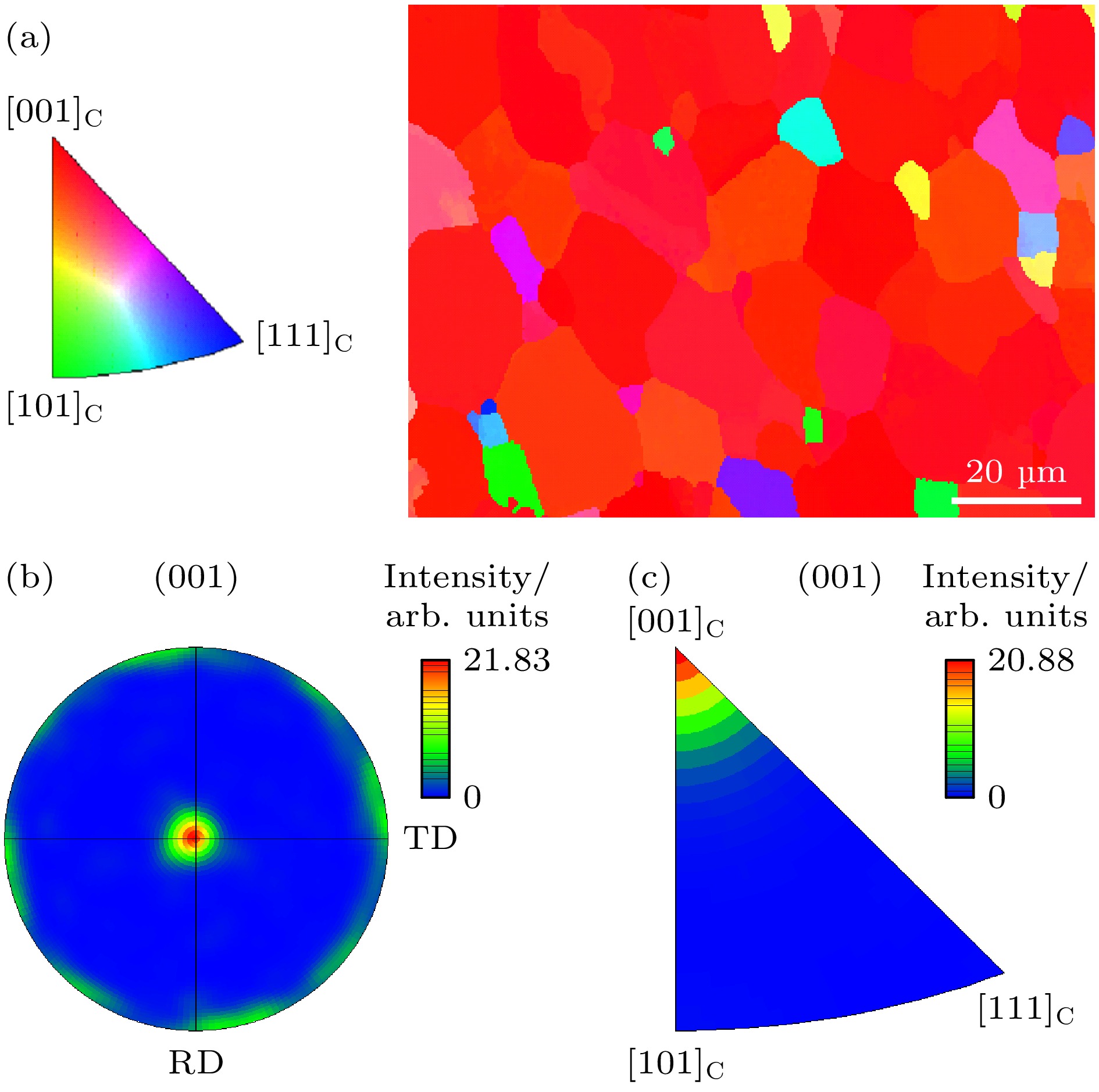
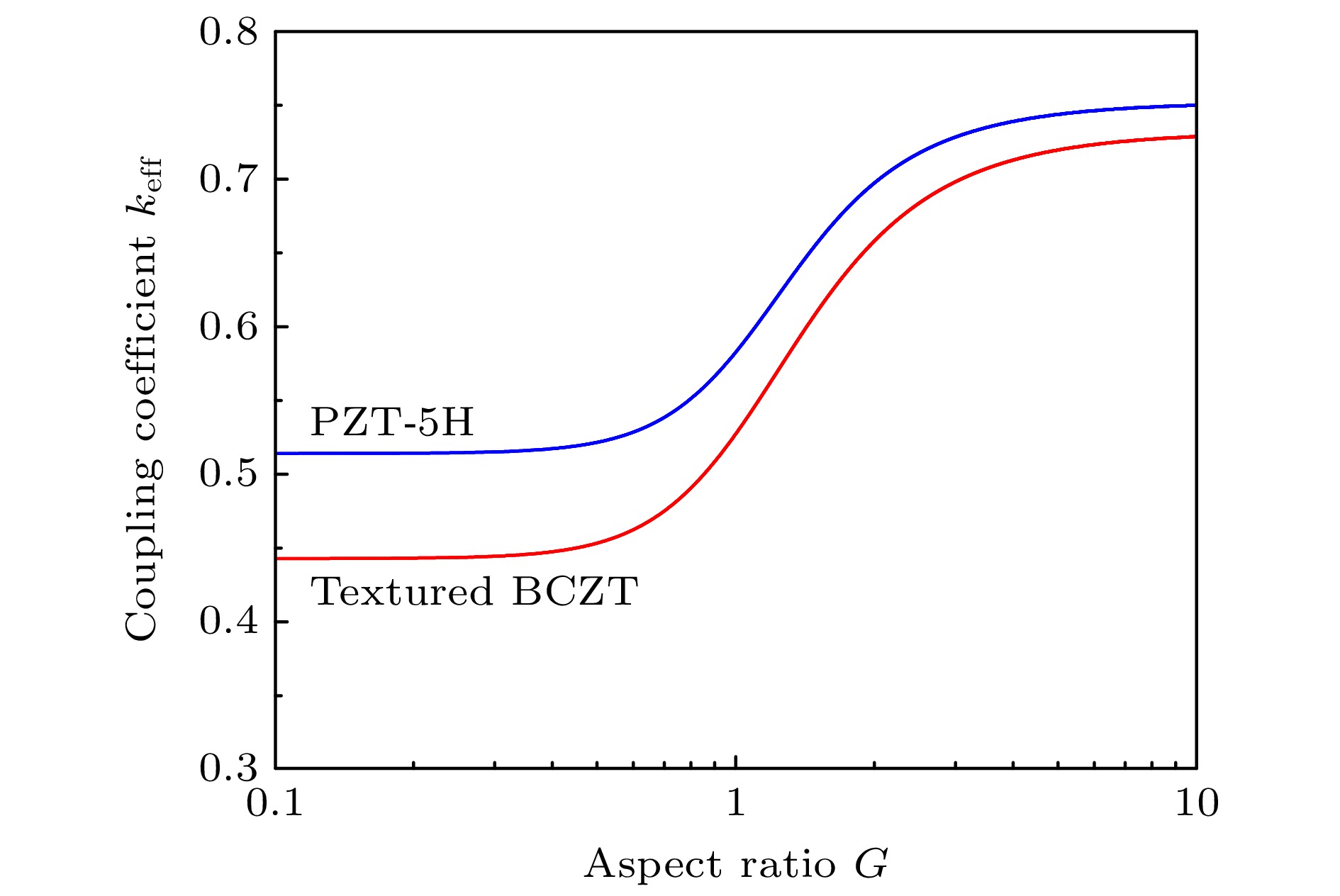
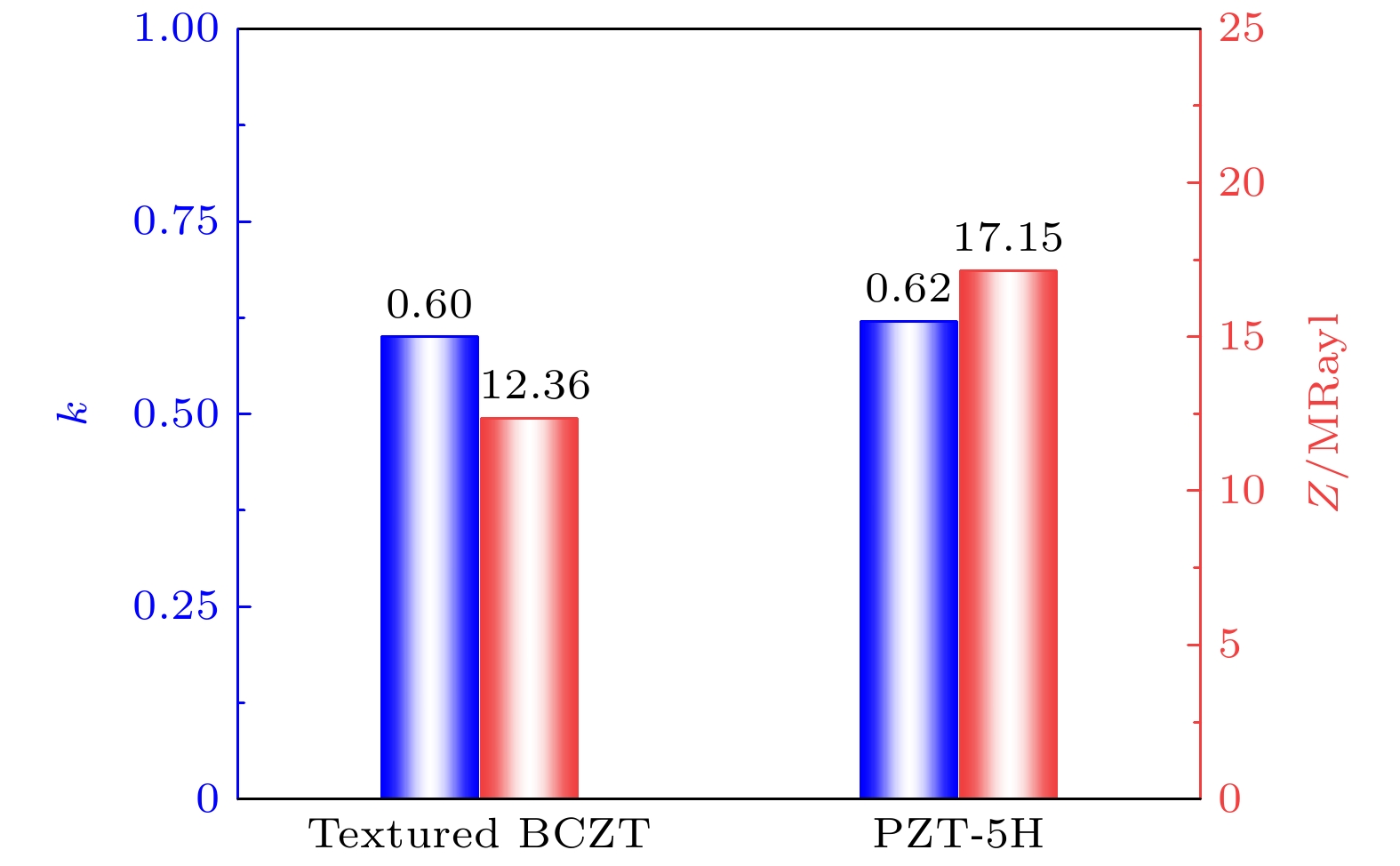
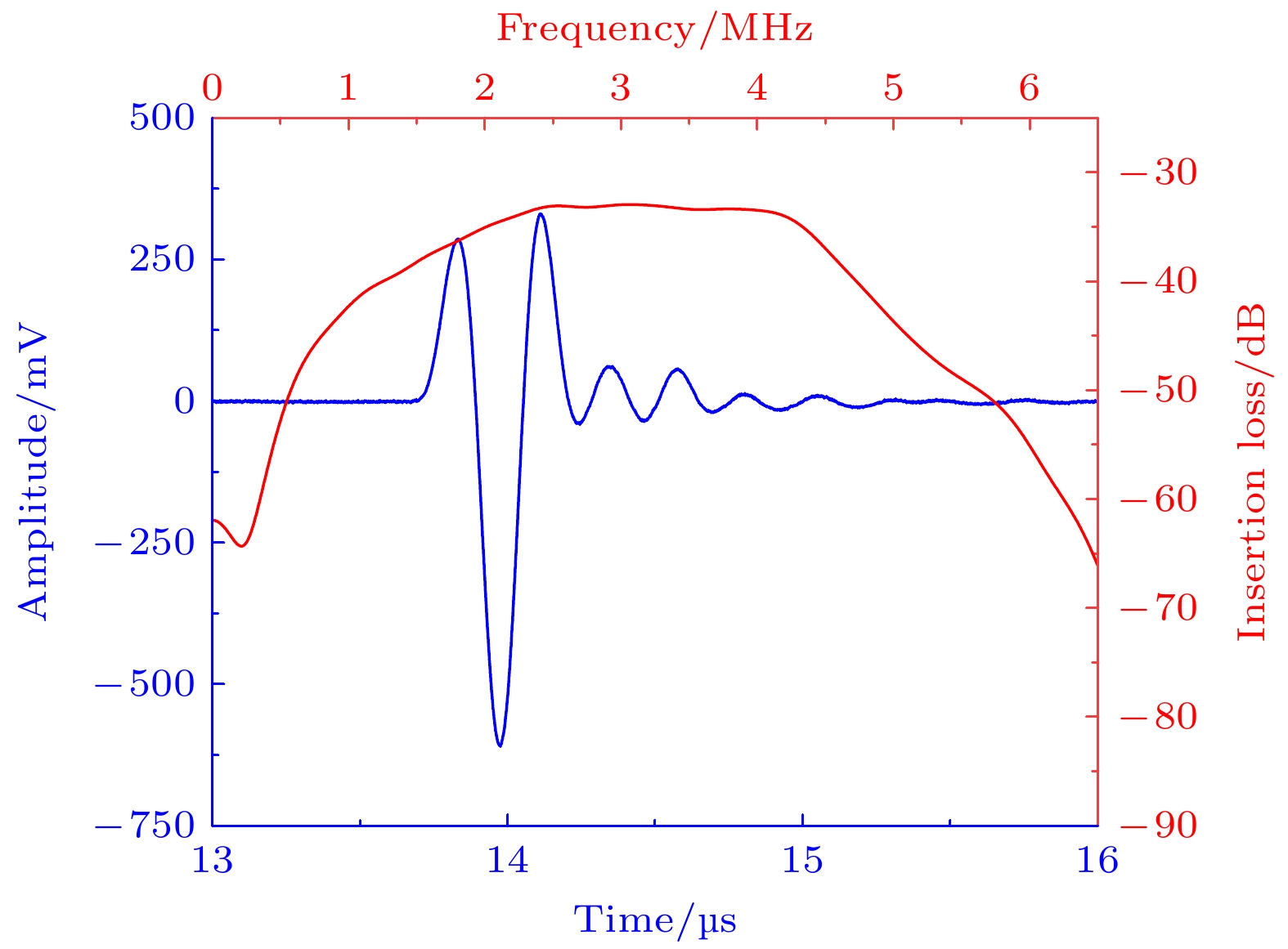
Ultrasound diagnostic technology demonstrates unique clinical value in cardiovascular monitoring, precise ophthalmic diagnosis, and interventional therapy, and possesses the advantages of high efficiency, safety, non-invasiveness, and significant cost-effectiveness. The performance of transducer that is a core component of ultrasound imaging systems directly determines the image resolution. Piezoelectric materials, essential for the acoustic-to-electric energy conversion, exhibit piezoelectric and electromechanical properties that obviously affect the transducer sensitivity and bandwidth. Although commercial Pb(Zr,Ti)O3 (PZT) ceramics offer excellent properties, the toxicity of the lead element in the entire material preparation, service life, and disposal process pose significant risks to human health and ecosystems. The [001]C-textured lead-free (Ba,Ca)(Zr,Ti)O3 (BCZT) ceramics are fabricated by the template grain growth (TGG) method. The materials demonstrate high piezoelectricity, elevated sound velocity, and low dielectric constant, making them highly suitable for developing high-sensitivity and large-bandwidth ultrasonic transducers. However, critical limitations are also existent: 1) the absence of full-matrix electromechanical properties such as dielectric constant εij, piezoelectric coefficient dij, and elastic constant sij essential for device design, and 2) the restriction of electromechanical coupling coefficient k calculations to extreme aspect ratios. The failure to accurately simulate the evolution of k under finite aspect ratio severely limits the practical applications. To overcome such challenges, highly [00l]C-oriented textured BCZT ceramics (texture degree f00l ~ 98%) are synthesized via TGG. By combining resonance-antiresonance spectroscopy with pulse-echo ultrasonic measurements, the dataset of complete full-matrix electromechanical property is established for the first time. The textured BCZT ceramics exhibit strong anisotropic Poisson’s ratios. Their piezoelectric coefficient d33 (605 pC/N) and electromechanical coupling coefficient k33 (0.73) are comparable to those of PZT-5H ceramics, while the piezoelectric voltage constant g33 (23.6 × 10⁻³ V·m–1·Pa–1) is 20 % higher than that of PZT-5H. By using the piezoelectric constitutive equations, a theoretical model is developed to predict k at an arbitrary aspect ratio. Based on this model developed, the 1-3 type BCZT composite transducer with high sensitivity and wide frequency band is designed and fabricated, exhibiting a center frequency of ~3.0 MHz. The BCZT transducer achieves an insertion loss of –33.0 dB. The –6 dB bandwidth is as high as 107.1%, which is superior to the ultrasonic transducer made of PZT-5H composite reported in the literature. This work not only provides complete electromechanical parameters for lead-free piezoelectric device applications but also lays a theoretical and technical foundation for developing high-performance, eco-friendly ultrasonic diagnostic equipments. 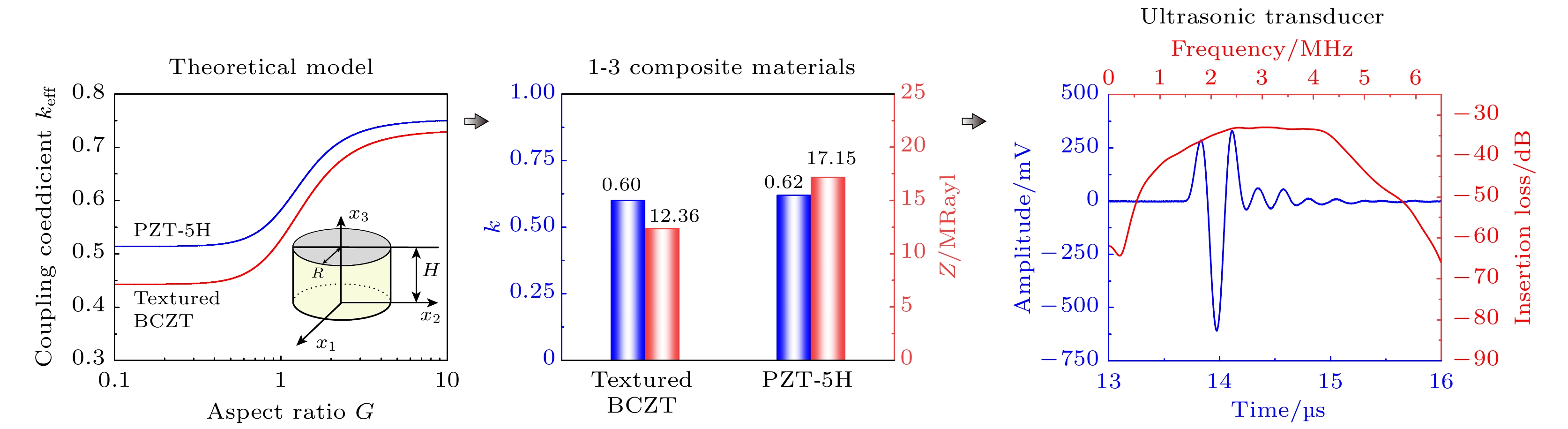
-
Keywords:
- textured ceramics /
- lead-free piezoelectrity /
- full matrix electromechanical parameters /
- ultrasonic transducer
[1] [2] [3] [4] [5] [6] [7] [8] [9] [10] [11] [12] [13] [14] [15] [16] [17] [18] [19] [20] [21] [22] [23] [24] [25] [26] [27] [28] [29] -
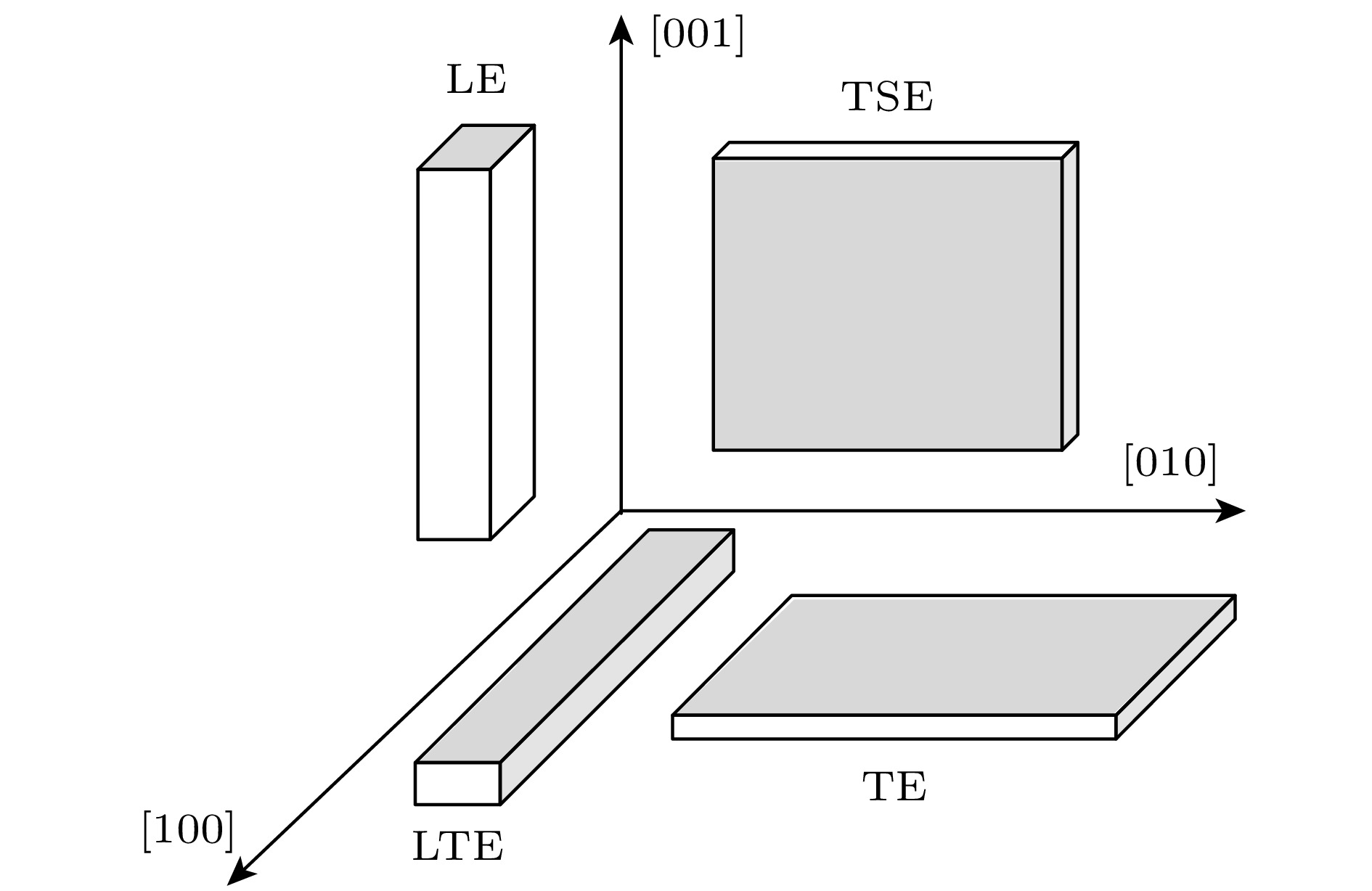
压电振子
类型尺寸/mm 测量参数 计算参数 LTE $12.01{\times}2.46{\times}0.32 $ $ s_{{11}}^{\text{E}} ,\, {k_{31}} ,\, \varepsilon _{{33}}^{\text{T}},\, \varepsilon _{33}^{\text{S}} $ $ {d_{31}} $ LE $0.39{\times}0.40{\times}2.17 $ $ s_{{33}}^{\text{D}} ,\, {k_{33}} $ $ s_{{33}}^{\text{E}} ,\, {d_{33}} $ TSE $0.32{\times}2.19{\times}5.43 $ $ c_{{44}}^{\text{D}} ,\, {k_{15}} ,\, \varepsilon _{{11}}^{\text{T}} ,\, \varepsilon _{{11}}^{\text{S}} $ $ {d_{15}}, \, c_{{44}}^{\text{E}} $ TE $0.62{\times}6.52{\times}6.50 $ $ c_{{33}}^{\text{D}} ,\, {k_{\text{t}}} ,\, \varepsilon _{{33}}^{\text{S}},\, \varepsilon _{{33}}^{\text{T}} $ $ c_{{33}}^{\text{E}} $  DownLoad: CSV
波传播方向 [001] [001] [100] [100] [100] 声速 $ V_1^{\left[ {001} \right]} $ $ V_{\text{s}}^{\left[ {001} \right]} $ $ V_1^{\left[ {100} \right]} $ $ V_{{\text{s}} \bot }^{\left[ {100} \right]} $ $ V_{{\text{s}}/ / }^{\left[ {{100}} \right]} $ 弹性刚度常数 $ c_{{33}}^{\text{D}} $ $ c_{{44}}^{\text{E}} $ $ c_{{11}}^{\text{E}} $ $ c_{{66}}^{\text{E}} $ $ c_{{44}}^{\text{D}} $
DownLoad: CSV
BCZT PZT-5H 弹性
刚度
常数$c_{{11}}^{\text{E}}$/(1010 N·m–2) 13.9 12.7 $c_{{12}}^{\text{E}}$/(1010 N·m–2) 6.9 8.0 $c_{{13}}^{\text{E}}$/(1010 N·m–2) 8.7 8.5 $c_{{33}}^{\text{E}}$/(1010 N·m–2) 11.0 11.7 $c_{{44}}^{\text{E}}$/(1010 N·m–2) 4.7 2.3 $c_{{66}}^{\text{E}}$/(1010 N·m–2) 2.9 2.3 $c_{{11}}^{\text{D}}$/(1010 N·m–2) 14.2 13.0 $c_{{12}}^{\text{D}}$/(1010 N·m–2) 7.2 8.3 $c_{{13}}^{\text{D}}$/(1010 N·m–2) 7.8 7.2 $c_{{33}}^{\text{D}}$/(1010 N·m–2) 13.7 15.7 $c_{{44}}^{\text{D}}$/(1010 N·m–2) 6.3 4.2 $c_{{66}}^{\text{D}}$/(1010 N·m–2) 2.9 2.4 弹性
柔顺
常数$s_{{11}}^{\text{E}}$/(10–12 m2·N–1) 14.2 16.5 $s_{{12}}^{\text{E}}$/(10–12 m2·N–1) –0.1 –4.8 $s_{{13}}^{\text{E}}$/(10–12 m2·N–1) –11.2 –8.5 $s_{{33}}^{\text{E}}$/(10–12 m2·N–1) 26.7 20.7 $s_{{44}}^{\text{E}}$/(10–12 m2·N–1) 21.4 43.5 $s_{{66}}^{\text{E}}$/(10–12 m2·N–1) 34.1 42.6 $s_{{11}}^{\text{D}}$/(10–12 m2·N–1) 11.1 14.0 $s_{{12}}^{\text{D}}$/(10–12 m2·N–1) –3.1 –7.3 $s_{{13}}^{\text{D}}$/(10–12 m2·N–1) –4.5 –3.1 $s_{{33}}^{\text{D}}$/(10–12 m2·N–1) 12.4 9.0 $s_{{44}}^{\text{D}}$/(10–12 m2·N–1) 16.0 23.7 $s_{{66}}^{\text{D}}$/(10–12 m2·N–1) 34.1 42.6
DownLoad: CSV
BCZT PZT-5H 压电
常数${e_{15}}$/(C·m–2) 16.2 17.0 ${e_{31}}$/(C·m–2) –5.8 –6.6 ${e_{33}}$/(C·m–2) 17.8 23.3 ${d_{15}}$/(10–12 C·N–1) 347 741 ${d_{31}}$/(10–12 C·N–1) –281 –274 ${d_{33}}$/(10–12 C·N–1) 605 593 ${g_{15}}$/(10–3 V·m–1·Pa–1) 15.6 26.8 ${g_{31}}$/(10–3 V·m–1·Pa–1) –11.0 –9.1 ${g_{33}}$/(10–3 V·m–1·Pa–1) 23.6 19.7 $ {h_{15}} $/(108 V·m–1) 9.8 11.3 $ {h_{31}} $/(108 V·m–1) –4.9 –5.1 $ {h_{33}} $/(108 V·m–1) 15.0 18.0 机电
耦合
系数$ {k_{15}} $ 0.50 0.51 $ {k_{31}} $ 0.47 0.39 $ {k_{33}} $ 0.73 0.75 ${k_{\text{t}}}$ 0.44 0.51 ${k_{\text{p}}}$ 0.63 0.65 介电
常数$ \varepsilon _{{11}}^{\text{S}} /{\varepsilon _0} $ 1871 1704 $ \varepsilon _{{33}}^{\text{S}} /{\varepsilon _0} $ 1341 1434 $ \varepsilon _{{11}}^{\text{T}} /{\varepsilon _0} $ 2507 3130 $ \varepsilon _{{33}}^{\text{T}} / {\varepsilon _0} $ 2892 3400 $\beta _{{11}}^{\text{S}}/(10^{-4} {\varepsilon _0} )$ 5.3 5.9* $\beta _{{33}}^{\text{S}}/(10^{-4} {\varepsilon _0} )$ 7.5 7.0* $\beta _{{11}}^{\text{T}}/(10^{-4} {\varepsilon _0} )$ 4.0 3.2* $\beta _{{33}}^{\text{T}}/(10^{-4} {\varepsilon _0} )$ 3.5 2.9* *基于表格中PZT-5H的数据, 根据公式$ {\beta _{ij}} = 1/{\varepsilon _{ij}} $计算得出.
DownLoad: CSV
-
[1] [2] [3] [4] [5] [6] [7] [8] [9] [10] [11] [12] [13] [14] [15] [16] [17] [18] [19] [20] [21] [22] [23] [24] [25] [26] [27] [28] [29]

 DownLoad:
Catalog
Metrics
- Abstract views: 1501
- PDF Downloads: 28
- Cited By: 0