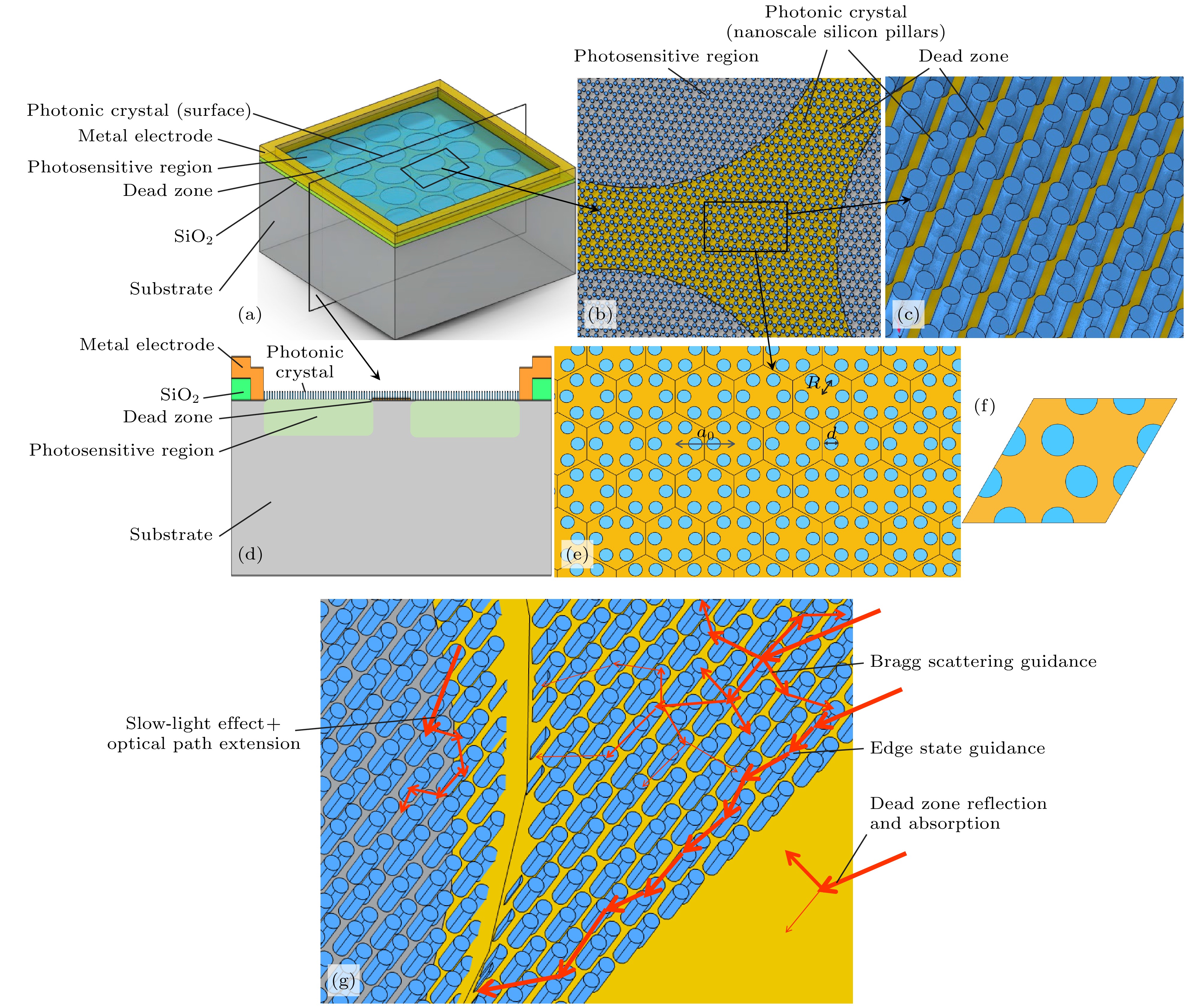
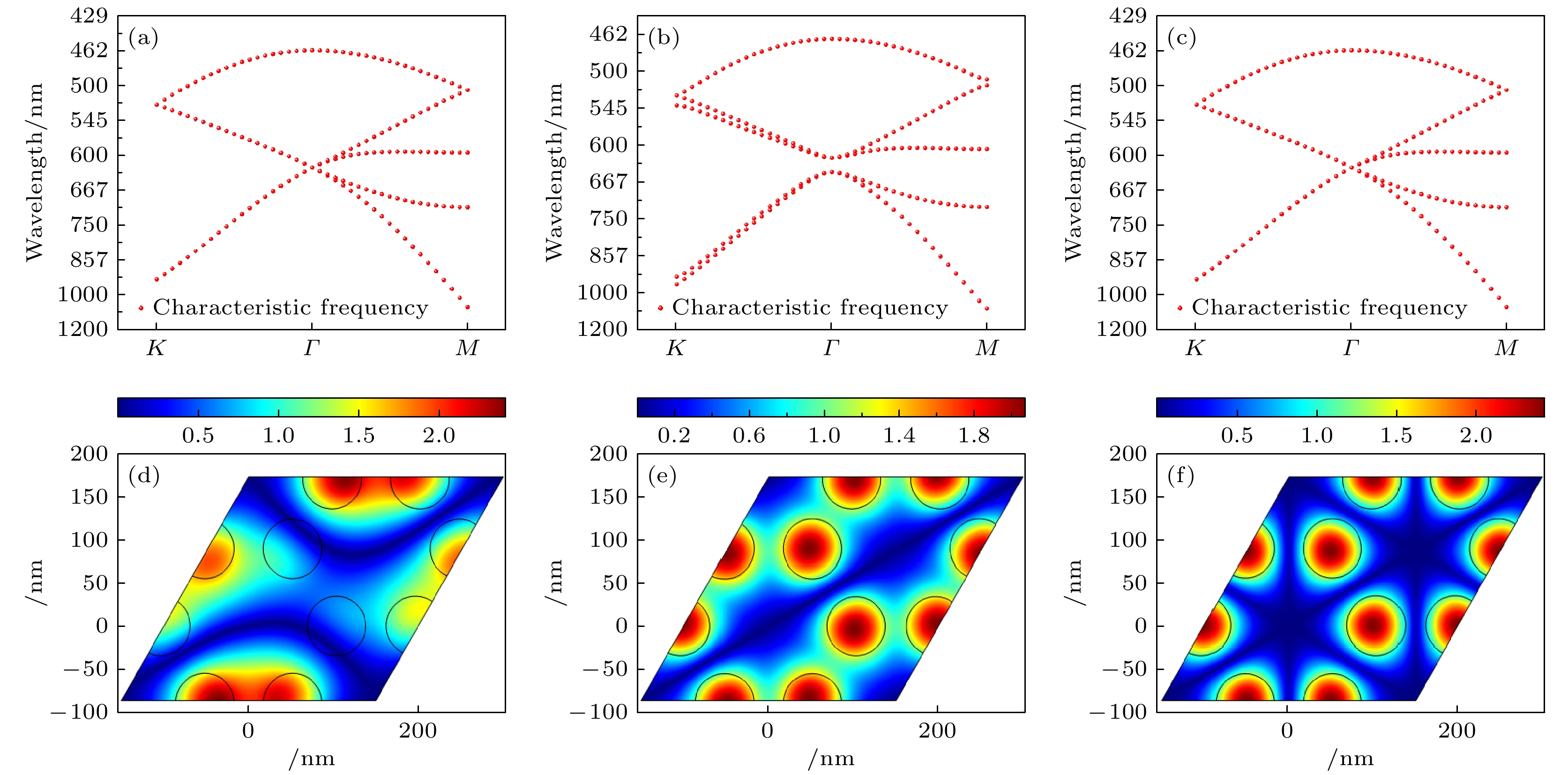
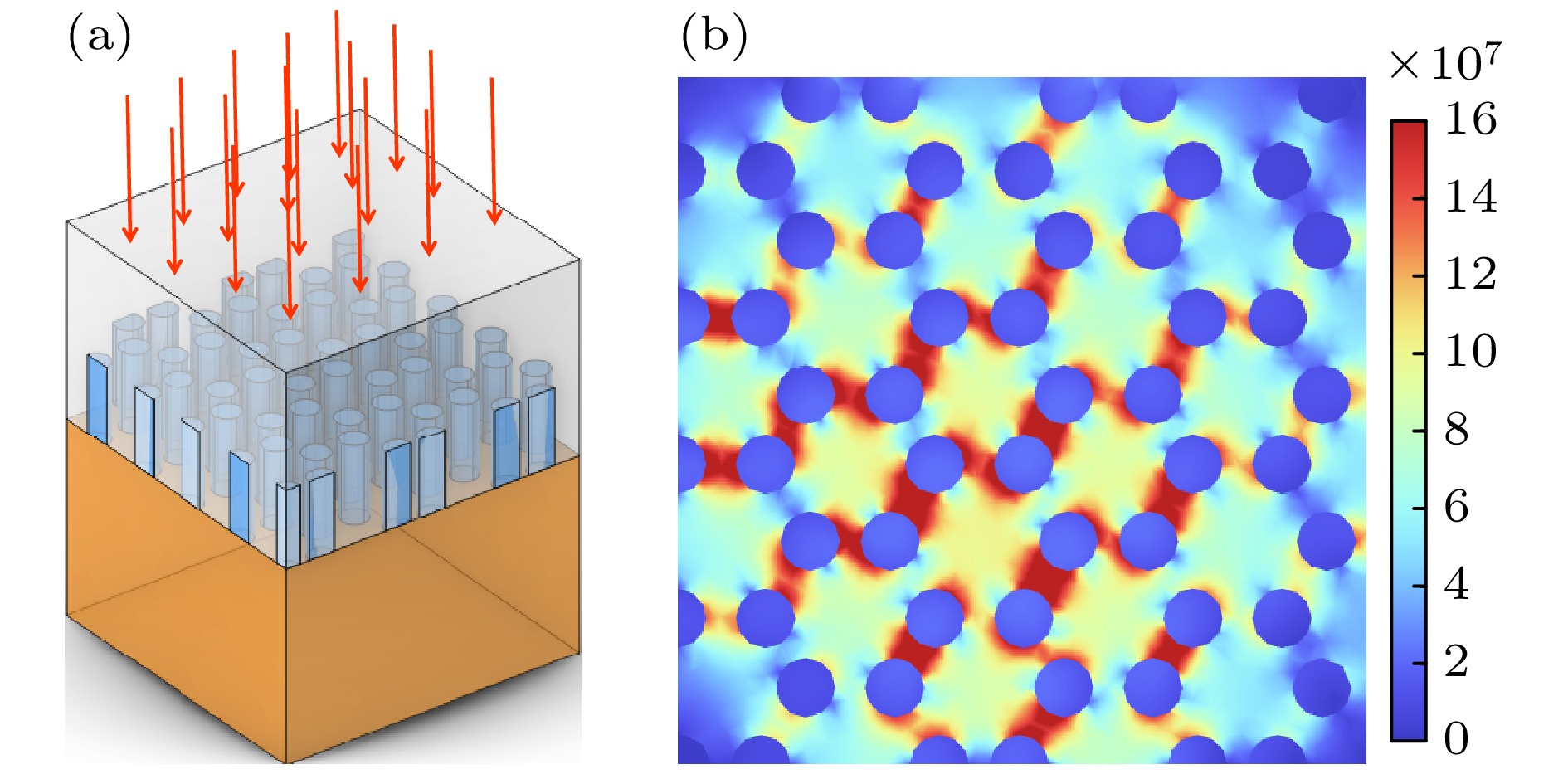
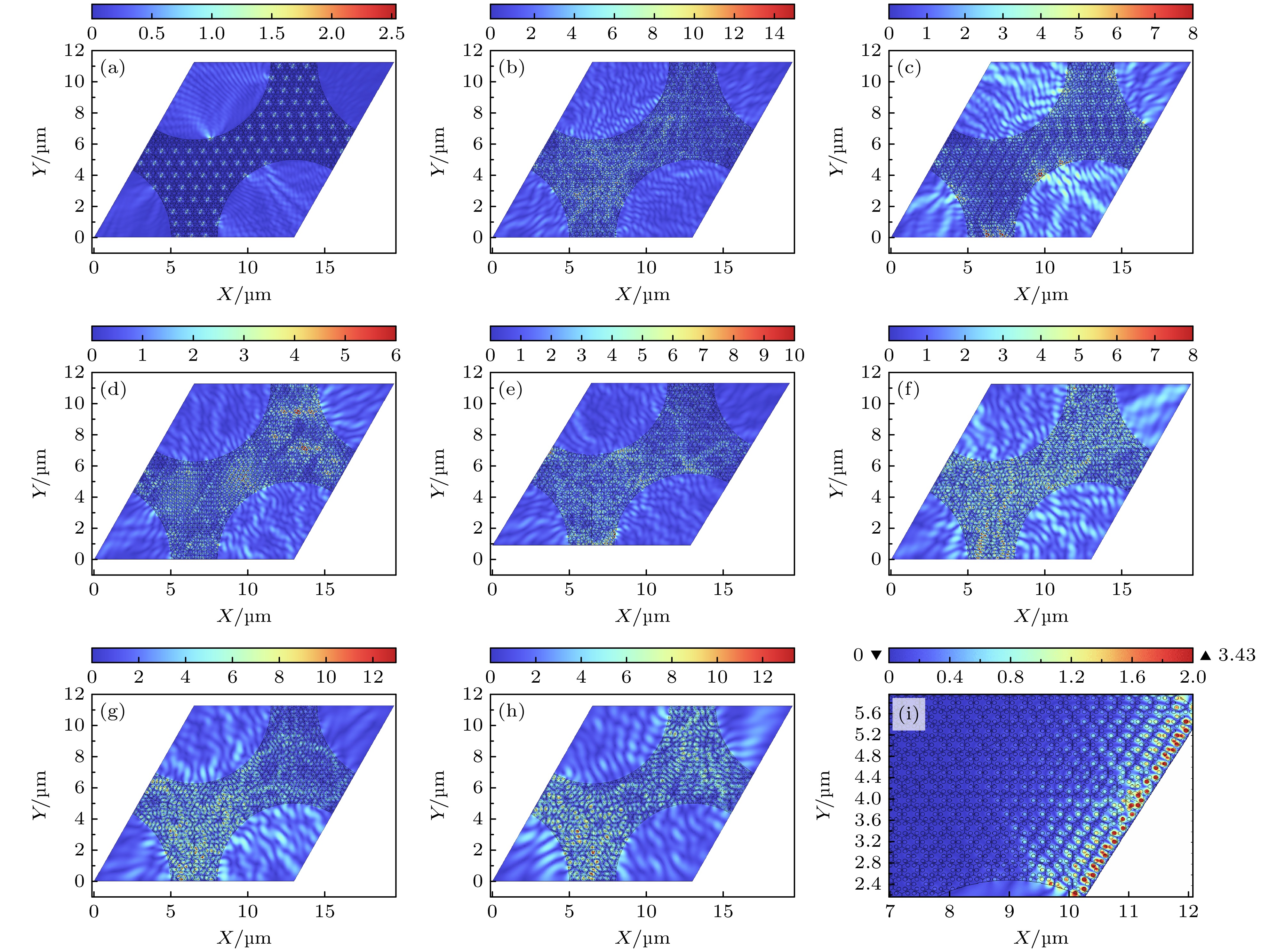
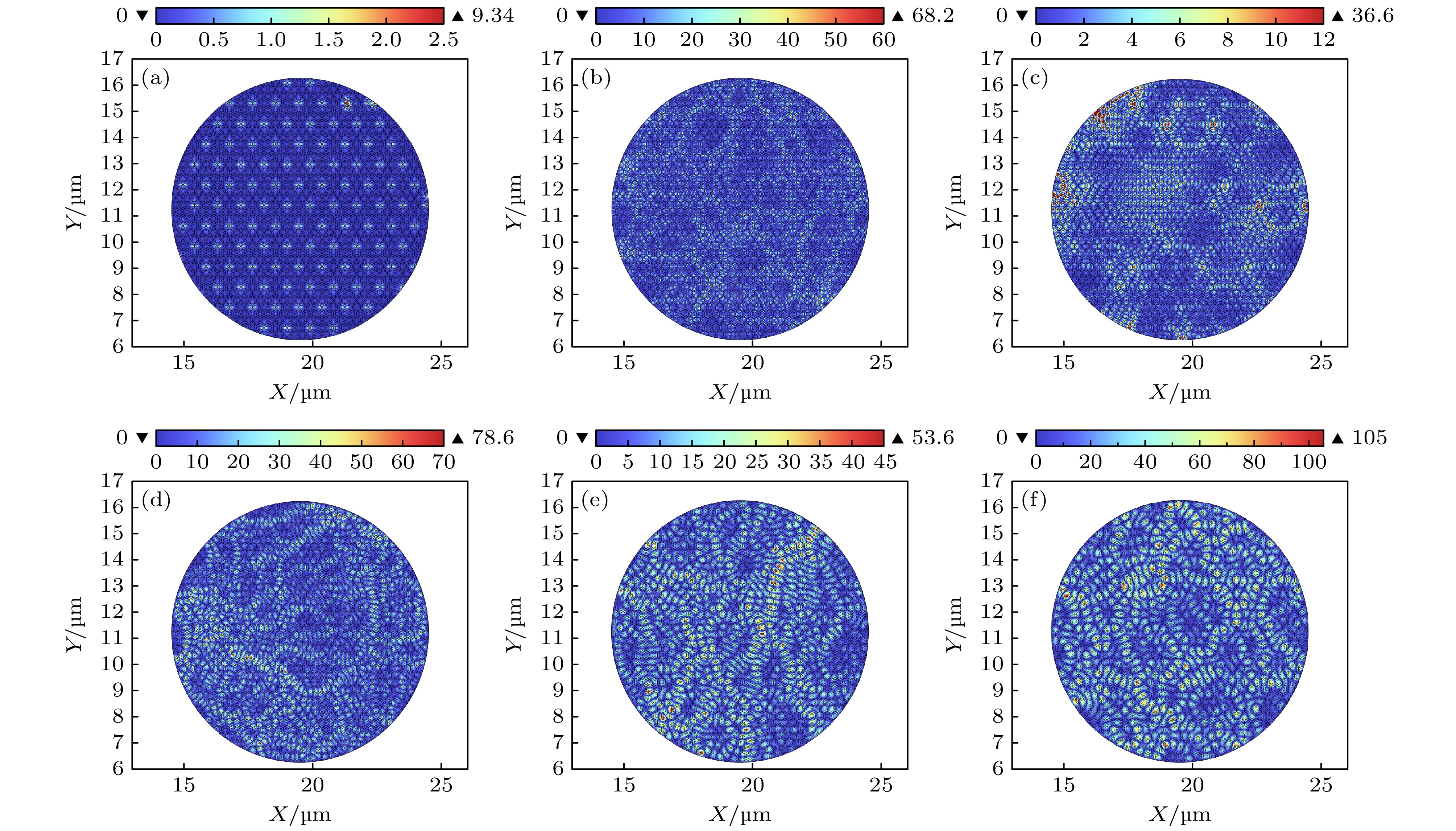
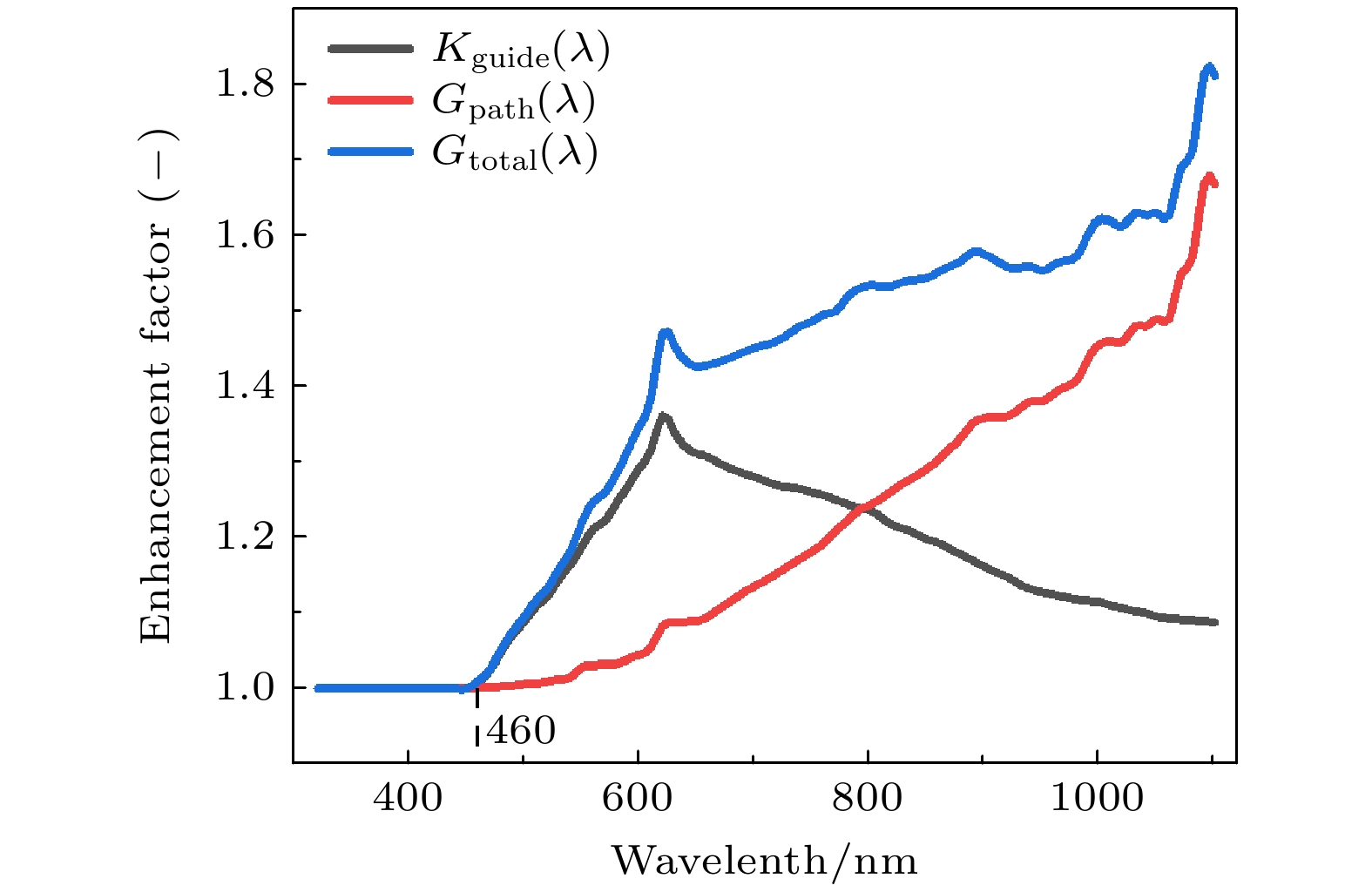
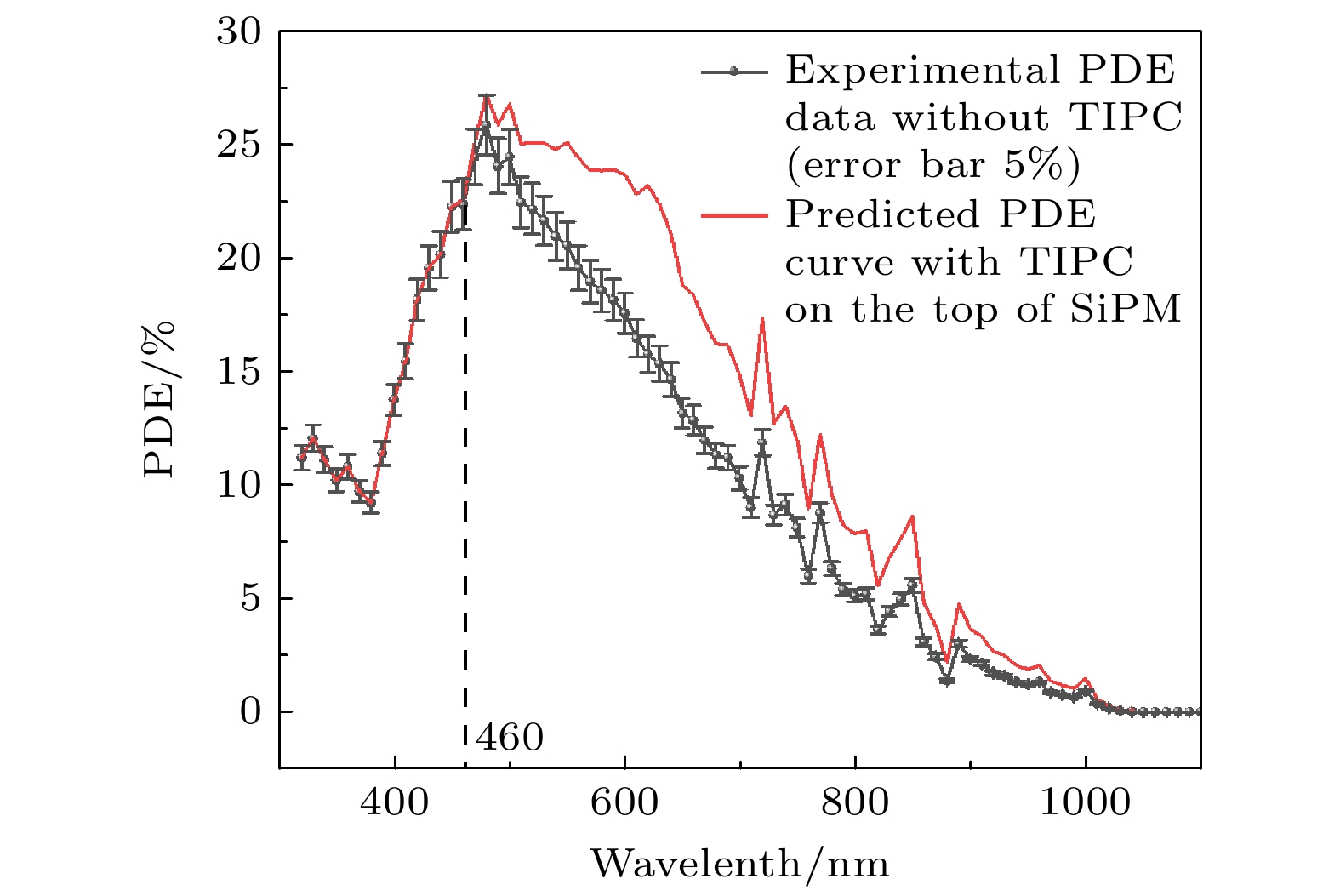
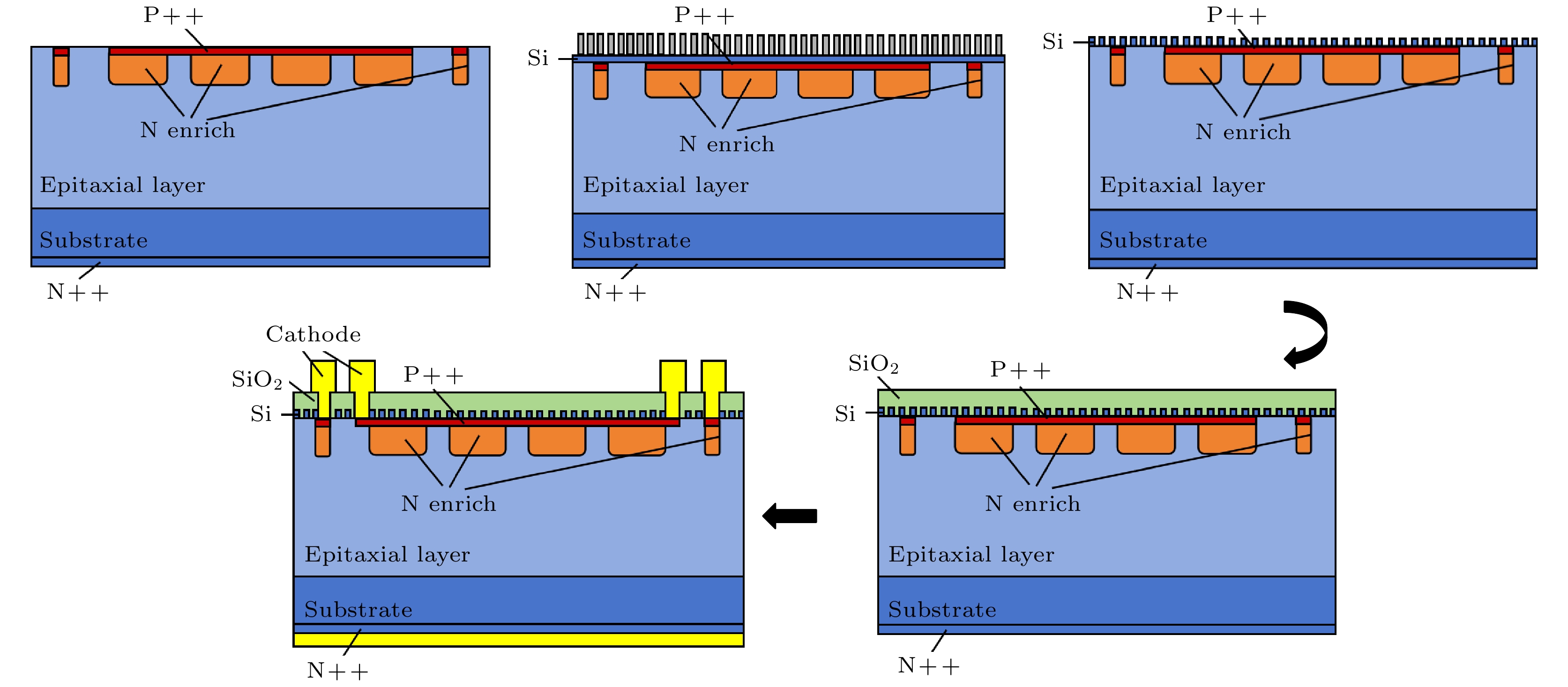
Silicon photomultipliers (SiPMs) have been widely used in the field of weak light detection. However, SiPMs utilizing small-sized Geiger-mode avalanche photodiode (G-APD) cells face the limitations due to a restricted effective geometric fill sactor (GFF), which leads to relatively low photon detection efficiency (PDE), and additionally, constrained by the intrinsic properties of silicon materials, their PDE in the near-infrared band is also relatively insufficient. To address the above issues, this work proposes a regional optical field modulation approach based on topological photonic crystals (TPCs), aiming to improve the PDE of SiPMs without modifying their internal structure. Through COMSOL electromagnetic wave frequency-domain simulation, the multi-band synergistic mechanism of dead-zone topological edge state guidance, photosensitive region slow-light effect, and Bragg scattering is revealed. In the 460–700 nm band, the honeycomb lattice in the dead zone induces topological edge states via Floquet periodic analysis, while the periodic dielectric distribution of the lattice excites Bragg scattering to reduce photon reflection loss at the metal surface and precisely couples photons to the photosensitive region, leading to an increase in effective GFF from 46.4% to 63.1% at 621 nm. In the 700–1100 nm band, in addition to reducing reflection loss via Bragg scattering, the designed periodic silicon pillar structure can effectively extend the transverse propagation path of photons through the slow-light effect, thereby increasing the coupling probability with the photosensitive region, resulting in a significant increase in absorption efficiency from 41.19% to 55.94% at 900 nm. Simulation results show that this design scheme increases the average PDE of SiPMs by 50% in the 460–1100 nm band (with a peak value of 81%) and can be implemented via mainstream etching processes (electron beam lithography + reactive ion etching). Compared with traditional microlens and plasmonic structures, TPCs exhibit significant advantages in broad-spectrum response and process simplification. This work provides a new topological photonics approach for photon recycling and PDE enhancement of SiPMs.













 DownLoad: CSV

 DownLoad:
