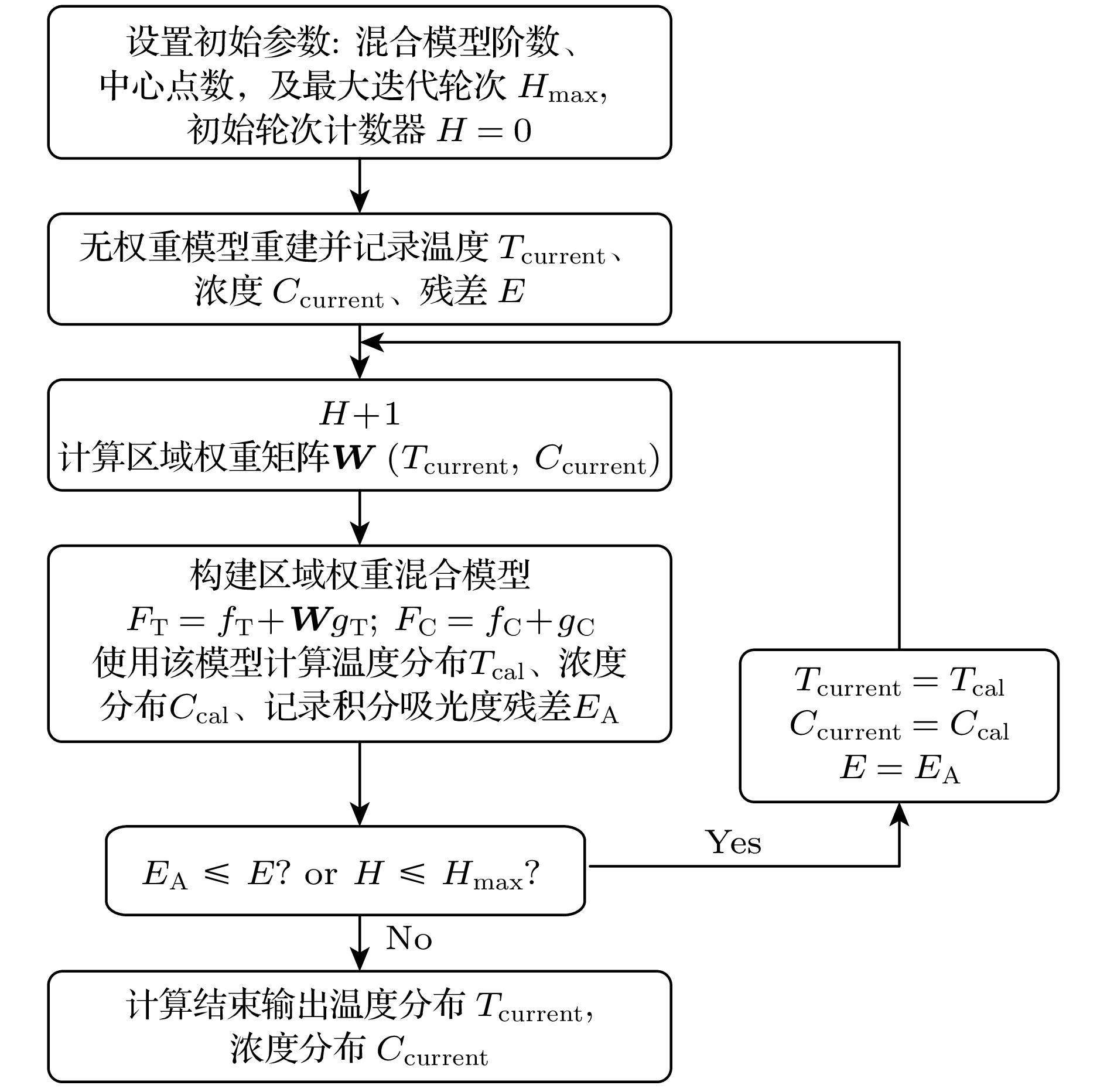
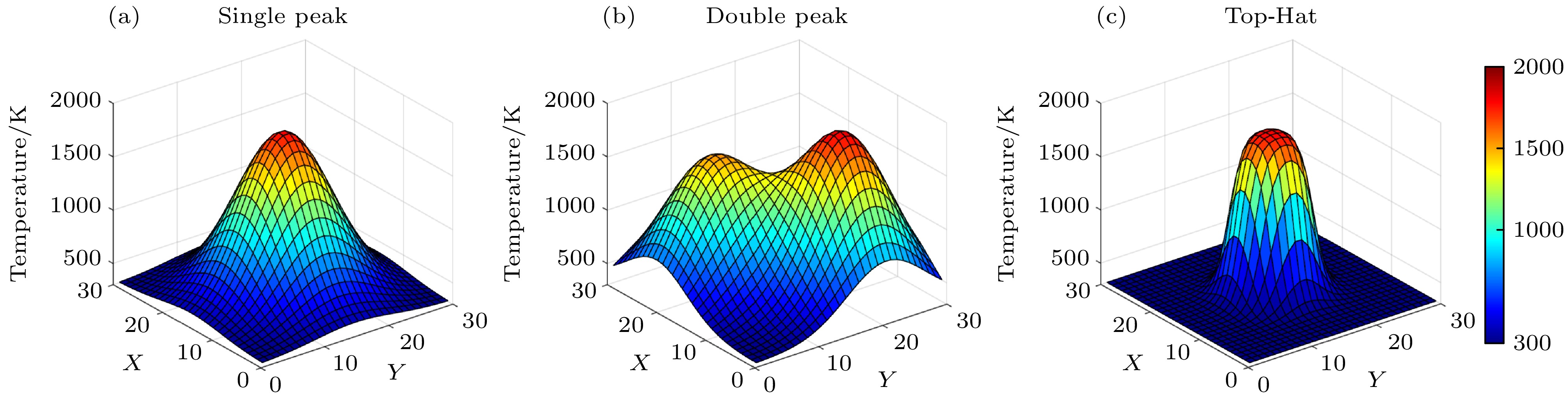
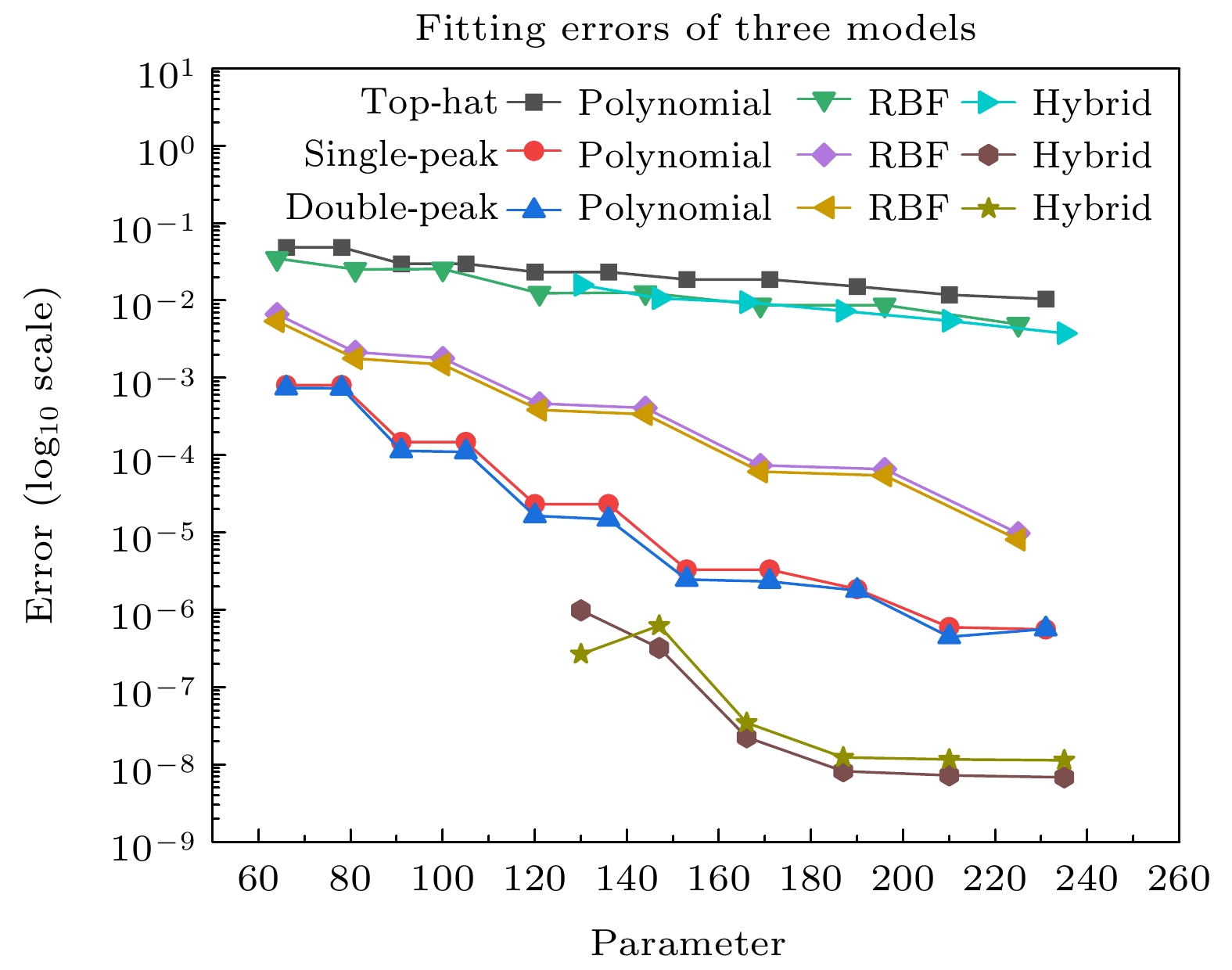
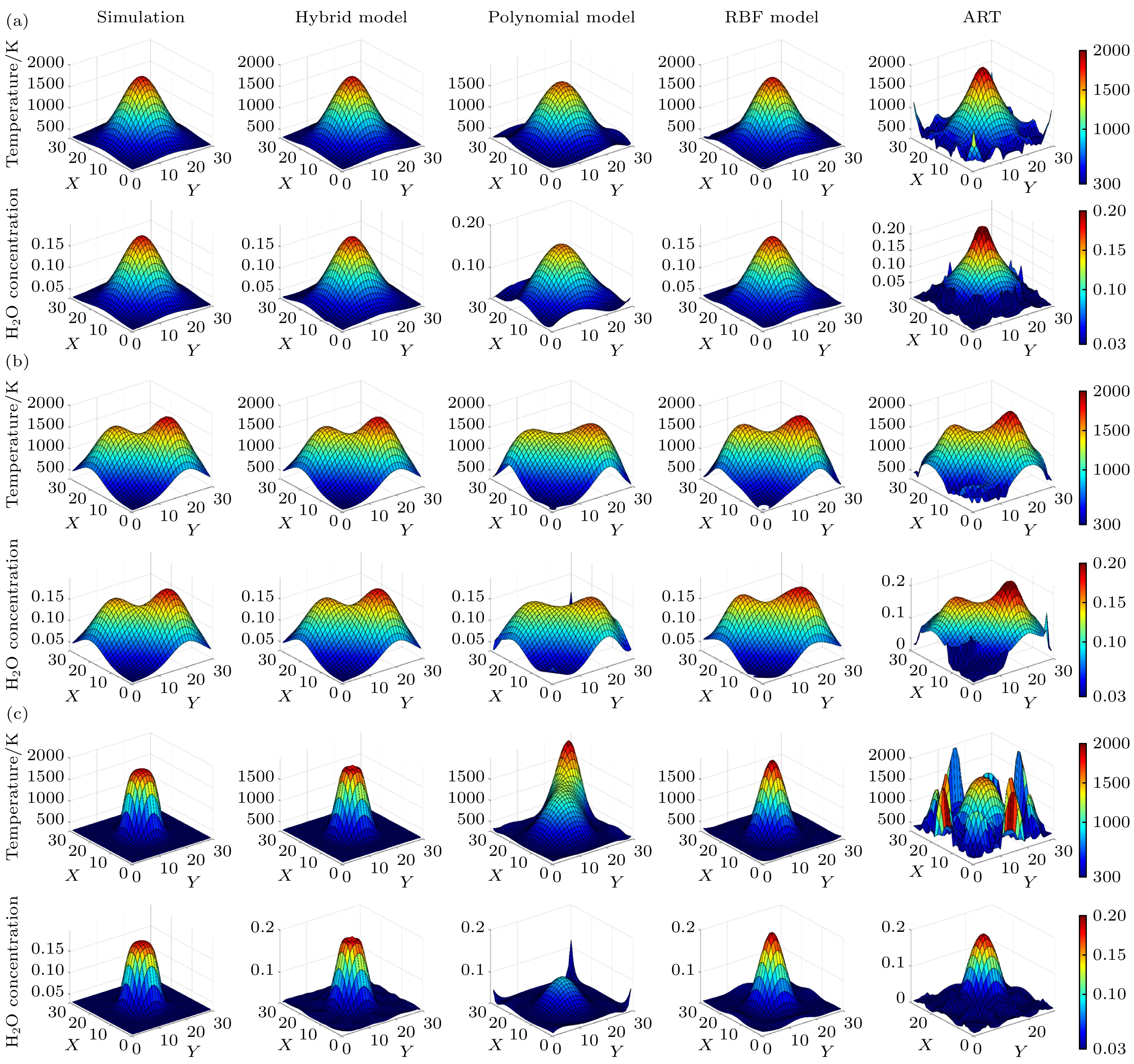
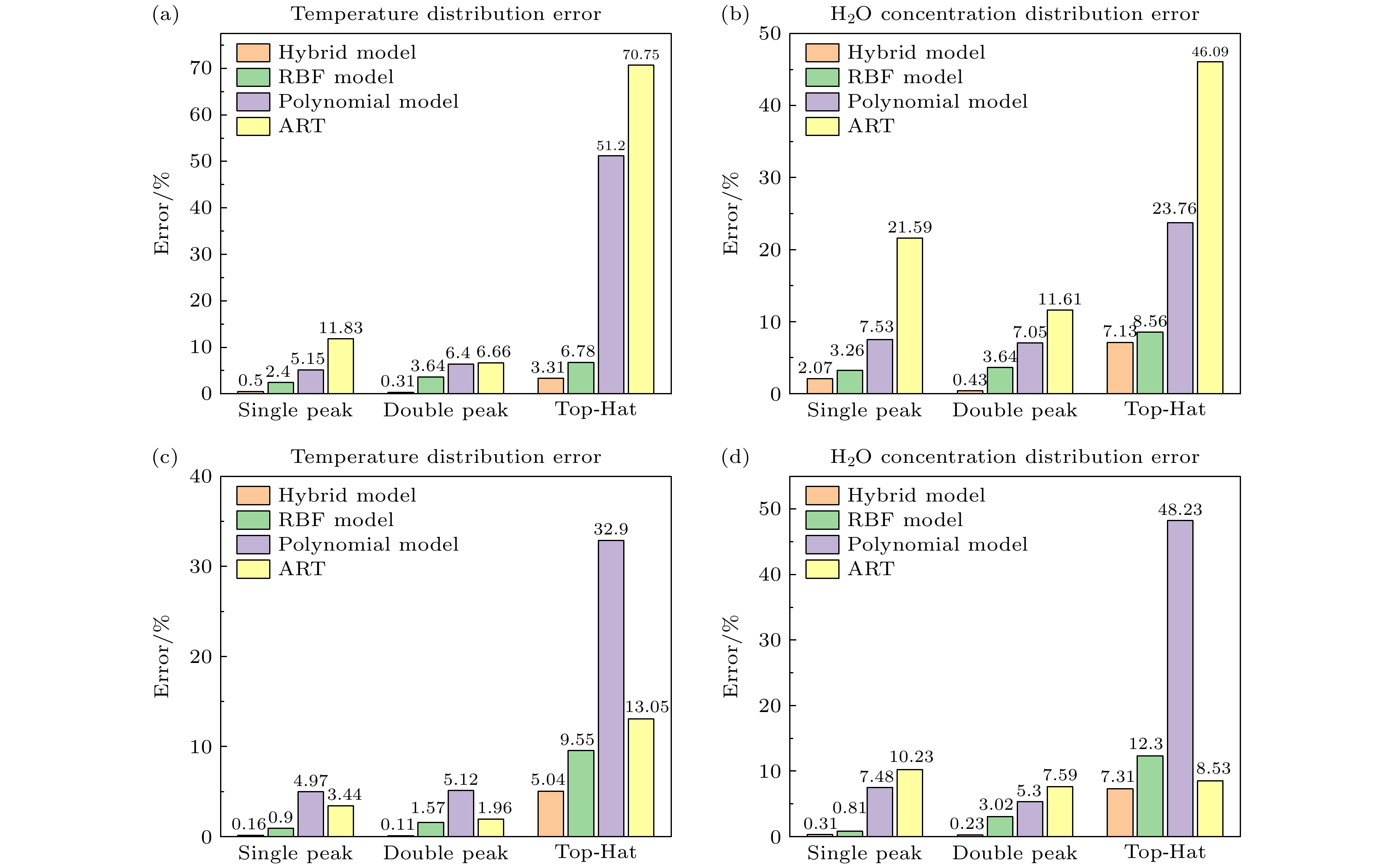
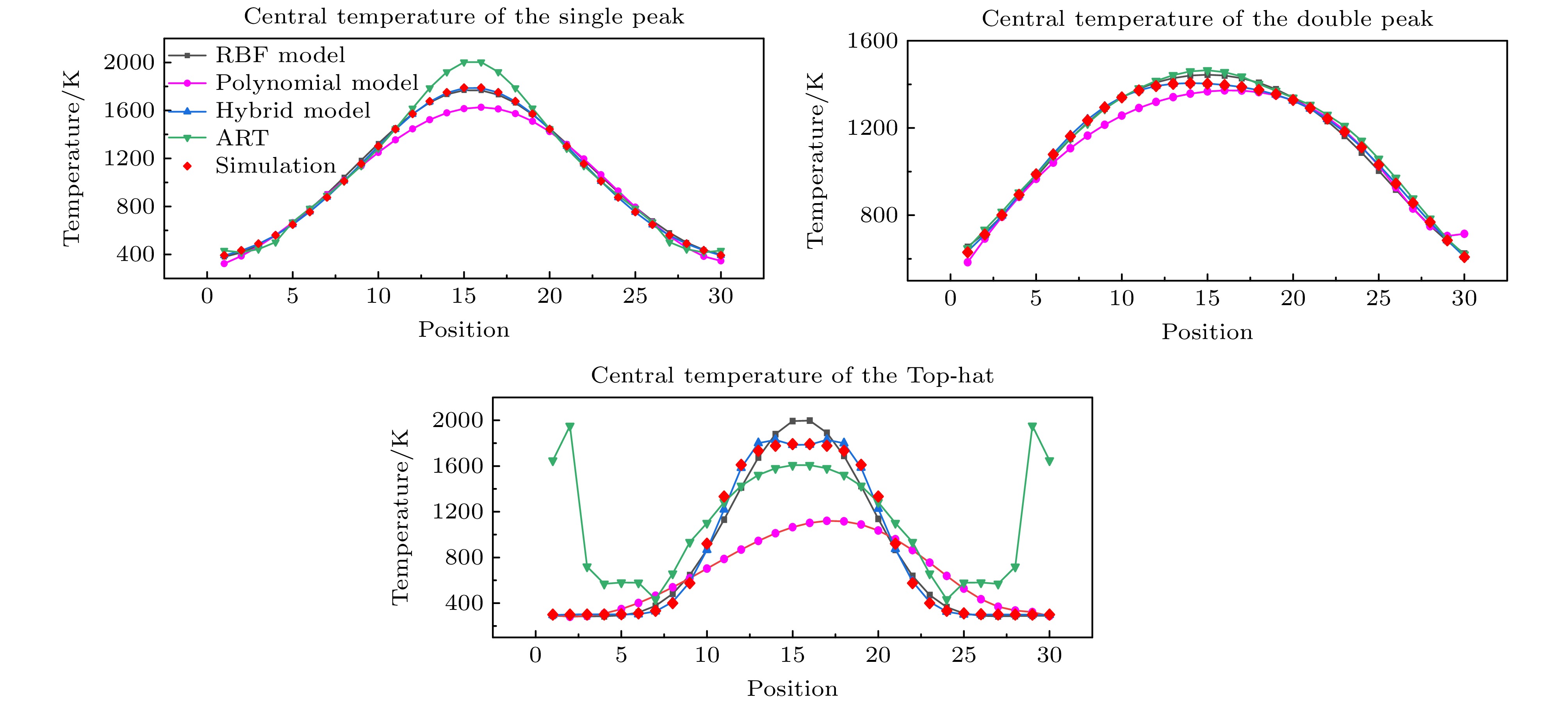
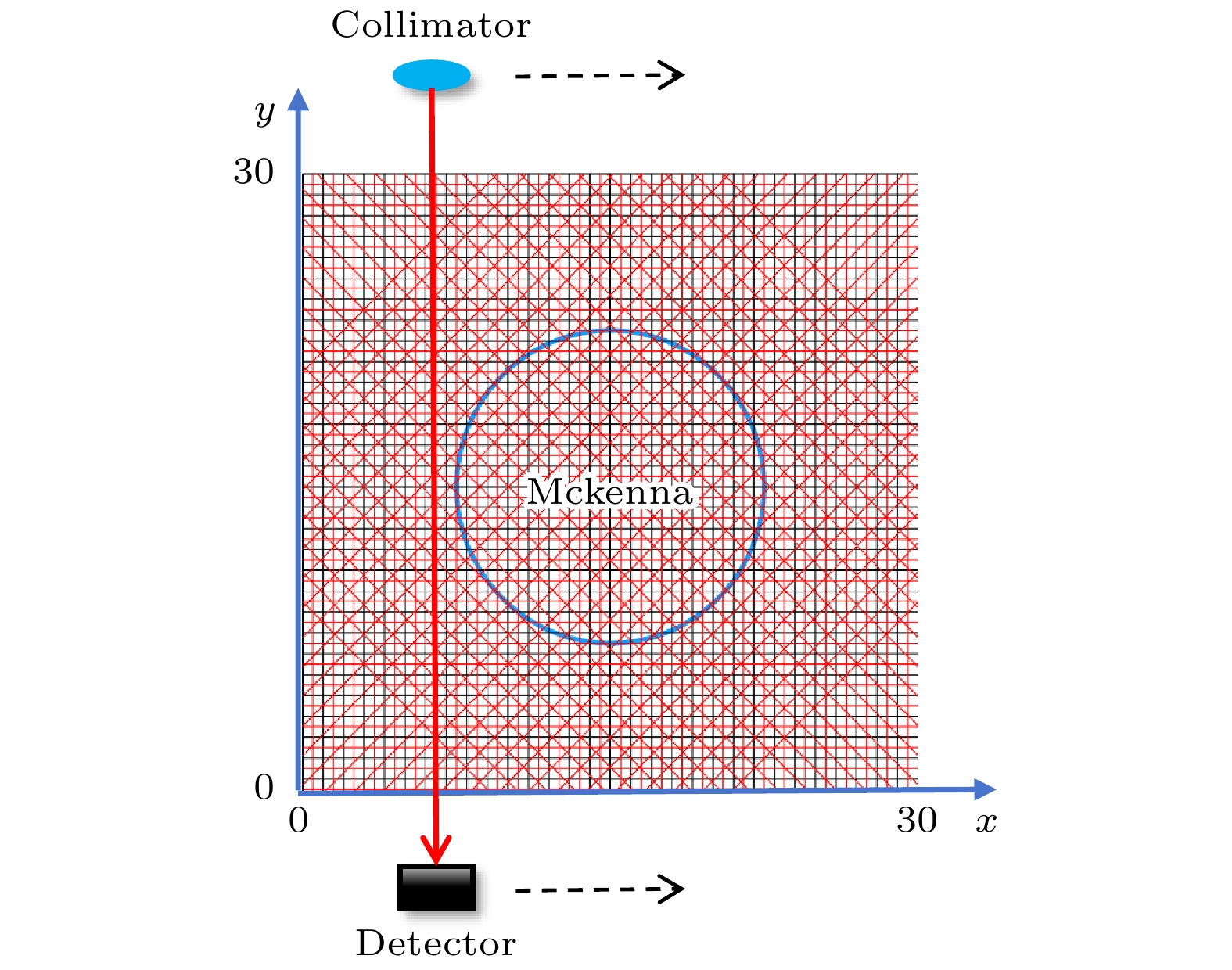
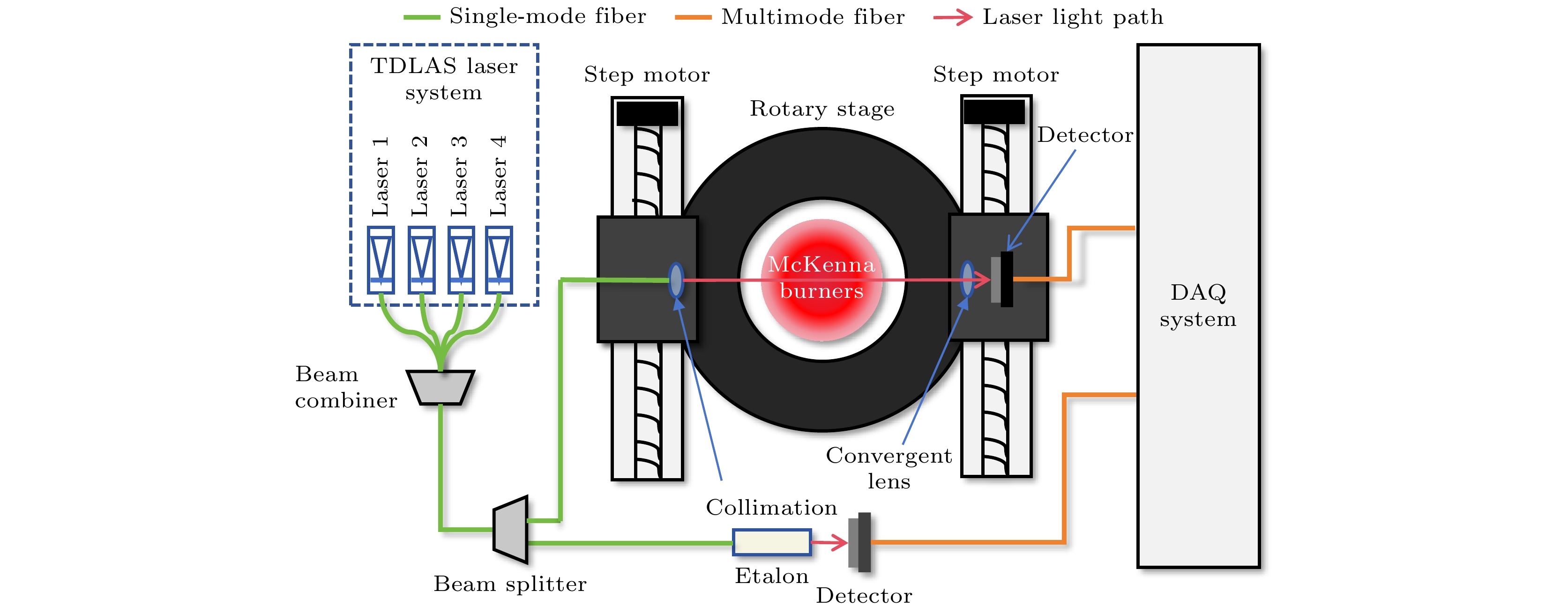
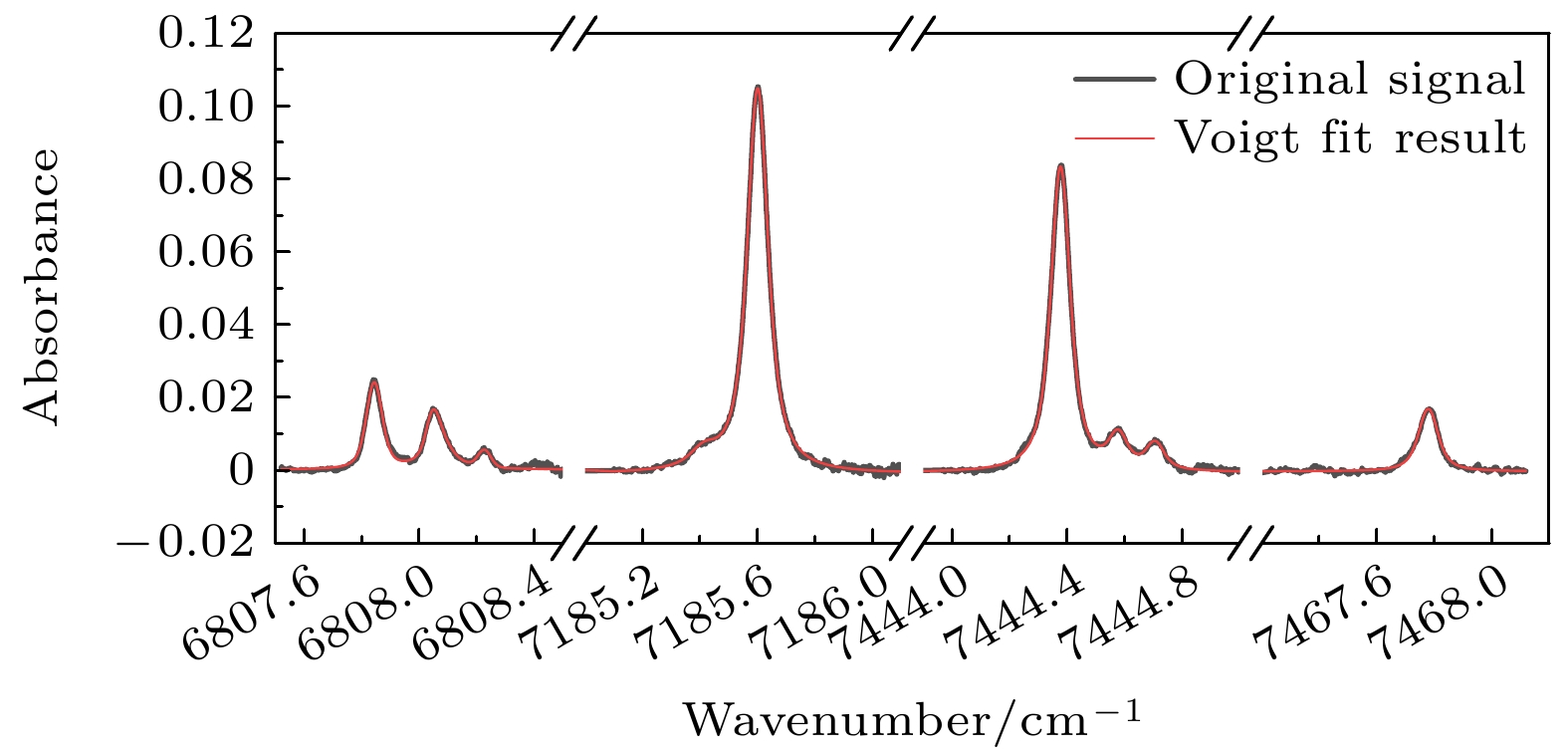
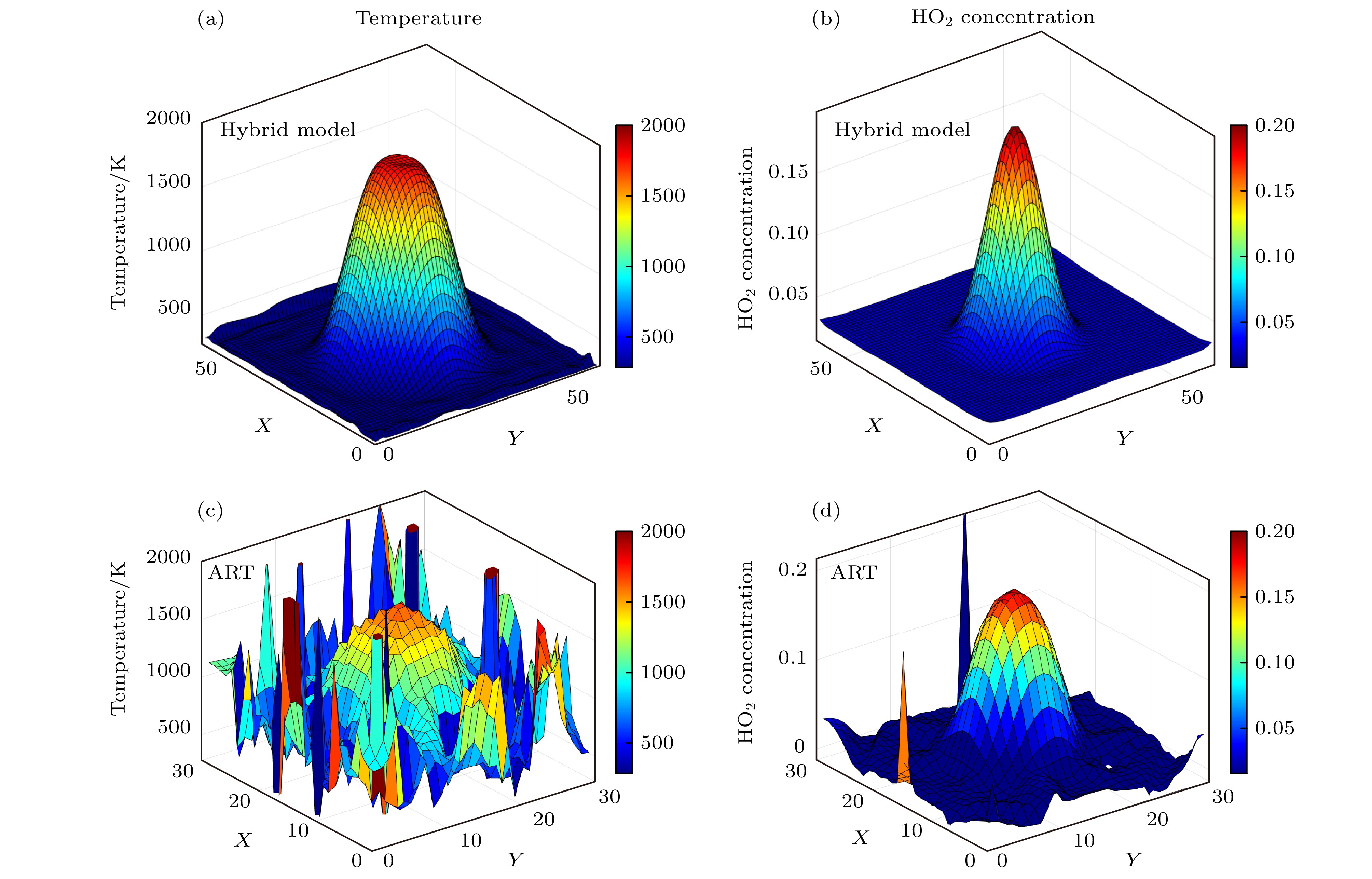
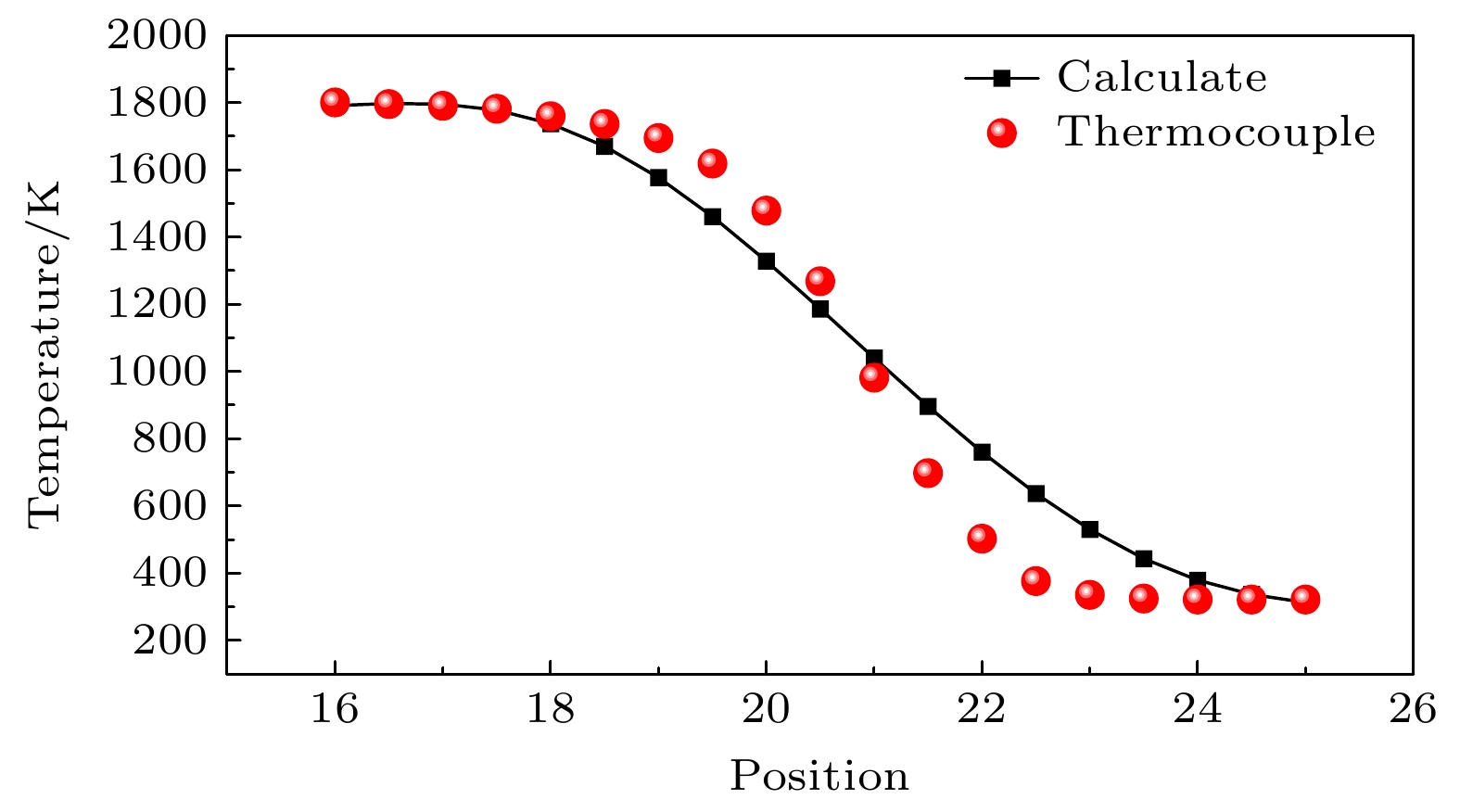
Diagnosis of combustion flow fields in aeroengines, scramjets, and related systems plays a crucial role in understanding combustion mechanisms, evaluating combustion stability and performance, and and is also a major challenge in the development of advanced propulsion technologies. Among the non-intrusive diagnostic approaches, laser absorption spectroscopy has become one of the most representative techniques. In particular, tunable diode laser absorption spectroscopy (TDLAS) offers advantages such as a compact system architecture, easy miniaturization, strong environmental adaptability, and the capability of simultaneous temperature and concentration measurements. By employing multiple laser beams intersecting at different angles and collecting absorption spectra along various paths, the two-dimensional distribution of flow-field parameters can be reconstructed using computed tomography (CT) algorithms.However, traditional nonlinear tomographic algorithms based on polynomial models encounter difficulties in reconstructing flow fields with steep gradients. To solve this problem, we propose a hybrid reconstruction method that integrates a regional weighting mechanism. In this framework, the polynomial model is combined with a Gaussian radial basis function (RBF) model, and a regional weight matrix is iteratively updated in an adaptive manner. The regional weight matrix is determined by introducing perturbations into the current temperature field and jointly considering its temperature gradient. This design allows the hybrid model to capture global features while enhancing its ability to resolve local details. In addition, a regional weight regularization term is incorporated into the residual function to further improve reconstruction accuracy.To validate the proposed approach, numerical simulations are conducted on three representative combustion field distributions, and comparisons are made between polynomial model, RBF model, and traditional algebraic reconstruction technique (ART) algorithms. The results demonstrate that the hybrid model achieves higher representational capability and reconstruction accuracy, with maximum temperature and concentration errors reduced to 3.31% and 7.13% (for the Top-Hat case), respectively. A scanning TDLAS measurement platform and a thermocouple measurement platform are built on a standard McKenna burner to experimentally verify the method. The reconstructed distribution has good consistency with the experimental results, and the deviation between the reconstructed 1800 K central temperature and the thermocouple measurement value is only 10 K. These findings verify the effectiveness of the proposed method and highlight its potential as a reliable tool for combustion field diagnostics in propulsion systems.













 DownLoad: CSV

 DownLoad:
